Israel’s war plan has led directly to this juncture (though Trump’s own decision to tear up the 2015 nuclear agreement in 2018 arguably paved the way). The culmination of Israeli Prime Minister Benjamin Netanyahu’s decades-long crusade to neutralize Iran’s nuclear threat to the Jewish state, ‘Operation Rising Lion’ began early on June 13 with Hollywood-worthy sabotage to disable Iranian air defenses, followed by the largest airstrikes on Iranian territory since the 1980-88 conflict with Iraq.
The Israel Defense Forces have since methodically destroyed significant portions of Iran’s missile launchpads, drone factories, and above-ground nuclear facilities. They have decimated its military leadership. They have gone after its domestic energy production and industrial capacity. On June 16, the IDF announced it achieved full air supremacy over Tehran, meaning Israeli planes can now fly over Iran’s capital without getting shot down – an extraordinary statement of facts on the ground.
Iran has been unable to mount much of an effective response. It has fired hundreds of missiles and drones against Israeli population centers, but very few projectiles (under 5 percent) have penetrated Israel’s layered defenses. Though these barrages have caused damage to mostly residential buildings and killed scores of Israeli civilians, as Tehran’s ballistic stockpile has started to dwindle, each wave has been smaller than the last. Israel’s advantage is only set to grow the longer the war goes on.
Yet the Israeli campaign has a hole. Despite severe damage inflicted upon Iranian capabilities and escalation dominance, Israel cannot achieve its chief war aim on its own: destroying Iran’s nuclear program. The partial degradation of the Natanz, Isfahan, and Parchin nuclear facilities, along with the assassination of 14 of Tehran’s top nuclear scientists, have set it back by months. But crucially, the Fordow enrichment plant, which sits more than 300ft beneath earth and reinforced concrete, remains out of Israel’s reach. Only the US Air Force’s Massive Ordnance Penetrators, or bunker-buster bombs, can “finish the job.”
Israel can and will continue to hammer at Iran’s other nuclear, missile, and military infrastructure for weeks (if not months), but a war that ends with Fordow guarantees that Tehran retains the means to redouble its efforts to acquire a bomb once the smoke clears. Israel’s only path to victory therefore runs through President Trump.
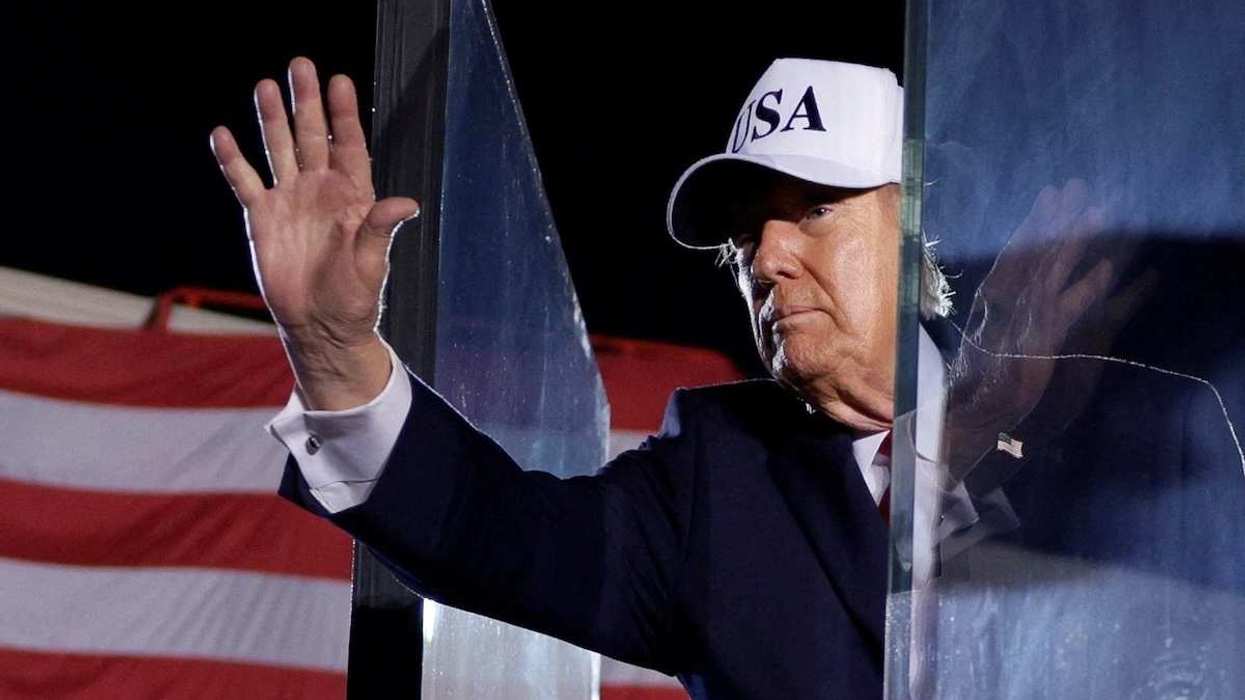
Early on, Trump drew a clear red line: American forces would stay out unless Iran escalated directly against American interests, such as by attacking US military bases or interfering with shipping through the strategic chokepoint of the Strait of Hormuz. The president ran as a peacemaker, promising to end foreign wars and keep US troops out of them. To his credit, he has tried – he just hasn’t been very effective at it. Even after sanctioning Israel’s June 13 operation, he still insisted the US had nothing to do with it and urged the Iranians to return to the negotiating table, despite being frustrated at their continued refusal to compromise.
But over the last few days, signs have emerged that the president’s position has shifted. On June 15, Trump said “it’s possible we could get involved.” The day after, on Monday, he issued a cryptic warning to Tehran’s 10 million residents to “immediately evacuate” the city. And on Tuesday, he implicitly threatened to assassinate Iran’s Supreme Leader Ali Khamenei and called for Iran’s “UNCONDITIONAL SURRENDER!” (all caps assuredly not mine).
In tandem, the Trump administration and the MAGA media apparatus started laying the political groundwork for a one-off US strike, making the case to the isolationist wing of the GOP that one-off airstrikes – as opposed to boots on the ground and long-term occupation – to prevent Iran from acquiring nuclear weapons are not only consistent with the president’s “America First” approach, but necessary to achieve his “peace through strength” vision. Even Vice President JD Vance, a vocal critic of US military intervention in the Middle East and the cabinet’s leading isolationist, echoed the new party line.
Trump has reportedly not made up his mind yet. He said today that it’s not “too late” for Iran to avoid a US attack if it agrees to give up its nuclear program. But as Israel and Iran exchange blows for the seventh day, the president could give the go-ahead to strike any second now. The retaliatory threat to US forces in Iraq should give him pause; two dozen ballistic missiles or sustained short-range rocket fire could overwhelm the air defenses shielding American bases in close proximity to Iran. A single successful barrage causing American fatalities could trap the United States in another open-ended quagmire. Ultimately, though, the perceived upside – encouraged by Netanyahu – of going down in history as the guy who eliminated the Iranian nuclear threat is likely to prove too tempting to pass up on. The US military has already deployed enough air and naval assets to the region to enable a strike and defend against potential retaliation.
Despite last-ditch efforts from both sides to avert a direct clash, Tehran looks unlikely to capitulate; Khamenei swore as much today. The leadership’s priority is regime survival, with domestic enrichment viewed as a cornerstone of the regime’s long-term survival strategy – the ultimate insurance policy against a Libya-style overthrow. Surrendering the nuclear program under threat of US bombardment would sacrifice long-term deterrence and legitimacy for the sake of short-term respite – a “poisoned chalice” even more bitter than Khamenei’s predecessor Ayatollah Khomeini’s 1988 decision to accept a ceasefire with Saddam Hussein’s Iraq. While devastating, enduring the loss of Fordow would at least allow the regime to live to fight another day and perhaps even rebuild the nuclear program in secret once the dust settles.
With Iranian capitulation all but ruled out and no other clear off-ramp for Trump to walk back his ultimatum, the likely outcome is a US strike on Fordow in the coming days. Tehran would face growing pressure to retaliate against US bases, Gulf energy infrastructure, and shipping through the Strait of Hormuz (through which 20% of the global oil supply flows) to restore deterrence and maintain credibility at home. But, fire and brimstone rhetoric notwithstanding, a weakened regime in survival mode will probably (read: hopefully) refrain from purposefully broadening the conflict further, especially in ways that would force it to fight a three-front war against Israel, the US, and the Gulf Arab states. Iran might opt to harass oil shipping and local export facilities instead, possibly leaning on its proxies, while stopping short of measures that invite major retaliation. Trump, for his part, shows little appetite to indulge Netanyahu’s regime-change fantasies.
The greater danger lies in the fog of war. Israeli decapitation strikes have fractured Iran’s chain of command; even if the consensus among the decision-makers is to proceed cautiously, a rogue Revolutionary Guard faction might decide to take matters into its own hands and shoot at US barracks, or a wayward missile could hit an oil tanker and blow $120-a-barrel crude into the global economy. The longer the conflict runs, the higher the odds of unintended escalation. And if it’s backed into a corner, such as via overt Israeli or American attempts to induce regime change (no matter how likely to fail and/or backfire), Iran can always decide to raise the stakes, retaliation risks be damned.
President Trump could well still pull back from the brink. Just hours ago, he said to reporters at the White House, “I may do it, I may not do it." The option for the United States to take out Fordow won’t go away in a month or six. At this point in time, it will unnecessarily put American troops at risk, and it won’t result in regime change. In fact, it’s more likely to rally Iranians around the flag, empower hardliners, accelerate clandestine nuclear activities, and create pressure for prolonged American involvement. It would be smarter to allow Israel to continue degrading Iranian nuclear, missile, and military capabilities while setting back its nuclear program many months further.
But evidence suggests Trump is about to pull the trigger. When he does, headlines will hail an American-Israeli triumph. The true picture will be more mixed: Iran’s nuclear program shattered but not permanently destroyed, its regime weakened but not dead; the United States deeper in a conflict it vowed to avoid; and Israel confronting a mortal enemy whose resolve to acquire nuclear arms will only intensify. The Middle East will be 16 centrifuge cascades weaker but no closer to peace.