scroll to top arrow or icon

Living
Beyond Borders

GZERO Media and Citi Global Wealth Investments present “Living Beyond Borders,” a special-edition podcast series, as well as articles and graphics that examine how our lives change as the world changes.
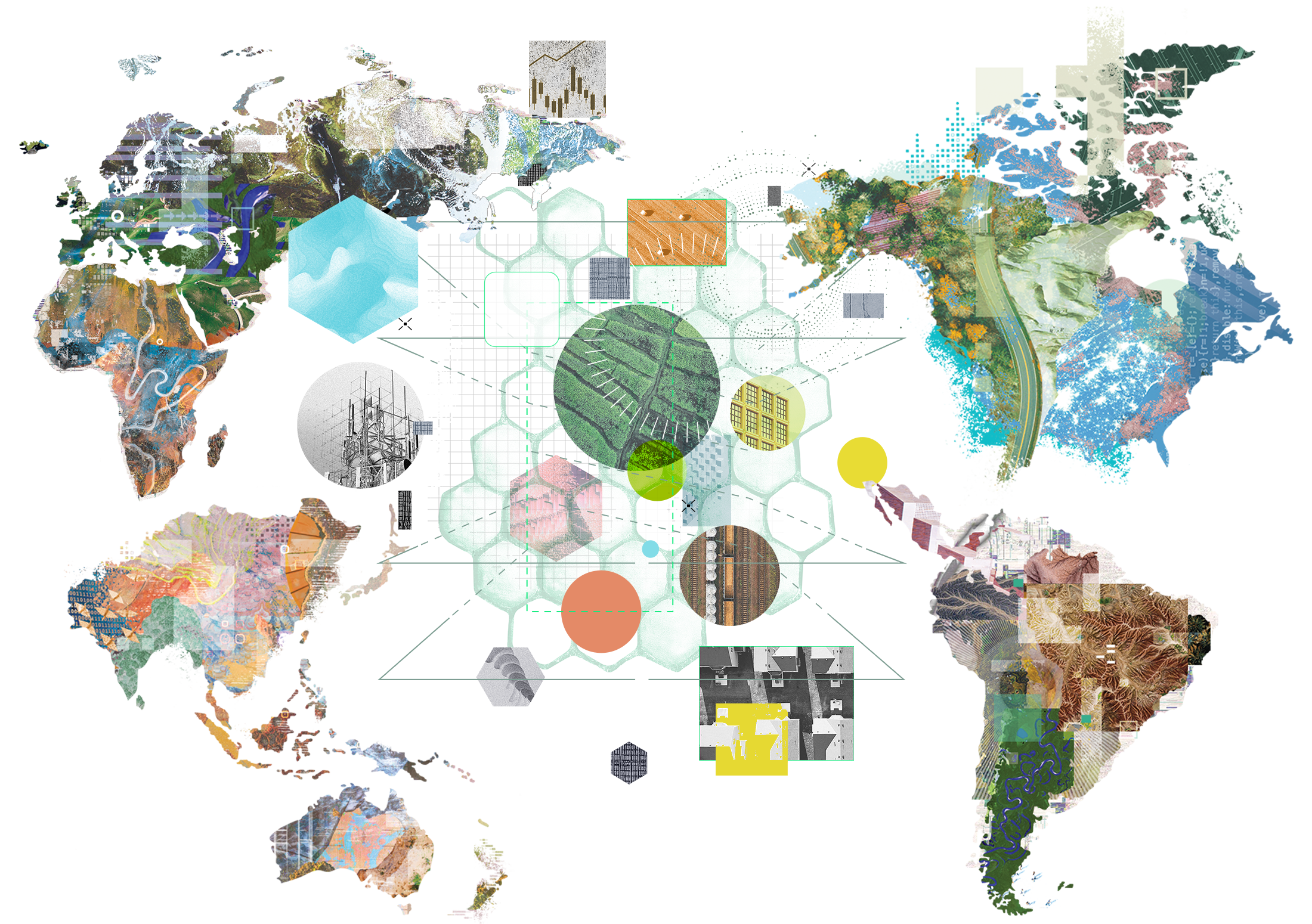
Stylized illustration of a map of the world

Episode 9: What's next in 2023?

Transcript

Listen: "We are coming out of a period of uncertainty," says David Bailin, Chief Investment Officer at Citi Global Wealth. "We've all been thinking it would go much faster than it has, but in the event we get to a more normal economy in 2024, given how vastly impactful COVID was, I think that that's a pretty fast outcome."

In the latest episode of Living Beyond Borders, a podcast produced in partnership between GZERO and Citi Global Wealth Investments, Bailin is joined by Eurasia Group President Ian Bremmer to discuss what's happened so far on the economic and political stage, and what we might look forward to in the back half of the year and into 2024.

Read moreLess

Podcasts

See more

Transcript

Listen: Following shortages that came out of the COVID pandemic as well as the war in Ukraine, the dual food problems of affordability and availability persist. While temporary impacts may be waning, the experts also discuss the longer-term impacts of the global food production system on the environment and what will - or won't - be sustainable going forward, including the food system's massive dependence on fossil fuels. In the latest episode of Living Beyond Borders, Peter Ceretti, Director of Global Macro Geo Strategy at Eurasia Group, Harlin Singh, Global Head of Sustainable Investing, and Malcolm Spittler, Global Investment Strategist, and Senior US Economist, both at Citi Global Wealth Investments, discuss the latest causes and ripple effects of food shortages around the globe.

In Planting for Tomorrow: Weaving sustainability into the path toward food security, a report from Citi Global Wealth and Eurasia Group/GZERO Media, we take a deep dive into the challenges and the innovations in sustainable agriculture. This newsletter gives you an essential look into the future of food.

Check it out here

Read moreLess

Transcript

Listen: "We're entering into another leg of a continued industrial revolution which is going to be marked by collaboration between humans and machines," says Archie Foster, Managing Director and Head of Thematic Equities at Citi Investment Management. "This will include industrial automation, robotics, and AI," he adds.

In the latest episode of Living Beyond Borders, a podcast produced in partnership between GZERO and Citi Global Wealth Investments, Foster is joined by Dev Saxena, Director of Eurasia Group's Geo-technology Practice, to go beyond the hype surrounding generative AI and ChatGPT to understand how it can truly affect the economy and our political systems in the coming months.

Read moreLess

Transcript

Listen: "I think we're entering into a period when it will be more attractive to invest outside of the US and to invest in China and Pan-Asia than we've probably seen in the last few years," says David Bailin, Chief Investment Officer at Citi Global Wealth.

In the latest episode of Living Beyond Borders, a podcast produced in partnership between GZERO and Citi Global Wealth Investments, Bailin is joined by Ian Bremmer, President and Founder of Eurasia Group and GZERO Media, to get the latest on the relationship between the United States and China, and their power over the rest of the world.

Read moreLess

Transcript

Listen: "It actually all comes down to one thing and that's money," says Raad Alkadiri, Managing Director of Energy, Climate and Resources at Eurasia Group. "Will there be the money for investment in renewables, in energy efficiency made available? And I'm not just talking about the industrialized world, I'm talking about globally."

In the latest episode of Living Beyond Borders, a podcast produced in partnership between GZERO and Citi Global Wealth Investments, Alkadiri is joined by Malcolm Spittler, Global Investment Strategist and Senior US Economist at Citi Global Wealth Investments, to look at where the energy transition to renewable fuels stands globally, after setbacks from the pandemic and geopolitical instability.

Read moreLess
Subscribe to our global politics newsletter GZERO Daily

Special Edition Newsletters

Inflation stations!

Articles

The Graphic Truth: ChatGPT breaks the internet

Since ChatGPT, OpenAI's artificial intelligence chatbot, burst onto the scene late last year, AI seems to be everywhere – so much so that it’s become an integral part of our conversations, business dealings, academics, campaign ads, and everything in between.

While being faced with constant reminders of AI’s looming threat or promise, most people still had some catching up to do on what the technology even was — let alone what it could be. And whether you are inspired, afraid, or confused about the future of AI, you probably augmented that train of thought with a trip to Google.

We took a look at Google search history to see how often the most popular AI product, ChatGPT, is crossing humanity’s minds.

How AI will roil politics even if it creates more jobs

Whether artificial intelligence will ultimately be good or bad for humanity is an open debate. But there’s another, more immediate issue that often gets lost in the scrum: Even if AI eventually creates more jobs and opportunities than it destroys, what happens to the actual people who lose their jobs on the way to that happier future? And how might their grievances shape politics in the meantime?

Read moreLess

AI regulation can’t address what people want

The emergence of AI has amplified the problem of disinformation that has proliferated since the 2016 US presidential election, and regulation is often touted as a way to address this worsening issue.

But even if governments do find a way to effectively regulate AI – and that’s a big if – that doesn’t address the widespread demand for conspiracy theories that confirm people’s established political and cultural biases.

Read moreLess

The revolutionary AI upside

In years to come, experts tell us that artificial intelligence will alter societies and change individual lives on a scale greater than changes brought about by the creation of the World Wide Web. In the process, AI will create challenges and risks that deserve careful consideration. But headlines that warn of catastrophe are hiding the revolutionary advances and opportunities that will benefit billions of people.

Read moreLess

Regulate AI: Sure, but how?

AI revolutionaries like OpenAI CEO Sam Altman want government regulation, and they want it now – before things get out of hand.

Read moreLess

The race to build humanity's future in space, with Chris Hadfield

More than half a century after humans last walked on the Moon, the next era of space exploration is taking shape. Getting there is cheaper, private companies are playing a much bigger role, and discoveries like vast reserves of lunar water have made the prospect of establishing a permanent presence on the Moon far more realistic.

Ian Bremmer sits down with Canadian astronaut Chris Hadfield to talk about what this new space age could look like. They discuss the growing competition between the US and China, whether rivals can cooperate on the lunar surface, and who gets to write the rules as governments and companies begin looking beyond simply planting a flag.

Hadfield also breaks down the practical challenges of living on the Moon – from powering a settlement through long lunar nights to the unanswered question of whether humans can develop normally in low gravity. He explains how private companies are turning space into a commercial marketplace, why regulation will inevitably struggle to keep pace, and why robots alone can never satisfy humanity’s drive to explore Mars.

And drawing on nearly six months aboard the International Space Station, Hadfield reflects on the surprisingly wonderful experience of sleeping in zero gravity, circling Earth 2,600 times, and how seeing the planet from above fundamentally changed his perspective on humanity and our place in the universe.