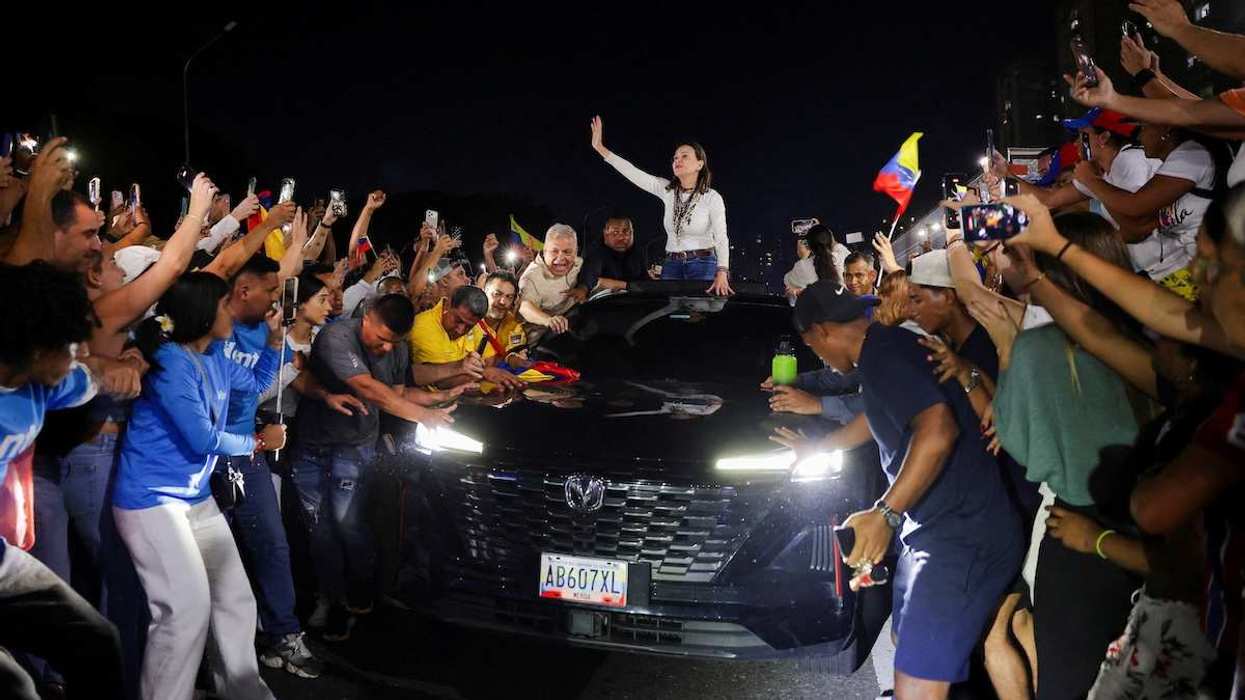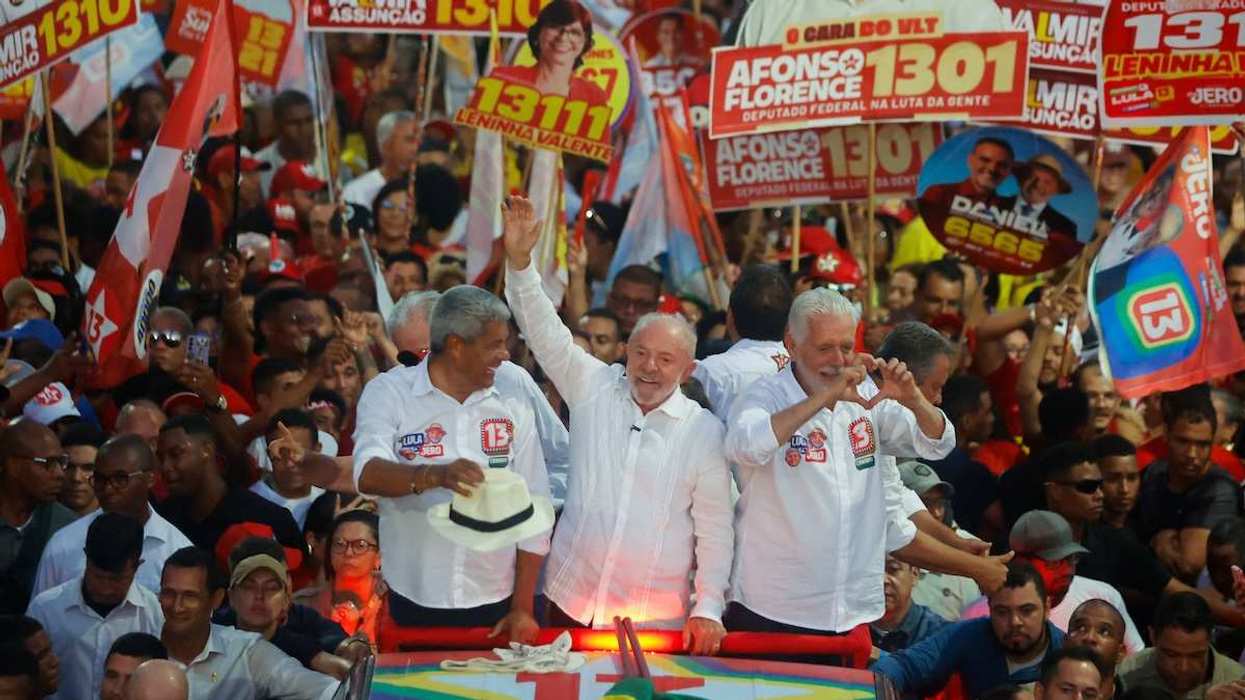
On Sunday, Venezuelan opposition leader María Corina Machado returned home after ten months in exile.
In the time since she last set foot on Venezuelan soil, the United States arrested authoritarian leader Nicolás Maduro on narco-terrorism charges and installed Vice President Delcy Rodríguez as acting president. As the Trump administration slowly negotiated with Rodríguez to hold elections, it made a flurry of oil deals, including one that gives the US the rights to more than 65 billion barrels and involves a Venezuelan businessman under investigation for money laundering. The country was also struck by two devastating earthquakes that killed thousands. Machado, meanwhile, gifted her Nobel Peace Prize to President Trump, in an effort to facilitate her return and Venezuela's transition to elections, in which she would expect to be heavily favored to win.
Much has changed since Machado left. But now that she's back, the big question is: what is the timeline for Venezuela to hold its first free-and-fair elections in over a decade? And does the Trump administration care? The answers (possibly 2027 but more likely 2028; and it does, while not making it a priority) reveal as much about the future of Venezuela as they do about the Donroe Doctrine in Latin America.
Shortly after removing Maduro from power, the US embarked on a strategy of simultaneously rebuilding Venezuelan oil infrastructure and reforming its political institutions. Or as Trump said at the time: "We're going to run it, fix it. We'll have elections at the right time," but also: "We're going to take our oil back." On both fronts, the Trump administration has had considerable success: coercing Rodríguez into reforms to Venezuela's Supreme Court and opening the oil industry to foreign investment (headlined by a $7 billion investment from Chevron), which has already enabled a 17.6% spike in production after years of decline.
At the UN General Assembly, Trump made these commercial motivations clear in announcing "to the victor belong the spoils." After removing Maduro in violation of international law and announcing a desire to profit from the endeavor before heads of state from around the world, the US made clear that its priority was business first, rule of law and democracy second.
That put Machado in an awkward position after the US intervention as she lobbied the Trump administration to help her return to Venezuela – without much success. After she reached the country on Sunday, Secretary of State Marco Rubio voiced public support for Machado's return, but the administration had long privately discouraged it. And while the US State Department has laid out a plan for the return of democracy, the benchmarks that must be met before elections can be held are steep – including the formation of a new Supreme Court and National Electoral Council, the restructuring of Venezuela's enormous national debt, and the declaration of a vacancy in the presidency, followed by elections six months later. Achieving those goals won't be fast, meaning an election is more likely to arrive in 2028 than 2027.
It's in Rubio's interest to ensure a democratic transition – as a key accomplishment that could burnish his credentials for a 2028 presidential run or preserve his political future in Florida, home to many Venezuelan expats. But he's one actor in an administration more focused on business opportunities and other foreign policy challenges, as the US readies for more potential strikes on Iran after the midterms.
Machado is in a tight spot. If she galvanizes public demonstrations in favor of elections, she risks drawing the ire of both Rodríguez and Trump, which could set back the cause and her political career. She also needs to maintain credibility with the Venezuelan people, which means criticizing the potentially exploitative oil deals – but making sure she directs those attacks towards the incumbent Venezuelan government, not the Trump administration (whose support she needs).
She will likely start campaigning across Venezuela but without any certainty of an election, while facing threats to her safety. The latter is nothing new for the Nobel winner, who lived in hiding for extended periods during Maduro's tenure, but the long run-up to elections is concerning in an unstable country with a history of political violence. The State Department's strategy of cautiously rebuilding Venezuela's institutions first is legitimate – it takes infrastructure and planning to have free-and-fair elections to replace a government that has systematically rigged them – but the slow pace of democratization carries its own risks.
To the Trump administration's critics, it's hard to take the gradual strategy in good faith amid the backdrop of Trump's accusation that Brazil's election on Sunday (in which incumbent President Lula da Silva came back to defeat the more Trump-friendly Flávio Bolsonaro) was "rigged" – it wasn't – and empowerment of businessman Alejandro Betancourt, who is currently under criminal investigation, in Venezuela's oil sector. To the administration's supporters, Machado's return is a positive milestone, as the State Department reforms the Venezuelan system to allow her to run for the presidency – while it directs more of its focus on America-first policy priorities: combating drug trafficking (made easier with Rodríguez than Maduro) and leveraging commercial opportunities.
At its core, that is the Donroe Doctrine: a United States that acts unilaterally in its own interest in its hemisphere, without second-guessing international law or norms around sovereignty. There is an interest in promoting democracy, but US-friendly leaders are the more pressing goal. (And, as Brazil showed Trump, those don't always come from elections.) The Donroe Doctrine has likewise led to the American pressure campaign against Cuba, which has involved a thus far unsuccessful search for an equivalent to Delcy Rodríguez in order to manage an aspirational democratic transition: a unilateral move to install a more palatable head of state who can eventually preside over the establishment of a new political order.
The path forward for Machado and Venezuelan democracy is uncertain. There are going to be elections eventually. The prospects for Venezuela returning to a functional representative government are the best they have been in decades. But the transition to democracy is being slow-played by an administration that has deprioritized it, has only two years left in its term, and is experiencing a collapse of political support in the US. Building a sustainable democratic model is difficult in the best circumstances – building it in this environment... well, let's see.
Machado's return is a step forward. Now, Venezuela's democratic institutions must return from their exile.