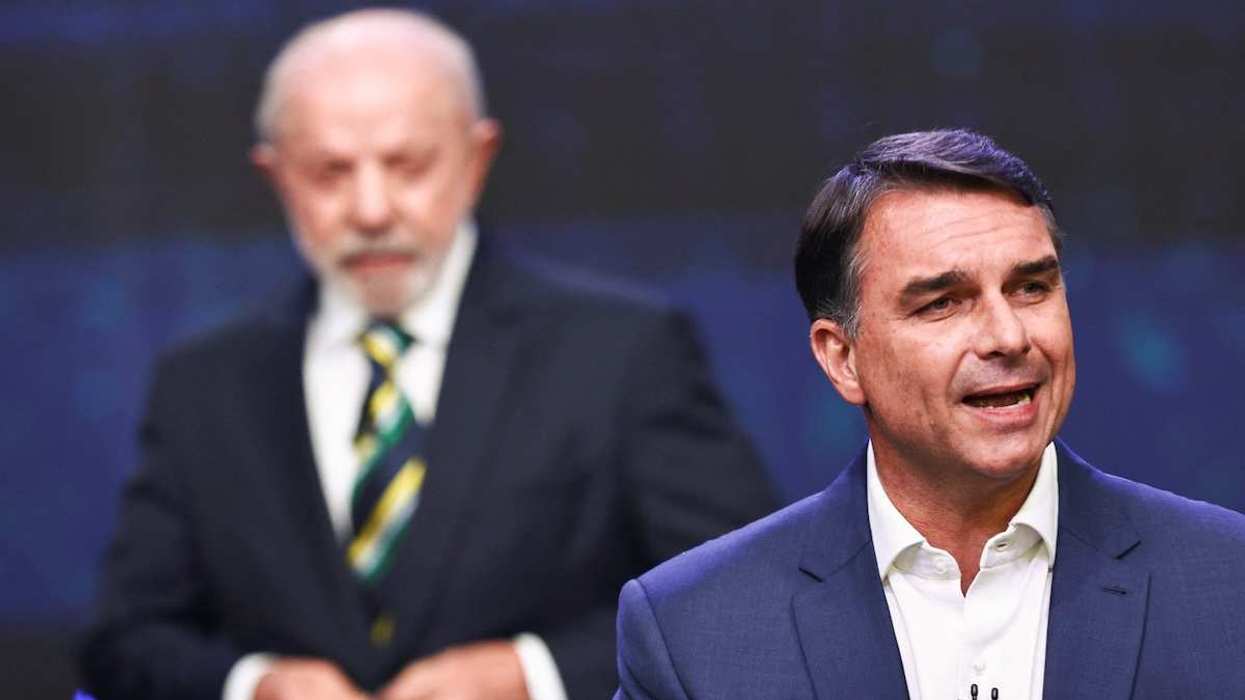
Brazil’s left-wing President Luiz Inácio Lula da Silva of Brazil staged an astonishing comeback on Sunday to win a record fourth term, breaking a string of recent right-wing victories in Latin America. His opponent, Flávio Bolsonaro, has so far refused to accept the results – echoing his father, Jair Bolsonaro, who refused to accept a loss to Lula in 2022.
Lula’s victory marked the first time that a Brazilian candidate has finished second in the first round of the election, only to come back to win the runoff. And yet Lula, now 80 years old, won 51.8% of the runoff vote with a margin of more than four million votes.
Lula’s strategy shifted significantly after his first-round loss, launching an intense online campaign which saw him gain 10 million votes – compared to Bolsonaro’s gain of just 3.6 million. This was driven by increased turnout – the abstention rate dropped from 21% to 19% – and the re-allocation of votes that had been cast for other candidates in the first round.
Meanwhile, Bolsonaro has called for the election to be annulled, claiming election interference: A judge extended voting by two hours on the day because voters had struggled to reach polling sites due to weather and public transport disruptions.
But given the margin of victory, his challenges are unlikely to see much success. What’s more, leaders around Latin America, including right-wingers like Colombia’s Abelardo de la Espriella, Peru’s Keiko Fujimori, and Chile’s José Antonio Kast have already congratulated Lula on his victory. The Trump administration, which is close to the Bolsonaro family but did not formally endorse either candidate, has yet to release a statement on the election.
However, Lula now faces a rocky term in office. He doesn’t control Congress or the Senate, where Bolsonaro’s Liberal Party won the largest share of seats earlier this month. Conservative forces now dominate key state governorships as well. And he faces a challenging economic outlook: public debt is now over 82% of GDP, its highest since the pandemic, while forecasts suggest the economy will grow just 2.3% next year. On top of all of this, Lula, who turns 81 tomorrow and will enter his final term, must also find a successor to lead his leftwing Workers Party, which he has now dominated for more than 40 years.