Ethiopia claims “all-out invasion” by Eritrea
Ethiopia has told the UN that troops from neighboring Eritrea penetrated at least 60 meters across the border as long-standing tensions between the two East African countries threaten to boil over again. At issue is access to the Red Sea, which Ethiopia lost when Eritrea became independent after 30 years of war in 1993. The two sides signed a historic peace accord in 2018, and a heavily militarized Eritrea supported the Ethiopian government in its war against Tigray rebels from 2020 to 2022. But relations frayed soon after, and in 2023, Ethiopia declared it would restore access to the sea, a pledge Eritrea viewed as a threat. In recent weeks, border tensions have flared again, while the Ethiopian government has also accused Eritrea of now supporting a fresh uprising by Tigray rebels. A wider war between Ethiopia and Eritrea could destabilize East Africa and the Red Sea coast at a time when the war in Iran has already raised risks in the region.
UK Labour Party gets a ‘Burnham Bounce’ – for now
A candidate from Prime Minister Andy Burnham’s center-left Labor Party won a special election for former Prime Minister Keir Starmer’s old parliamentary seat yesterday, fending off a challenge from the progressive-left Green Party. The election was seen as a test of whether Burnham could appeal to the left flank of voters who were turning to the Greens. Under Starmer, only 52% of voters who voted for Labour in 2024 had planned to do so again. That number has jumped to 70% since Burnham became leader – in what some describe as the “Burnham Bounce.” But he can’t get too comfortable: Labour candidate Sagal Abdi-Wali won the seat with a far slimmer lead than Starmer did in 2024 – down from a majority of 11,572 votes to Abdi-Wali’s 3,364. Green Party leader and candidate for the seat Zack Polanski framed his second-place result as a victory and rejected calls to step down as party leader. He won 33% of the vote, an increase of 22% from 2024.
Brazil’s third-place candidate endorses Bolsonaro
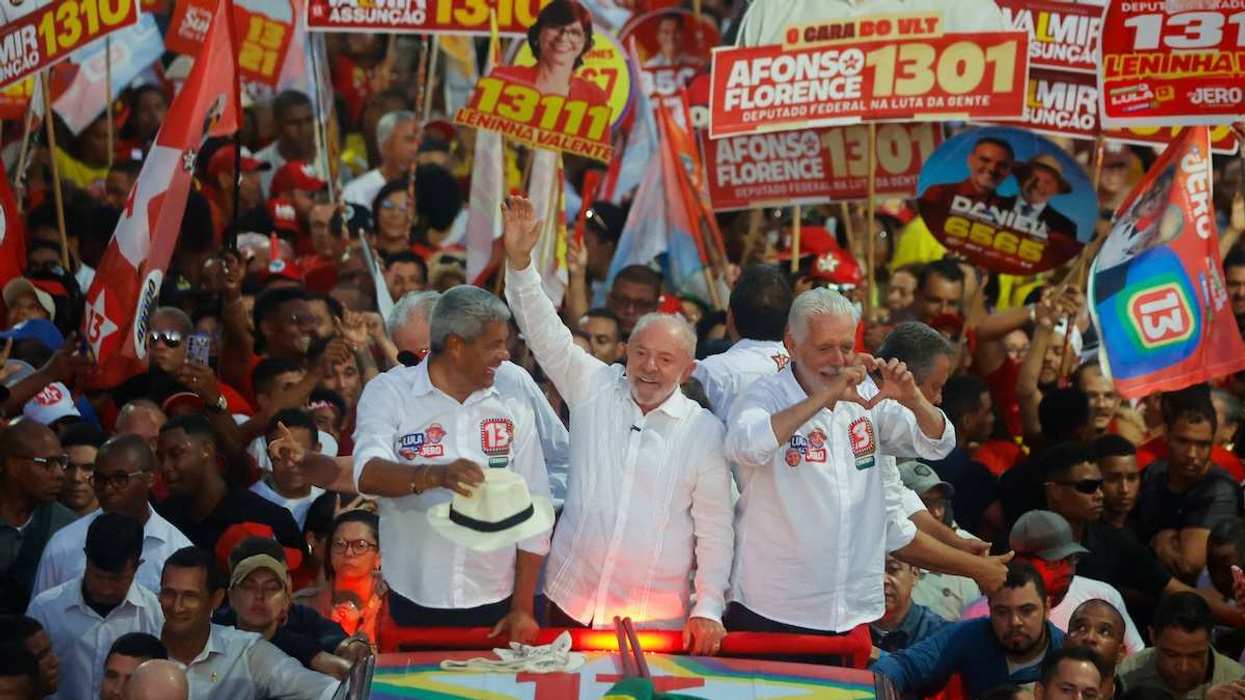
The re-election picture is darkening by the day for Brazil’s aging leftist President Luiz Inácio “Lula” da Silva, who unexpectedly lost the first round to right-winger Flavio Bolsonaro by more than two points last Sunday. Polls released Wednesday showed him trailing by four points now. The same day, third-place finisher Augusto Cury, who got just under 3% of the vote, endorsed Bolsonaro, potentially widening the gap further. Lula’s second round strategy has focused on the more than 30 million Brazilians who abstained in the first round, but he faces an uphill battle. Bolsonaro, whose ultra-rightwing father remains in jail for trying to overturn his own re-election loss to Lula in 2022, has benefited from Brazilians’ sense of economic malaise, security concerns, and fatigue with Lula, who has been president three times since 2002. The second round is on October 25th.