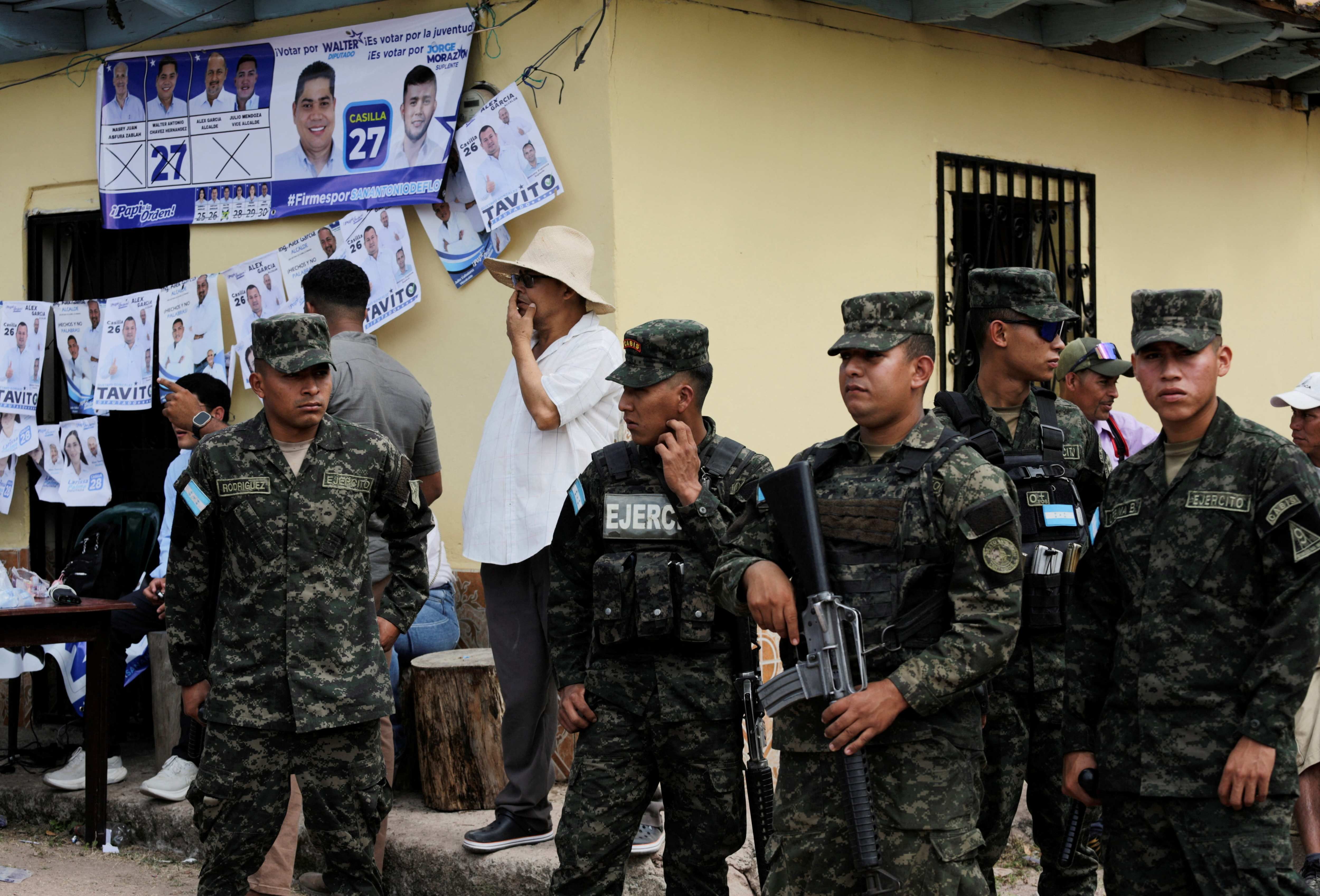
More than a week after Hondurans cast their ballots in a presidential election, the country is still stuck in a potentially-dangerous post-election fog. With 97% of votes tallied, the race remains a dead heat: former Tegucigalpa Mayor Nasry Asfura, who has been backed loudly by US President Donald Trump, holds a paper-thin one-point edge over fellow right-winger Salvador Nasralla, a well-known TV personality. The difference is roughly 42,000 votes. Rixi Moncada of the ruling leftist party trails far behind at 19%.
Tensions are rising. Nasralla is alleging election fraud, while Moncada wants the entire vote annulled and is urging her supporters into the streets with protests and strikes. They both accuse Trump of meddling in their country’s politics. Trump has fired back with his own allegations of election fraud because of the delayed results.
The drawn-out count isn’t helping. Honduras uses a two-step system: preliminary results are transmitted digitally from polling stations, but the official tally comes later, after workers manually verify every vote sheet. This year, the delay has been unusually long, with officials blaming the bottleneck on the private company that built the voting systems. Plus, the electoral authority says about 14% of tally sheets show inconsistencies and need to be recounted.
Trump’s meddling is complicating things further. The US president endorsed Asfura early on, branding the other candidates as “narcocommunists”, threatening to cut off US aid to the country if he didn’t win. Many voters who had drifted toward Nasralla because they saw him as the best shot at ending the ruling party’s long tenure turned instead to Asfura after Trump’s endorsement, hoping it would improve their country’s relations with Washington.
Honduras is one of the poorest nations in the Western Hemisphere, and depends on remittances from the US for more than a quarter of its GDP. Many voters said they feared their family members in the US will pay the price if Asfura loses, or that migrants could, conversely, benefit from better relations between the countries if he wins.
Experts agree. “If Asfura wins,” Eurasia Group’s Central American researcher Sofia Osorio, “his alignment with the Trump administration will facilitate engagement, particularly on shared security and migration priorities.”
Meanwhile, Indigenous, environmental, and farmworker groups marched on the US Embassy last week to protest Trump’s involvement and his controversial pardon of former Honduran President Juan Orlando Hernández, a member of Asfura’s party who was convicted of collaborating with drug cartels to flood the US with cocaine. Following the pardon, Honduras’ government issued an arrest warrant for Hernández, who was freed last week from a US prison.
The messy vote count and fraud accusations have revived uneasy memories of the country’s 2017 election, when similar allegations sparked mass protests and security forces opened fire, killing at least 16 people. For now, the streets of Tegucigalpa remain calm. But the margin is tiny, tempers are rising, and Honduras has seen this film before.