September 30, 2026
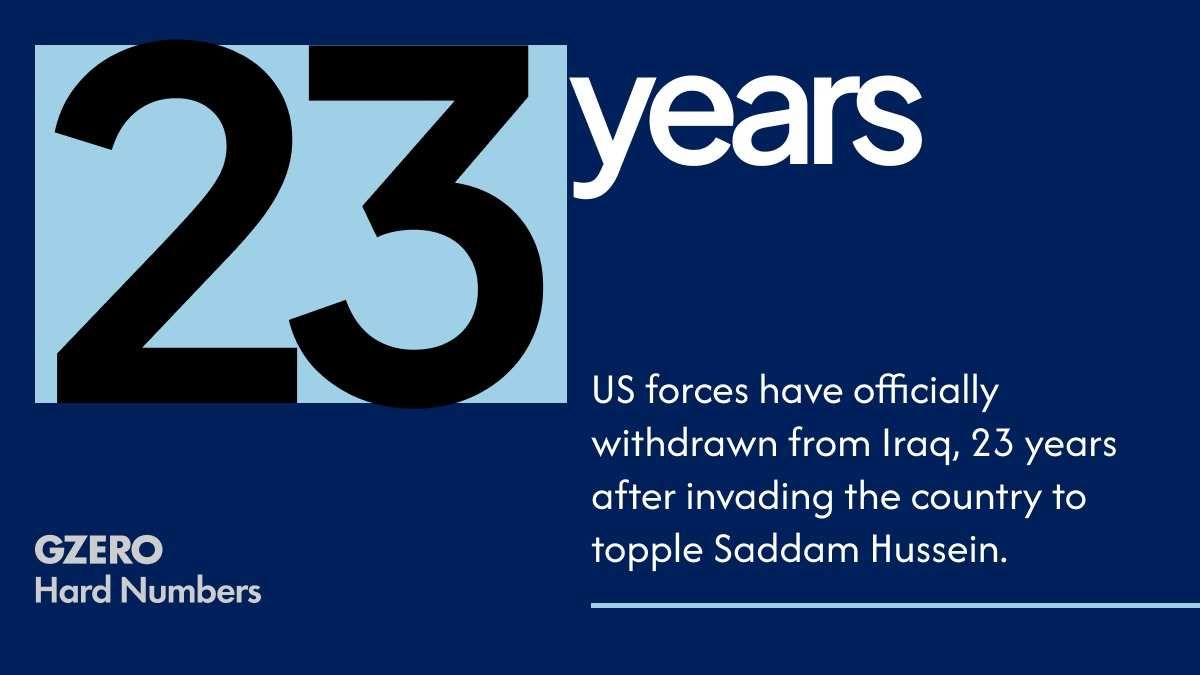
This is actually the second time the US has left Iraq. The first was in 2011, when Washington ended the occupation which began with the 2003 invasion. But US forces returned in 2014 to lead a multinational fight against ISIS, the jihadist militant group born amid the chaos and sectarian strife triggered by the original US invasion. Today’s exit saw the last 2,500 US troops leave Erbil, capital of Iraq’s semiautonomous Kurdish region. “Our happiness is mixed with fear,” an Iraqi photographer told the New York Times. The US invasion removed a hated dictator but touched off violence and sectarian clashes that claimed at least 300,000 lives, and gave rise to jihadist groups like ISIS. Iraq’s fragile democracy faces immense pressures today as it balances between Iran — which backs powerful Shia militias in Iraq — and the US, which has demanded that Baghdad rein in Tehran’s influence.
More For You
The US and China are racing to develop increasingly powerful AI, but what does it actually mean to win? Former White House AI advisor Ben Buchanan joins Ian Bremmer to discuss the geopolitical stakes of superintelligence, the growing risks of AI development, and how democracies can compete without sacrificing their values.
Most Popular
- YouTube
Look on the bright side. #PUPPETREGIME
- YouTube
At the 2026 Paris Peace Forum, former Georgian President Salome Zourabichvili reflects on why Western democracies failed to respond more forcefully to Vladimir Putin’s efforts to expand Russian influence over neighboring countries and challenge European security, despite years of warning signs.
As voters spend more time scrolling through social media on their phones, politicians are following them. Long reliant on horizontal TV ads, candidates are increasingly embracing short, vertical videos to grab voters' attention and get their message out.
© 2025 GZERO Media. All Rights Reserved | A Eurasia Group media company.