September 21, 2026
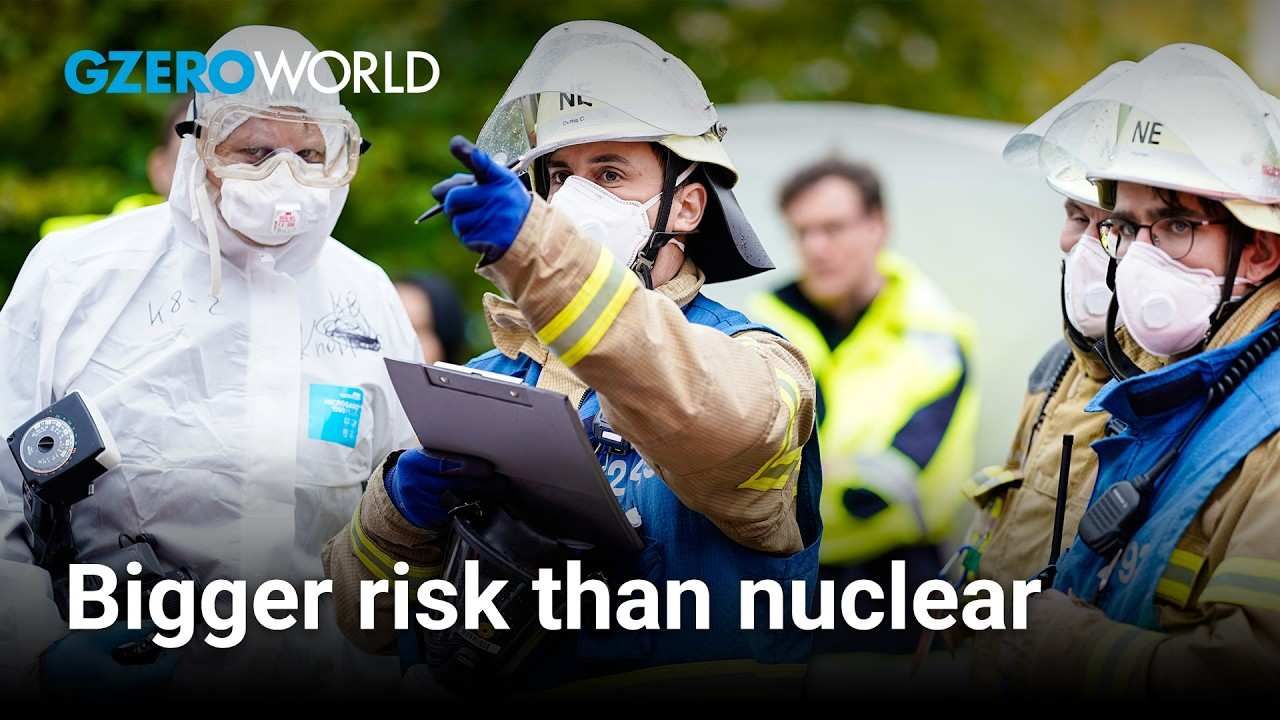
Nuclear war has long represented the ultimate doomsday scenario. But investigative journalist and author Annie Jacobsen says biological warfare may pose an even greater overall threat, in part because the barriers to developing a bioweapon are dramatically lower.
On GZERO World, Jacobsen explains to Ian Bremmer why nuclear weapons require closely guarded materials, enormously expensive delivery systems, and decades of technical expertise, while many of those obstacles don’t exist for biological weapons.
And as artificial intelligence makes sophisticated scientific expertise easier to access, that gap could grow even wider. Jacobsen explains why advances in AI are changing the biological threat landscape – and potentially putting dangerous capabilities within reach of more people.
More For You
Brazilian voters arrive at a polling station at Cidade Universitaria to cast their ballots in the second round of Brazil's presidential election in Lisbon, Portugal, on October 25, 2026.
Luis Boza via Reuters Connect
Elections have been taking place around the world in recent weeks – and if there’s one thing they have in common, it’s this: voters are fired up.
Most Popular
Airlines across the continent have been affected by threats, now in their second week, with some planes making emergency landings or being escorted by fighter jets.
Did the midterms tank Vance's 2028 chances? | The Debrief with Clayton Allen
On The Debrief, Clayton Allen explains why the vice president’s ties to Trump—and dependence on a fractured MAGA coalition—could make 2028 a race he chooses to skip.
From shopping to services, consumer spending is showing strength across categories. Holiday shopping got an early start, and it’s not just higher earners filling their carts. Bank of America Institute sees continued spending growth recovery for lower- and middle-income households. See what’s driving the trends.
© 2025 GZERO Media. All Rights Reserved | A Eurasia Group media company.