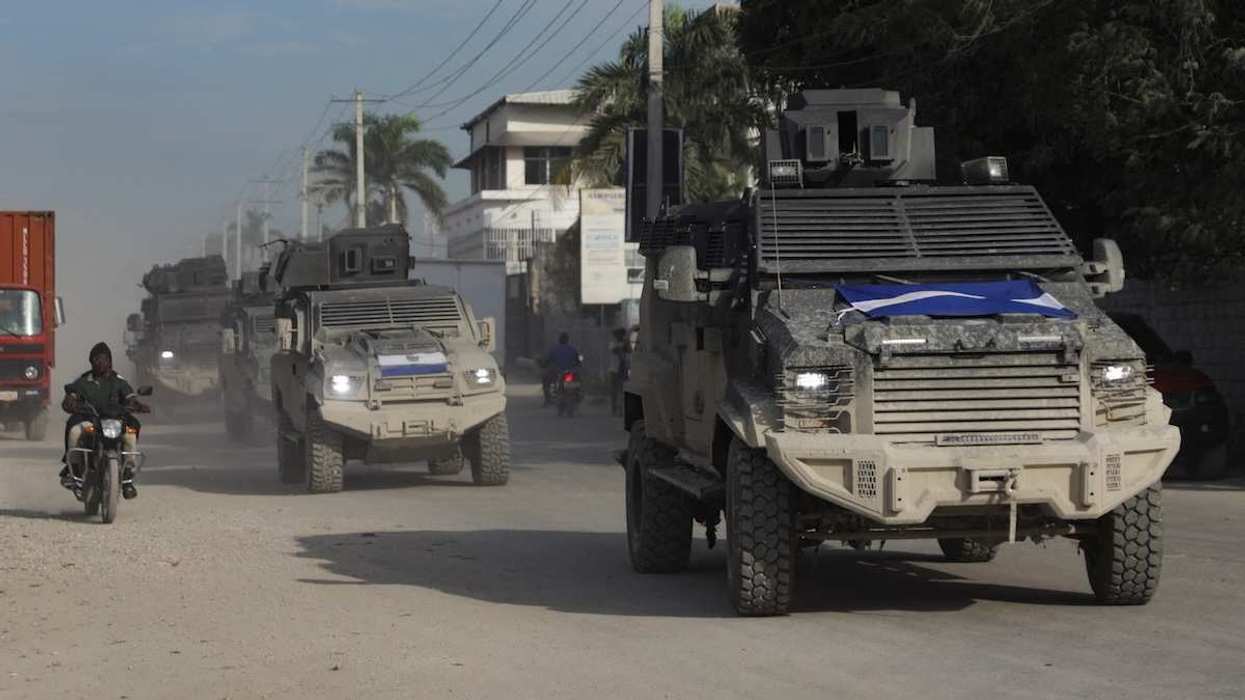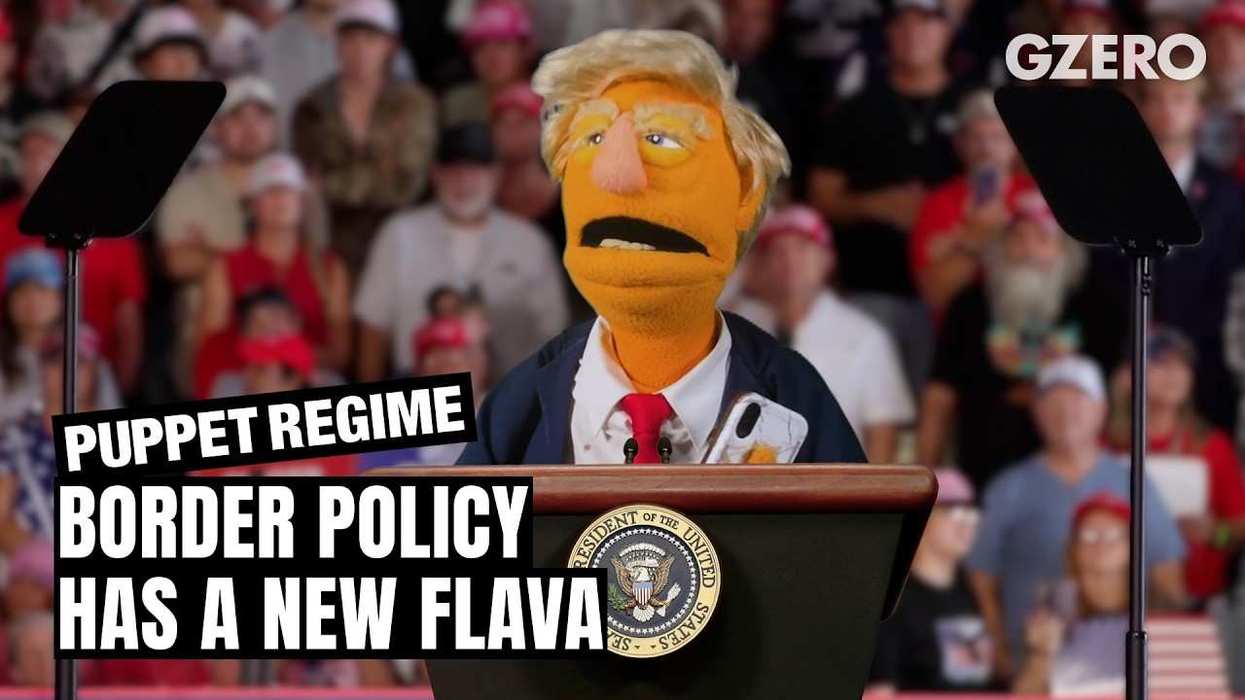
Over the past two weeks, President of El Salvador Nayib Bukele has sent around 2,000 troops to Haiti to rescue four Salvadoran nationals working in Haiti who were kidnapped by gangs. But the self-proclaimed “world’s coolest dictator” may have bigger ambitions. In a series of social media posts, he's drawn parallels between Haiti's struggles with gang violence and El Salvador's own gang-ridden past, saying that he’s preparing to tackle Haiti’s years-long security crisis.
“We have already finished with the gangs in El Salvador, and we can finish with you too,” Bukele wrote.
It’s a gamble for a president who has recently earned street credit for doing just that at home. Since taking office in 2019, Bukele has virtually eliminated the gang violence that once plagued El Salvador, earning him sky-high approval ratings and admiration from other right-wing leaders in Latin America. Why would Bukele risk his reputation by venturing into one of the world's most intractable security crises? And could exporting the "Bukele model" backfire?
A tale of two countries. Both Haiti and El Salvador have been plagued by gang violence, but their situations are vastly different. In Haiti, armed gangs control roughly 90%of the capital of Port-au-Prince, as well as large sections of the country. These gangs have filled the vacuum left by the state since the assassination of President Jovenel Moïse in 2021, and have even formed loose alliances to counter attempts by the state to oust them. Currently, 1.5 million people are displaced because of gang violence, and almost 6 million people – about half of the population – face severe hunger. Late last year, the UN created and deployed a Gang Suppression Force (GSF) to address the situation. About 2,000 GSF troops are on the ground tasked with restoring order, but have struggled to make any progress amid funding and logistical delays.
El Salvador, meanwhile, has undergone a remarkable transformation under Bukele. Once one of the most dangerous countries in the world, it has seen homicide rates plummet from 58 homicides per 100,000 people in 2018 – the year before Bukele took office – to just 1.9 in 2024. Bukele arrested and imprisoned tens of thousands of suspected gang members around the country, often holding them for long periods without trial and drawing condemnation from human rights groups. But the successful crackdown has also made Bukele extraordinarily popular at home, with some polls putting his approval rating above 90%.
Is Bukele too big to fail? Central America expert at Eurasia Group Yael Sternberg doesn’t think Bukele has much to worry about. “I see no situation where this hurts,” Sternberg says. She explains that Bukele – who entered politics with a background in public relations – is obsessed with maintaining his popularity and constantly looking for new ways to project strength. To Bukele, Haiti offers another opportunity to do just that. What’s more, taking on Haiti could be a great way to earn favor with the Trump administration, which has been reluctant to take a role – militarily or through significant aid – in Haiti.
Sternberg also doesn't believe Bukele is actually preparing for a prolonged military campaign. El Salvador has pressing economic problems of its own – high public debt and poverty rates – and she argues that Bukele is far too conscious of his public image to risk getting bogged down in an expensive foreign conflict. “They can't pay for that,” she says. “They have other things to do [domestically] that are really important to them." Instead, she expects a quick operation that allows him to project strength without taking on the responsibility of fixing Haiti.
The problem is not as simple as Bukele thinks. Haiti expert Jake Johnston at the Center for Economic and Policy Research believes Bukele may be underestimating the risks he’s taking. To start, Haiti is a very different country from El Salvador. Its gangs are deeply intertwined with political and business elites, and the state is far weaker. Bukele’s crackdown succeeded in part because he could wield the full power of the Salvadoran government, from the police to the courts and prisons. In Haiti, Johnston notes, he has none of those options. “You can’t replicate that in Haiti,” Johnston says.
Even if Bukele does make headway with the gangs, Johnston says it won’t be enough. Often Haitian security forces reclaim territory from gangs only to lose it again because the government lacks the capacity to establish a presence in the area. Without functioning state institutions to take over, any military gains would quickly evaporate.
There’s also the politics to worry about. If Salvadoran soldiers start coming home in body bags, the intervention could quickly become a political liability for Bukele. Even a swift withdrawal could be difficult to spin as a victory. “You’re far more likely to end up with a headache that blows back on you politically than you are to be received as a savior,” Johnston said. That leaves Bukele with a dilemma: stay and risk getting dragged into a prolonged conflict, or leave without accomplishing much.
What Haiti needs. But beyond whether Bukele's gamble pays off, a more important question remains: will it actually help Haiti? Johnston argues that while military force may be necessary to push back the gangs, lasting stability will require functioning institutions, a credible political process, and a government capable of maintaining control over territory reclaimed from armed groups, which he does not think El Salvador can – or will want to – provide.
As Johnston says, Bukele may not fully grasp the task in front of him: “What is the vision? What is the plan?”