The Democratic Party has flipped the House and the Senate. While there are still votes left to be counted and races yet to be determined, the Democrats' victory is unambiguously big – at least 54 Senate seats and approximately 258 seats in the House. In the Senate, Democrats won unexpected victories in Kansas (which had not elected a Democratic senator since 1932) and Texas (which had not elected one since 1988). Meanwhile, House wins stretched into districts recently gerrymandered by Republicans. Across state and congressional races, Democrats found success in parts of the United States where the party had not been competitive in generations.
While the president's party historically loses midterm elections, the scale of Republican losses is among the largest in decades, exacerbated by the Trump administration's historic corruption, war in Iran, unpopular tariffs, and focus on vanity projects – from ballrooms to arches – that aren't voter priorities.
It's a loss that will have far-reaching ramifications for the final two years of the Trump administration and the 2028 presidential election. But before looking ahead to the next election, I want to evaluate what I got right and wrong in my top three calls for the midterms. And what that record means for the remainder of Trump's time in the Oval Office.
Call 1: Democrats will win both the House (with at least 20 seats flipping blue) and the Senate (with a majority between 51 and 53 seats). And if I'm wrong, it's because I was too cautious in my prediction.
In my Quick Take on Monday, I laid out my expectations for a blue wave, spurred by Trump's low approval ratings and the global anti-incumbent trend in elections. I got the margin wrong but the direction of my error right. Democrats exceeded even optimistic predictions for their performance.
Not only did James Talarico defeat scandal-plagued Republican candidate Ken Paxton in the Texas Senate race, but Gina Hinojosa also defeated longtime Republican incumbent Governor Greg Abbott. Democrats flipped North Carolina on the strength of former Governor Roy Cooper's campaign, but they also managed to pick up the much harder seat in South Carolina, with Annie Andrews defeating Senator Darline Graham. Democrats didn't just win their target House seats, they flipped many that few thought competitive – such as North Carolina's 9th District, where perennial Democratic candidate Richard Ojeda (who'd previously run in West Virginia) defeated Rep. Richard Hudson, Chair of the National Republican Congressional Committee.
Call 2: Trump might claim the election was rigged, but he won't be able to do much about it. We will have free-and-fair elections and a peaceful transition of power in Congress.
Before Tuesday, there was a considerable amount of speculation that Trump would attempt to rig the midterms: seizing ballot boxes, sending ICE into polling places, or refusing to seat newly elected members of Congress. My take was that Trump did not have the ability – or focus – to overturn the results. The checks on his authority, including state control of elections and skeptical courts, would prevent any serious effort to ignore the will of the voters.
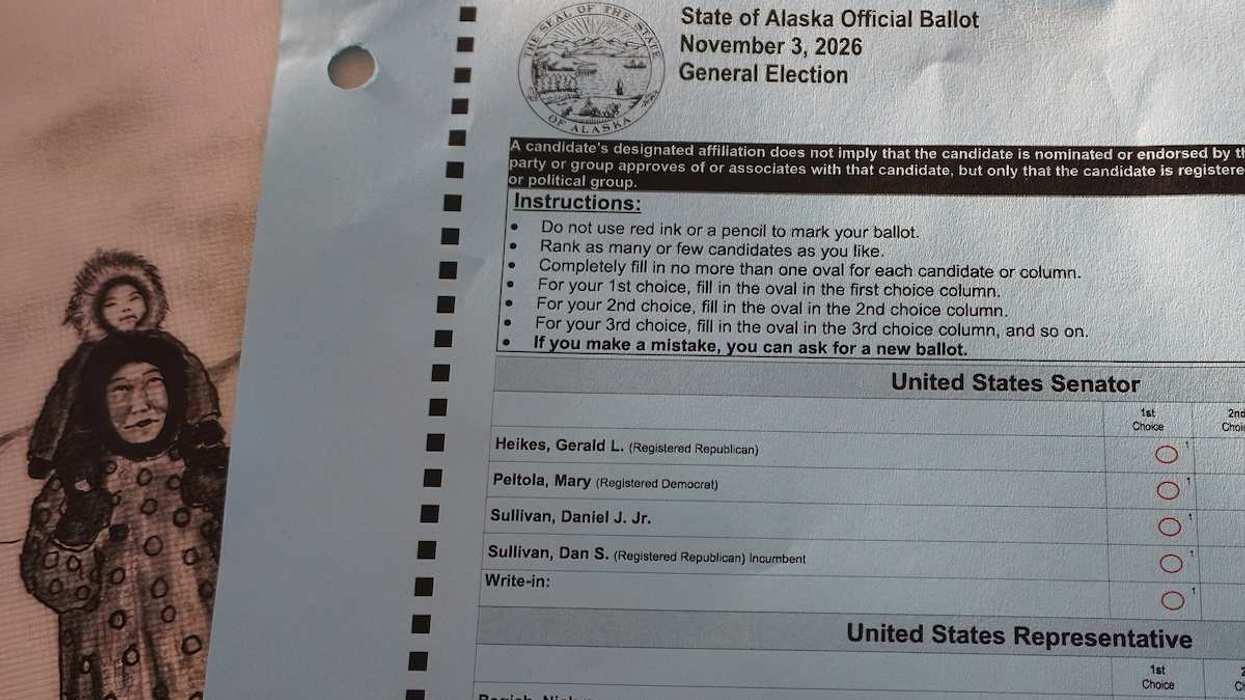
Even before the midterms, evidence backed up this call. After reporting by the New York Times revealed that individuals associated with former Congresswoman Mary Peltola's campaign were behind the running of a second candidate named Dan Sullivan in Alaska's Senate race against incumbent Republican Senator Dan Sullivan, the Trump administration sought to prevent the state from certifying a loss by the incumbent senator, if the additional Sullivan on the ballot decided the election. A federal judge threw out the suit, and Sen. Sullivan stated he would accept the election results – which we still haven't learned in a razor-tight race.
The administration also sued the state of California before the election, claiming – without offering much evidence – that 20,000 voters on the state's rolls were noncitizens whose ballots shouldn't be counted. After losing in the lower courts, the Department of Justice took the case to the Supreme Court, which quickly rejected the request.
Election Day went smoothly in Alaska, California, and the rest of the country, and there's no evidence to suggest that there will be any impediment to Democrats taking office in January. Even if the Trump administration wanted to overturn the election results, the scale of the Republicans' loss makes it all but impossible to do so. To his credit, Trump quickly confirmed he would accept the outcome and seek to work with Democrats. (He also claimed Republicans lost because he was not on the ballot.)
Democracy – for all its messiness – is still able to deliver peaceful, effective transfers of power in the United States.
Call 3: We're past peak Trump. The midterms will offer proof of that and accelerate the decline of his influence.
For months, I've made the case that we are past the peak of Trump's ability to disrupt the international order. Before Tuesday, I would have argued that with only two years left in his term, cratering domestic political capital, increasing checks on his power from the Supreme Court, and the backfire of his war in Iran, Trump was no longer able to dictate the course of global events. That did not eliminate all risk associated with his presidency – especially as his administration rules out significant regulation on artificial intelligence, while safety incidents mount – but Trump's power on the international stage had become a wasting asset.
After the midterms, I'm only more confident in that take. Beyond the oversight from newly elected House and Senate Democrats, the widespread losses by the Republicans will increase the likelihood that members of Trump's own party will defect from his coalition. That does not mean that a wave of House and Senate Republicans will immediately begin criticizing the administration's actions in Iran or its immigration enforcement policies – Trump will maintain considerable influence in Republican primaries. But there will be a gradual increase in Republicans willing to balk at the Trump administration's talking points as they search for a more effective message ahead of 2028.
That dynamic will be heightened by the uncomfortable but unmistakable fact that Trump is losing coherence at the age of 80. Much like President Biden in the later years of his presidency, Trump was increasingly erratic on the campaign trail – repeating the same story multiple times within one speech and making more than twice as many "rambling or confusing digressions" as he did ten years ago, according to an analysis from the New York Times. There have also been numerous moments in which the president appeared to say his internal thoughts out loud, including repeatedly commenting on the physiques of men and women around him and launching a racist tirade against Somali Americans.
I can't evaluate Trump's mental state, but I can evaluate the political implications of the public perceiving him as having lost a step (with nearly half of the country already having thought Trump was experiencing cognitive decline earlier this year). Concerns over President Biden's mental acuity led to a revolt in his party against him, ultimately sinking his reelection campaign. Trump can't run for a third term (no matter what Steve Bannon says), but Republicans hoping to lead the party in 2028 and beyond can still desert him.
There will be some cabinet members interested in staying close to Trump – due to genuine loyalty or a desire to exploit commercial opportunity through their office – but politicians angling for a future in elected politics, such as presidential hopefuls Vice President JD Vance and Secretary of State Marco Rubio, will face pressure to show their independence. And further infighting within the Republican Party will only entrench Trump's lame-duck status.
The midterms are over, but the Trump era is not yet. It has, however, entered a new phase, with Republicans laboring to rebuild the coalition that propelled them to office in 2024 and Democrats hoping their midterms landslide offers them a springboard to victory in 2028. That means we're increasingly talking about life after Trump in a country whose politics has been dominated by him for over ten years now. What that future looks like is still unknown, to America and to the world.
But one thing is known: voters in the midterms have offered a decisive repudiation of a president who has put himself above the country.