October 29, 2026
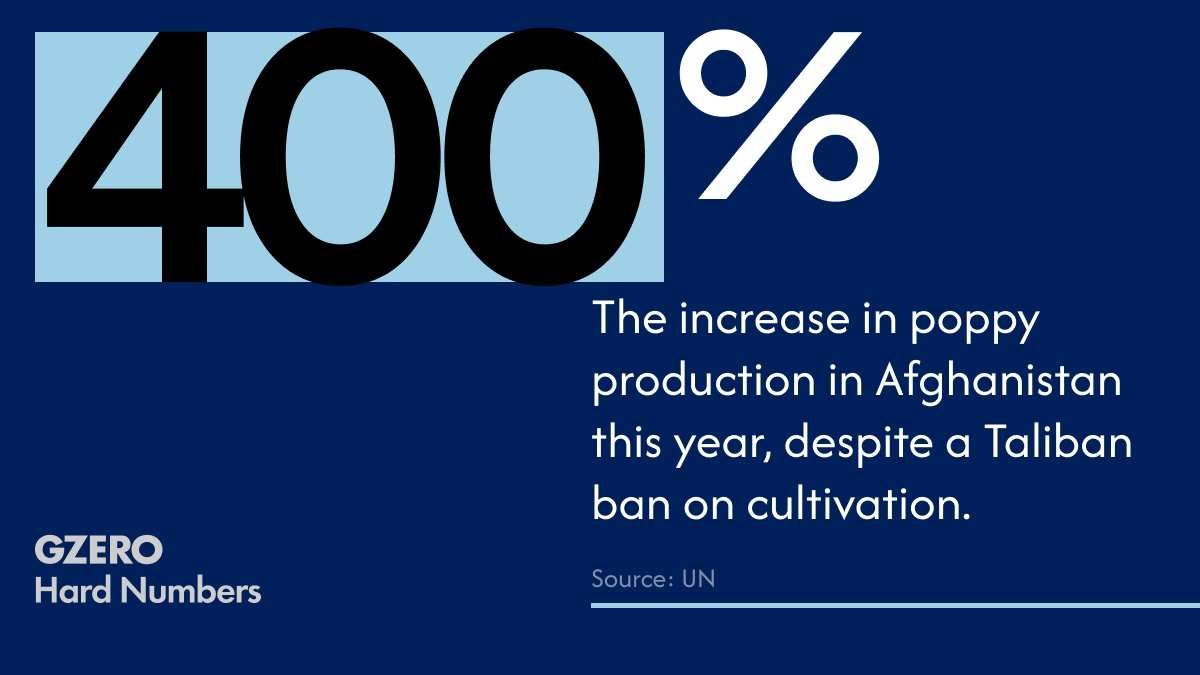
As Afghan farmers struggle with high operating costs and low crop prices, more are taking a risk by illegally growing poppy to feed their families. Poppy is a key ingredient in opium – which can then be used to make heroin – and Afghanistan has long been a major producer. Before the Taliban banned cultivation in 2022, the country supplied more than 80% of the world’s opium. Now, farmers hide poppies among tall cereal crops, harvest them secretly, and sell them on the black market. The surge could have consequences far beyond Afghanistan: a growing supply could drive down drug prices across Asia and Europe.
More For You
Last week, the US’s fertility rate hit a record low: CDC data for 2025 showed that for every 1000 women aged 15 to 44, only 53 gave birth each year, down from 54 the previous year.
Most Popular
Brazilian Senator Flavio Bolsonaro disembarks from a plane after arriving at Opa-locka Executive Airport near Miami, Florida, U.S., October 28, 2026.
REUTERS/Eva Marie Uzcategui
Flávio Bolsonaro, the right-winger who lost Brazil’s presidential runoff to incumbent lefty Lula on Sunday, landed in the Magic City with his family on Wednesday morning.
Are environmental summits a waste of time? | The Debrief with María José Valverde
On the ground at COP17 in Yerevan, Armenia, Eurasia Group's María José Valverde looks beyond the speeches and negotiations at the practical initiatives these conferences can produce: funding Indigenous-led conservation, researching cattle that produce less methane, and attracting investment to restore degraded farmland.
Tens of thousands still remain missing after the RSF’s siege of El Fasher. The RSF also remains in control of the city, and the civil war continues to drag on with seemingly no end in sight.
© 2025 GZERO Media. All Rights Reserved | A Eurasia Group media company.