Three years ago, a military, political, and humanitarian earthquake irreparably changed Israeli and global politics. On October 7th, 2023, Hamas militants killed over 1,200 Israelis and foreign nationals and took 251 as hostages. A catastrophic war in Gaza soon followed. Israel’s military killed over 70,000 Palestinians and displaced more than 1.9 million. In 2026, Israel, Gaza, and the world are still grappling with the far-reaching effects of October 7th—as Israel readies to go to the polls on October 27th, with Netanyahu and his right-wing party Likud facing off against centrist party Yashar, led by Gadi Eisenkot, former Chief of Staff of the Israel Defense Forces.
The debate over Netanyahu’s track record in responding to 10/7 will shape the race, with 68% of Jewish voters stating that 10/7 will be “central” to their vote. Recent headlines have been damaging to Netanyahu on this front, with reporting emerging that UAE President Mohamed bin Zayed warned Netanyahu before 10/7 about the risk of a Hamas attack—a charge that Netanyahu has emphatically denied.
The political implications of 10/7 have also stretched far beyond Israel’s borders, as the global perception of the country has cratered in the wake of humanitarian outcry over the war in Gaza, with a median of 67% of respondents in 36 countries viewing Israel unfavorably. The growing international anger at Israel has been accompanied by a disquieting spike in antisemitism, with last year featuring “the highest number of victims of antisemitic attacks in more than three decades,” according to Tel Aviv University. Netanyahu has long sought to link criticism of Israel’s actions—especially those connected to alleged Israeli war crimes—with antisemitism, which has arguably added further fuel to Israel’s rising internal polarization. Polarization in Israel has grown so acute that it is now considered by the public to be a more of a threat to the country than Iran.
While there is now a ceasefire in Gaza, Palestinians there are still living in an ongoing humanitarian crisis, with 86% of the population residing in 1,739 displacement sites, in which they’re experiencing “extreme overcrowding, unsafe water and sanitation, and widespread rodent infestation,” according to the Danish Refugee Council. The violence has not fully ended, with over 1,400 people having been killed in Gaza since the ceasefire took effect. And the long-term prospects for the improvement of conditions there appear poor, as Hamas remains in control of the strip, and Israel shows little interest in rebuilding Palestinian infrastructure as a result.
Three years ago on 10/7, I released a Quick Take in which I argued, like many others, that this attack represented the equivalent of Israel’s 9/11. Much like the United States before September 11th, Israel before 10/7 was in its strongest geopolitical position in decades—with momentum on normalization agreements with countries historically opposed to the Jewish state (including the UAE, Bahrain, and Morocco) and an overwhelming military, economic, and technological advantage over its regional competitors. At the time, I concluded that Hamas leaders would have perceived this shifting tide in the Middle East as a strategic threat, leading them to launch their attacks on 10/7.
Yet as I said then, the United States overreached in its response to 9/11 with disastrous wars in the Middle East, damaging its international standing, and Israel had to be careful not to do the same thing in response to the tragic loss of so many of its citizens on 10/7. I argued in that video that massive civilian casualties in the coming war in Gaza would lead to a shift in global public opinion, from initial sympathy with Israel’s trauma to the Palestinian cause—a prediction that’s come to fruition and been starkest in Israel’s closest historical ally in the United States.
There was a considerable risk then of the war expanding if Israel found that Iran had aided Hamas, which it historically had supported, in launching the attacks. Three years later, the war in Gaza may be over, but war has broken out with Iran, a conflict launched by Israel and the United States at Netanyahu's urging. While the war in Gaza did not quickly expand, it did spark a broader destabilization in the Middle East, as tensions rose between Israel and its enemies, Netanyahu was emboldened by a rally-around-the-flag effect and a close ally in President Trump's White House, and Israel grew more concerned about potential threats after such a breakdown in its defense on 10/7.
I also questioned at the time how Netanyahu’s government would weather such a catastrophic failure of intelligence and defense planning after Israel had been considered so much farther ahead of its enemies—and even allies—on security for so long. Could Netanyahu, the ultimate political survivor, survive the impending political backlash? His coalition's decision to encourage settlements on the West Bank had forced Israel to dedicate more resources there, a factor which may have weakened its defenses from Hamas forces in Gaza before 10/7. I’d wondered previously whether any number of other scandals would end Netanyahu’s political career, especially his controversial court reform scheme in 2023, which led to protests at a scale Israel had never seen before.
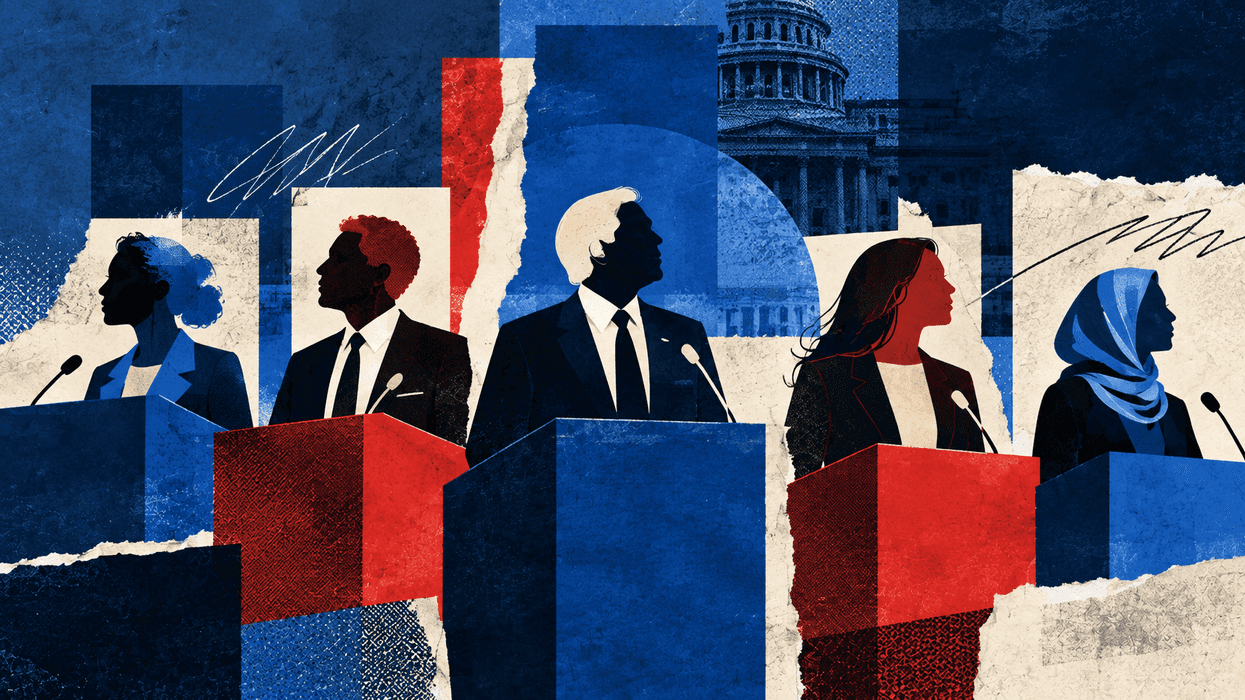
As Israel readies to go to the polls later this month, the voters will ultimately render a verdict over whether Netanyahu was at fault for the failures that allowed 10/7 to happen—and a verdict over his persecution of the war in Gaza, which has reshaped geopolitics in the Middle East and beyond. With polls showing a neck-and-neck race between Netanyahu and Eisenkot, that verdict is likely to be split, failing to resolve the fundamental divides in Israel’s self-identity and its global perception three years after the worst terrorist attack in the nation’s history.