scroll to top arrow or icon

Living
Beyond Borders

GZERO Media and Citi Global Wealth Investments present “Living Beyond Borders,” a special-edition podcast series, as well as articles and graphics that examine how our lives change as the world changes.
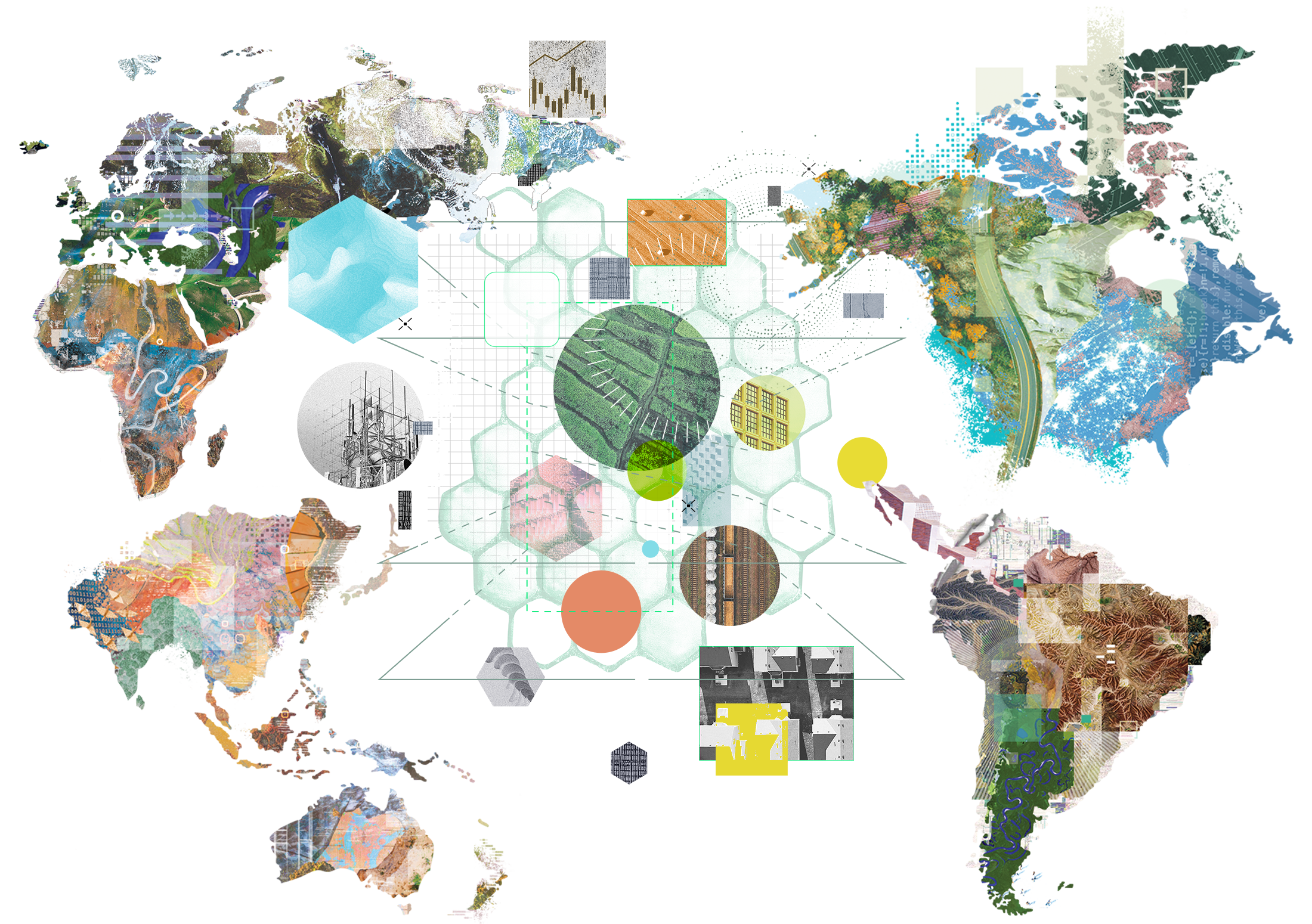
Stylized illustration of a map of the world

Episode 9: What's next in 2023?

Transcript

Listen: "We are coming out of a period of uncertainty," says David Bailin, Chief Investment Officer at Citi Global Wealth. "We've all been thinking it would go much faster than it has, but in the event we get to a more normal economy in 2024, given how vastly impactful COVID was, I think that that's a pretty fast outcome."

In the latest episode of Living Beyond Borders, a podcast produced in partnership between GZERO and Citi Global Wealth Investments, Bailin is joined by Eurasia Group President Ian Bremmer to discuss what's happened so far on the economic and political stage, and what we might look forward to in the back half of the year and into 2024.

Read moreLess

Podcasts

See more

Transcript

Listen: Following shortages that came out of the COVID pandemic as well as the war in Ukraine, the dual food problems of affordability and availability persist. While temporary impacts may be waning, the experts also discuss the longer-term impacts of the global food production system on the environment and what will - or won't - be sustainable going forward, including the food system's massive dependence on fossil fuels. In the latest episode of Living Beyond Borders, Peter Ceretti, Director of Global Macro Geo Strategy at Eurasia Group, Harlin Singh, Global Head of Sustainable Investing, and Malcolm Spittler, Global Investment Strategist, and Senior US Economist, both at Citi Global Wealth Investments, discuss the latest causes and ripple effects of food shortages around the globe.

In Planting for Tomorrow: Weaving sustainability into the path toward food security, a report from Citi Global Wealth and Eurasia Group/GZERO Media, we take a deep dive into the challenges and the innovations in sustainable agriculture. This newsletter gives you an essential look into the future of food.

Check it out here

Read moreLess

Transcript

Listen: "We're entering into another leg of a continued industrial revolution which is going to be marked by collaboration between humans and machines," says Archie Foster, Managing Director and Head of Thematic Equities at Citi Investment Management. "This will include industrial automation, robotics, and AI," he adds.

In the latest episode of Living Beyond Borders, a podcast produced in partnership between GZERO and Citi Global Wealth Investments, Foster is joined by Dev Saxena, Director of Eurasia Group's Geo-technology Practice, to go beyond the hype surrounding generative AI and ChatGPT to understand how it can truly affect the economy and our political systems in the coming months.

Read moreLess

Transcript

Listen: "I think we're entering into a period when it will be more attractive to invest outside of the US and to invest in China and Pan-Asia than we've probably seen in the last few years," says David Bailin, Chief Investment Officer at Citi Global Wealth.

In the latest episode of Living Beyond Borders, a podcast produced in partnership between GZERO and Citi Global Wealth Investments, Bailin is joined by Ian Bremmer, President and Founder of Eurasia Group and GZERO Media, to get the latest on the relationship between the United States and China, and their power over the rest of the world.

Read moreLess

Transcript

Listen: "It actually all comes down to one thing and that's money," says Raad Alkadiri, Managing Director of Energy, Climate and Resources at Eurasia Group. "Will there be the money for investment in renewables, in energy efficiency made available? And I'm not just talking about the industrialized world, I'm talking about globally."

In the latest episode of Living Beyond Borders, a podcast produced in partnership between GZERO and Citi Global Wealth Investments, Alkadiri is joined by Malcolm Spittler, Global Investment Strategist and Senior US Economist at Citi Global Wealth Investments, to look at where the energy transition to renewable fuels stands globally, after setbacks from the pandemic and geopolitical instability.

Read moreLess
Subscribe to our global politics newsletter GZERO Daily

Special Edition Newsletters

Inflation stations!

Articles

The Graphic Truth: ChatGPT breaks the internet

Since ChatGPT, OpenAI's artificial intelligence chatbot, burst onto the scene late last year, AI seems to be everywhere – so much so that it’s become an integral part of our conversations, business dealings, academics, campaign ads, and everything in between.

While being faced with constant reminders of AI’s looming threat or promise, most people still had some catching up to do on what the technology even was — let alone what it could be. And whether you are inspired, afraid, or confused about the future of AI, you probably augmented that train of thought with a trip to Google.

We took a look at Google search history to see how often the most popular AI product, ChatGPT, is crossing humanity’s minds.

How AI will roil politics even if it creates more jobs

Whether artificial intelligence will ultimately be good or bad for humanity is an open debate. But there’s another, more immediate issue that often gets lost in the scrum: Even if AI eventually creates more jobs and opportunities than it destroys, what happens to the actual people who lose their jobs on the way to that happier future? And how might their grievances shape politics in the meantime?

Read moreLess

AI regulation can’t address what people want

The emergence of AI has amplified the problem of disinformation that has proliferated since the 2016 US presidential election, and regulation is often touted as a way to address this worsening issue.

But even if governments do find a way to effectively regulate AI – and that’s a big if – that doesn’t address the widespread demand for conspiracy theories that confirm people’s established political and cultural biases.

Read moreLess

The revolutionary AI upside

In years to come, experts tell us that artificial intelligence will alter societies and change individual lives on a scale greater than changes brought about by the creation of the World Wide Web. In the process, AI will create challenges and risks that deserve careful consideration. But headlines that warn of catastrophe are hiding the revolutionary advances and opportunities that will benefit billions of people.

Read moreLess

Regulate AI: Sure, but how?

AI revolutionaries like OpenAI CEO Sam Altman want government regulation, and they want it now – before things get out of hand.

Read moreLess

New mutual defense agreement, “El Tigre” takes office in Colombia, Pacific Islands split over Chinese missile test

Major new Middle East defense pact signed

Saudi Arabia, Turkey, and Pakistan on a Friday signed a joint defense agreement that characterizes an attack on one as an attack on all. Although it doesn’t spell out specific obligations, the pact brings together Turkey’s formidable army (NATO’s second largest), Pakistan’s nuclear arsenal, and Saudi Arabia’s Gulf sway and sizable financial resources. It comes against the backdrop of the US-Israeli war on Iran — which has failed to dislodge the regime while instead provoking Iranian airstrikes against Gulf countries and a new anti-Saudi blockade by the Iran-backed Houthis. But it also reflects wider regional concerns both about Israel’s aggressiveness and uncertainty about US security commitments. The division of the region into “Abrahamic” and “Islamic” blocs, which Eurasia Group Middle East director Firas Maksad wrote about here, continues apace.

“El Tigre” takes office in Colombia

Abelardo de la Espriella will be sworn in today as Colombia’s president after narrowly winning June’s runoff. His presidency is expected to mark a sharp right turn from Colombia’s first left-wing leader, Gustavo Petro. De la Espriella, the far-right populist outsider also known as “El Tigre,” has pledged to strengthen security ties with the United States, cut government spending, and crack down on crime – echoing the playbook of several conservative leaders elected across Latin America in recent years. He takes office as security dominates public concern in Colombia, where violence, drug trafficking, and criminal activity have surged. But with a deeply divided electorate and only a slim electoral victory behind him, de la Espriella will face immediate pressure to deliver on his promises.

China’s missile test in the Pacific makes a splash

Chinese missile tests always make waves, but small nations in the Pacific hope they aren’t too big – literally. During a Pacific Island nations meeting in Fiji yesterday, eighteen foreign ministers discussed China’s July 6 nuclear missile tests in the South Pacific, which Tuvalu’s foreign minister said landed near the low-lying nation’s territory and sparked tsunami fears among residents. The ministers attempted – but failed – to agree on a joint statement condemning the tests. According to reports, Nauru and Kiribati, both of which have switched diplomatic recognition from Taiwan to Beijing in recent years, refused to sign on to any statement. The deadlock highlights deep divisions among Pacific nations over China’s growing diplomatic presence in the region.