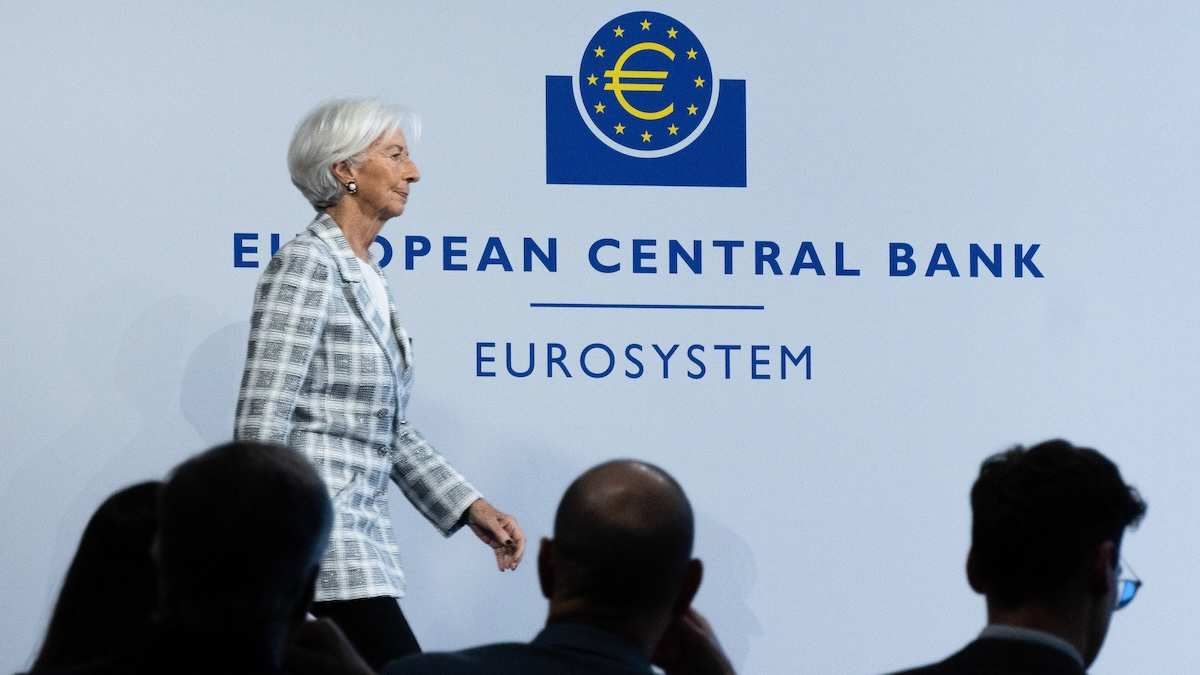
The changing of Lagarde
Christine Lagardeannounced yesterday that she will step down as head of the European Central Bank (ECB) eight months earlier than planned. Lagarde’s early exit will allow French President EmmanuelMacron to play a role in choosing her successor before he leaves office next year. The move will prevent presidential frontrunner Marine Le Pen from having a say in the decision – the second such appointment a Macron successor has lost out on. European leaders are also rushing to finalize a seven-year budget by December, ahead of a potential Le Pen victory. Le Pen, for her part, pledged to dramatically cut France’s contributions to the EU budget, and has pushed for the ECB to intervene to bring down France’s debt costs – moves that will be harder once the EU budget is approved and the ECB chair is replaced.
The darkening debate over daylight saving time
This weekend the US flips its clocks back by an hour in the annual ritual of ending “Daylight Saving Time.” The modern practice of extending summer days by moving clocks ahead by an hour dates back to World War I, when Germany and Austria-Hungary did so to save energy. The US quickly followed. But these days, most Americans find it annoying. So a bipartisan group of US lawmakers,backed by President Donald Trump, wants to scrap the twice-yearly time change and make DST permanent. The tradeoff would be longer winter mornings, and school safety advocates, the ski industry, and even sleep medicine experts strongly oppose it. Trump, frustrated, recentlydoxxed a prominent Republican opponent of the measure, but there’s little chance a bill to make DST permanent will get debated before next year. Only a third of countries in the world have DST, and most are in Europe or North America. What do you think about DST? Let us know here — include your name/location, and we may publish your response.
Massive crypto hack tied to North Korea
Three blockchain analytics companies have said North Korea is likely behind a $6 billion crypto hack of Binance, the world’s most popular cryptocurrency exchange platform, marking the largest cyber heist in history. Binance says it has blocked some of the stolen funds from being transferred and has begun recovering some of the money, though it remains unclear how much. The company has blamed TraderTraitor, an elite North Korean state-sponsored hacking group. Cyberhacking has become the country’s most lucrative source of revenue in recent years, replacing coal and textile exports that have been hampered by global sanctions. Its first major attack came in 2014, when hackers targeted Sony Pictures ahead of the release of “The Interview,” a comedy mocking North Korean leader Kim Jong Un. Since then, North Korea has significantly expanded its capabilities. Last year, North Korean hackers reportedly stole $2 billion in cryptocurrency, accounting for roughly 60% of total global theft.