November 12, 2026
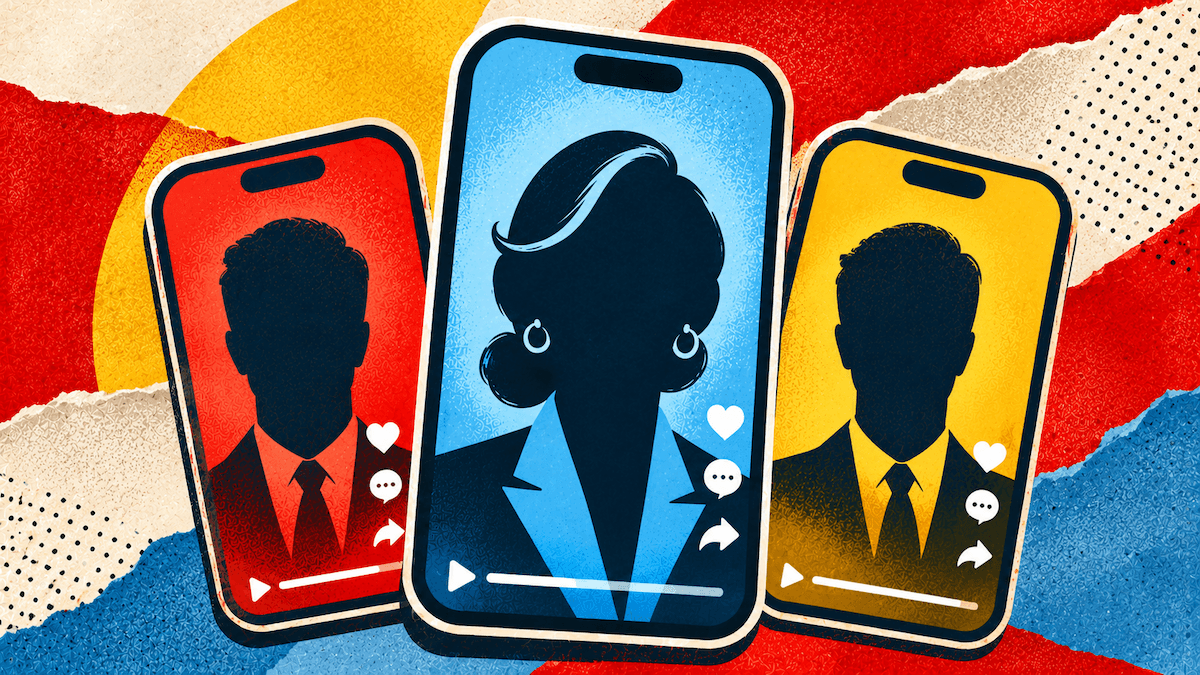
Political campaigns are turning 90 degrees. As voters spend more time scrolling through social media on their phones, politicians are following them. Long reliant on horizontal TV ads, candidates are increasingly embracing short, vertical videos to grab voters' attention and get their message out.
During the recent US midterms, candidates flooded social media with these videos, often borrowing Gen Z slang and speaking directly to the camera. Abdul El-Sayed took to Instagram Reels to tell voters about the value of volunteering. James Talarico posted a video of him leaving a voicemail for his opponent, Ken Paxton, inviting him to debate. Vivek Ramaswamyvisited polling sites on Election Day, taking voters with him via short-form video on his Instagram page.
These bite-sized clips are now a staple of campaigns. New York City Mayor Zohran Mamdani relied on punchy, high-energy clips during his 2025 campaign to turn out young progressives. In Germany, candidate Heidi Reichinnek’s TikTok presence helped far-left party Die Linke defy polling to win 64 Bundestag seats. Brazilian President Luiz Inácio Lula da Silva urged people to vote in the runoff this fall using direct-to-camera vertical videos posted to his social media, helping him win an unexpected fourth term.
While politicians have used social media for nearly two decades, short-form, direct-to-camera videos targeting voters who rely on their phones for news – often young people – are growing, particularly in the US. Between 2020 and 2024, US political ad spend on digital platforms grew 156%. So what do politicians gain from going vertical?
Social media costs less. Running for office is costly. Political advertisers spent an enormous $11.9 billion on ads during the 2026 midterms, nearly 86% of which went to TV ads, while just 15% went to digital. But social ad spend can buy much more targeted access to voters, often for less.
“[Social media campaigns are] much cheaper than the typical million-dollar TV spend,” explained Maria Comstock, a political social media strategist and content creator who worked on Kamala Harris’ 2024 presidential campaign. “And they’re very, very microtargeted in a way that you cannot achieve on the radio and TV.”
While a traditional national broadcast ad costs from $25-$40 per 1,000 impressions, it costs just $6-$15 to reach the same number of people on a Meta platform, according to analysis by digital and TV marketing platform Vibe. On top of that, candidates can pay to target their videos on social media, helping them reach the types of people they think they can mobilize or convince, using the data platforms collect on users.
Reaching young voters. For many politicians, speaking directly to camera (and by extension, voters) lets them build rapport, and helps get their content in front of those most likely to vote for them.
“[Politicians] develop their own media approaches and they have their own platforms which they’re using to speak directly to their users,” said Matt Walsh, a professor at Cardiff University who researches social media’s role in UK political campaigns.
This is especially true when it comes to reaching and mobilizing young voters. Almost 40% of young people use social media as their main source of news, up 18% from a decade ago, while 60% of 18–24-year-olds say they feel they’re "always connected to the internet." Vertical videos, in particular, also lead to longer average watch time and improved click-through rates than other forms of social content, helping get messages across and engage voters.
Short-form campaigning has its downsides, though. Condensing complex political messages into 30- to 60-second videos inevitably limits information. Fifteen years ago, Walsh explained, “social media activity would essentially be written posts, maybe with an image.” Now? “Platforms themselves are more likely to push forward dynamic video content, and there’s no benefit to that kind of textual analysis,” he said.
There’s also a loss of traditional fact-checking and interrogation – politicians speak directly to voters rather than through moderated mediums. “You have these people who are taking on your message and rebroadcasting your message to a supportive audience without the traditional journalistic fact-checking and interrogation that would take place,” Walsh said.
Still, Comstock argues that politicians have to be realistic about where voters consume news. “Whether or not you think it’s undignified to be on Instagram, like it or not, it’s where the attention economy is, and it's where the battlefield is being fought,” she said. “That’s where the majority of these voters are.”
The numbers back this up. Talarico, for example, has racked up over 43 million likes on videos posted to his TikTok account. There are another 31,400 posts on the platform tagged “jamestalarico.” El-Sayed has 51 million likes and 33,000 posts tagged with his name. Meanwhile, operating with the username of just “jon,” Jon Ossoff has 1.1 million followers on the platform – and counting.
The campaign never ends. For politicians, social media’s value doesn’t disappear once the votes are counted. Keeping voters involved beyond the campaign lets politicians build relationships even when they’re not trying to win office – especially among young people, where a majority (51%) trust individual creators – people who make native content for social media – more than traditional news (39%).
British PM Andy Burnham has been keen to continue the momentum he has with voters, taking to voters’ feeds to tell them how he’s working to make their lives better – an effort that might have helped the Labour Party increase its support by 7 points in as many months and overtake far-right party Reform UK. His videos include giving his “elevator pitch” on the budget while taking an elevator and climbing a ladder to talk about plans to help people get on the housing ladder.
“I think that Burnham’s approach is pretty much a permanent campaign approach,” said Walsh. “Part of the way he’s running that permanent campaign is to say, ‘Look, we understand there’s lots of irritating little things about modern life that you want to change… I'm doing that. I'm solving a problem for you here. I'm solving a problem for you there.’”
Staying in campaign mode isn’t always easy, especially with the pressures of holding office. But staying popular and relevant for young voters means staying online and producing regular, engaging vertical content.
“If you want to run an effective campaign, especially with mobilizing the youth vote, which is becoming ever more necessary, you just have to be on social media,” Comstock said.
More For You
- YouTube
In this ‘ask ian,’ Ian Bremmer looks at the fallout from Nvidia CEO Jensen Huang’s resignation and what it reveals about the challenges facing the US in its competition with China over artificial intelligence.
Most Popular
This week, a UK court overturned a law criminalizing homosexuality in Trinidad and Tobago.
Protests in Spain ahead of elections, New Congress takes shape, El Salvador angers US officials
Nov 11, 2026
November 11, 2026, Barcelona, Catalonia, Spain: Protesters march through Barcelona during a nationwide general strike over Spain’s housing crisis and demands for higher wages.
ZUMA Press Wire via Reuters Connect
Spanish workers are taking to the streets today for the country’s first general strike in 14 years, protesting against a severe housing crisis and soaring living costs.
- YouTube
Can the US beat China in the AI race without putting democracy itself at risk? Former White House Special Advisor on AI joins Ian Bremmer on GZERO World.
© 2025 GZERO Media. All Rights Reserved | A Eurasia Group media company.