What We're Watching
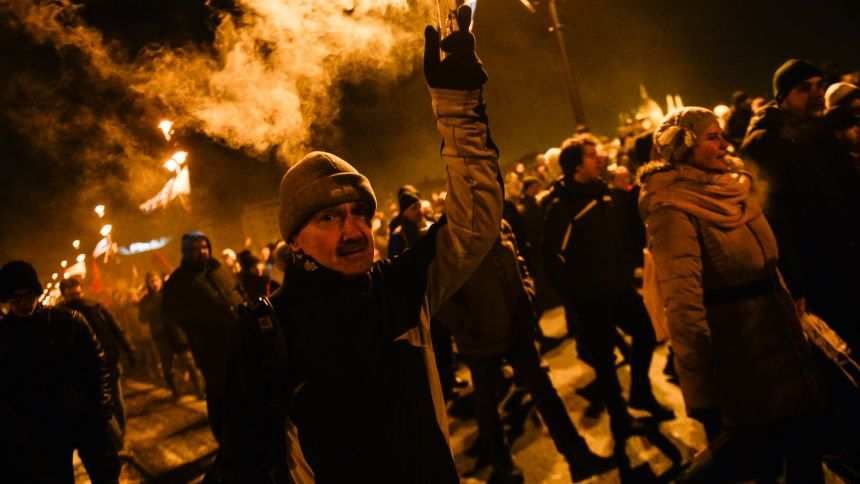
Protests in Hungary – Starting last week, thousands of anti-government protesters have hit the streets in Hungary. The unrest began when the government of Prime Minister Viktor Orban forced through a new labor law that permits bosses to demand 400 hours of overtime annually and to delay paying workers for those hours for up to three years.
The measure aims to solve Hungary's chronic labor shortages without accepting more immigrants, whom Orban often demonizes. Hungary's unions said hell no, opposition parties and students got behind them, and the protests have morphed into a broader backlash against Mr. Orban's crackdown on democracy and civil society. Footage of police beating an opposition politician has further inflamed the situation. Will Orban back down on an unpopular law or will he crack down on the streets, risking a more serious political crisis?
A new army in the Balkans – Last week, Kosovo's parliament voted to create a national army. The move provoked an angry response from neighboring Serbia, the country from which Kosovo gained independence in 1999 after a brutal war. Serbia says it's worried about the security of Serb minorities in predominantly ethnic-Albanian Kosovo. NATO also opposes the move, given the potential for instability in the region. Kosovo says it should be entitled to an army like any other country, though under the UN-brokered terms of its independence, Kosovo's constitution doesn't allow it. The US government has broken with NATO on this, by firmly backing Kosovo's position. The move is symbolic for now — the parliament's plan would take ten years to realize — but as tensions throughout the region continue to simmer, we're keeping a watchful eye even on symbolic gestures.
What We're Ignoring
Mexico's ambitious oil goals — Mexico's new left-wing president, Andres Manuel López Obrador, wants to make the country self-sufficient in oil and fuels. He's proposed massive new funding for Pemex, Mexico's heavily-indebted state oil company, and wants to build a new $8 billion oil refinery in his home state of Tabasco. Mr. Lopez Obrador's plan for Mexico's once-vibrant oil industry is ambitious: he wants to boost Pemex's oil production by 50 percent over the next five years. But it looks like a long shot, as it would require reversing 14 years of steady decline in oil output due to mismanagement, high debt, and low oil prices.
Putin's bid to become Tsar of all the Rappers – The Russian president doesn't like rap music. Its glorification of "drugs, sex, and protest" poison the Russian language, culture, and nation, he says. His curmudgeonly objections aside, Putin also says it's impossible to outlaw the genre – which is hugely popular among younger Russians. Instead, he wants instead to "regulate" it. What that means isn't clear, but his comments come amid a growing clash between Russia's hip-hop scene and the government that's seen shows cancelled, rappers jailed, and Soviet poets pressed into service in an attempt to prove that rap is actually Russian. Putin generally plays a weak hand well, but taking on an entire musical genre seems like a losing battle. Does he really think he's bigger than hip hop?