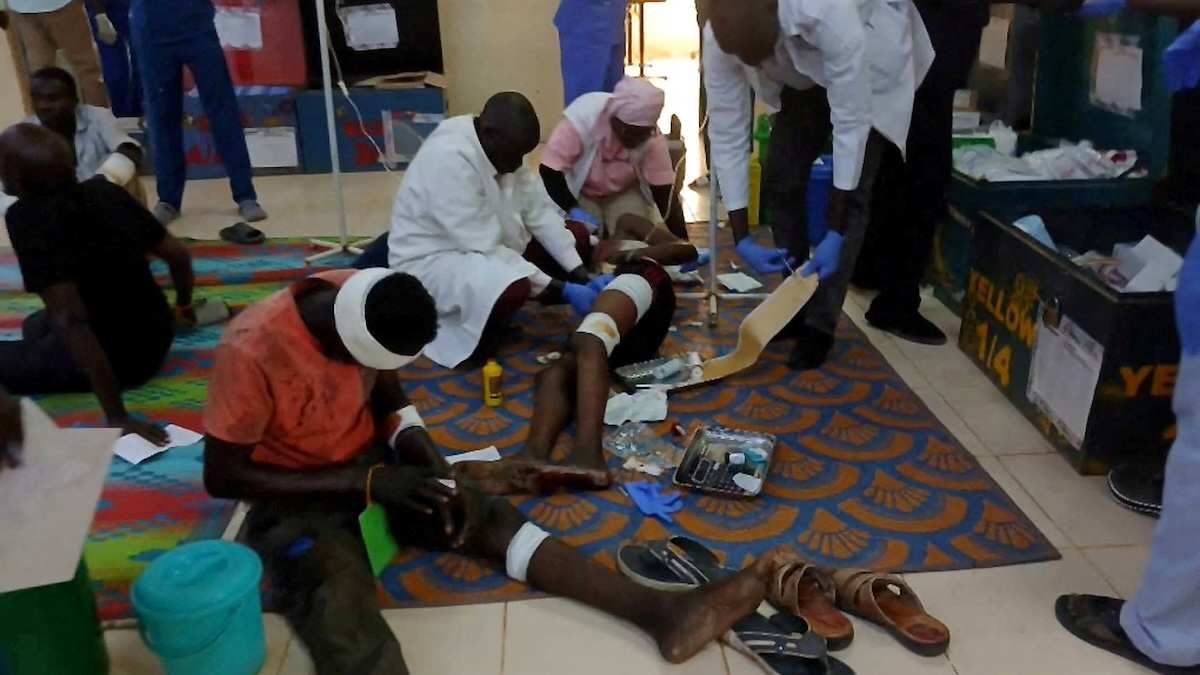
Drone strike raises tensions between Sudan and South Sudan
South Sudan is accusing neighboring Sudan of launching a drone strike that killed at least 73 people at a market in Abyei, a disputed, oil-rich region of roughly 4,000 square miles claimed by both countries. The attack has heightened tensions between the two states, which split in 2011 after South Sudan gained independence following decades of civil war. Why might Sudan attack the South? Since 2023, Sudan’s government has been locked in its own brutal civil war against the paramilitary Rapid Support Forces (RSF) group. Khartoum has long accused South Sudan of helping move weapons to the RSF and of allowing RSF transports to refuel in Abyei, allegations that South Sudan denies. If South Sudan retaliates for Monday’s strike, it could open another front in Sudan’s already devastating war.
Six months after election, Romania to form government
Romania’s parliament has finally formed a government, with independent Prime Minister Luca Niculescu presiding over a minority government. Since elections were held in May, President Nicușor Dan has failed three times to form a government. After months of deadlock, the parties chose compromise over snap elections that would likely have been won by the populist ultra-right Alliance for the Union of Romanians. But that’s not the end of the story. The current deal between the center-right National Liberal Party and the center-left Social Democrats gives both parties six months to negotiate a more permanent coalition. Romania, which has the EU’s largest budget deficit, has been plagued by political instability in recent years. Polarization has only deepened since the 2024 presidential election, when Romania’s Constitutional Court overturned far-right populist Călin Georgescu’s first-round victory amid claims of Russian interference.
Colombia revives territorial spat with Nicaragua
President Abelardo de la Espriellathreatened on Monday to unilaterally redraw his country’s maritime border with Nicaragua in order to expand Colombia’s territory. Under a 2012 International Court of Justice ruling that affirmed Colombia’s sovereignty over an archipelago off the Nicaraguan coast, Bogotá lost thousands of square miles of maritime territory. De la Espriella, a right-wing populist who won the presidency earlier this year, said the waters are Colombia’s “homeland” and that he will use force to defend them. Maritime sovereignty in the western Caribbean is not historically a hot-button issue in Colombia — unlike, say, Venezuela’s long-standing claims to the oil-rich Essequibo region of Guyana. But De la Espriella, who has a flair for the theatrical, may be testing the waters, as it were, to see whether it’s an issue that can stoke nationalist sentiment.