Today, we have the lowdown on the first Board of Peace meeting, examine whether Bangladesh will enact constitutional reforms, and explain the US military build-up in the Middle East.
- The Daily crew
The man at the center of the Board of Peace
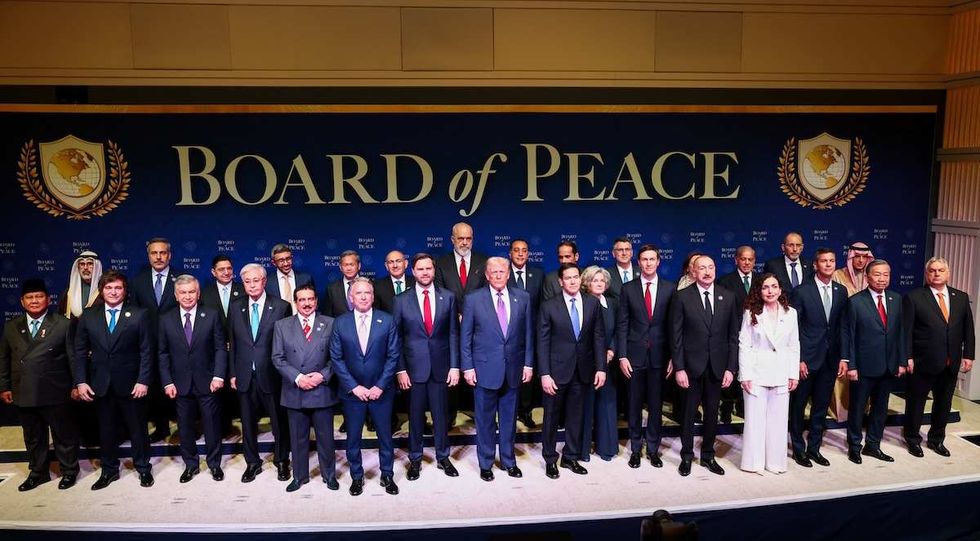
REUTERS/Kevin Lamarque
Argentina, Armenia, Belarus, Egypt, Indonesia, Jordan, Pakistan, Paraguay, Vietnam – to name only a few.
The eclectic group could pass for the roster of a niche Olympic sport. In fact, it is part of the membership roll of US President Donald Trump’s newly-minted Board of Peace, which meets today for the first time in Washington, D.C.
Despite a logo that only highlights parts of the Western Hemisphere – a visual nod to Trump’s “Donroe Doctrine” – the Board’s members span the globe. What unites them is something more pragmatic, according to Elliott Abrams, a Middle East expert at the Council on Foreign Relations.
“They are unified by a desire to avoid offending President Donald Trump,” Abrams told GZERO, “and the thought that maybe they would gain something by being on the Board of Peace.”
The group was initially unveiled last month as a “transitional administration” to oversee the redevelopment of Gaza. But its mission has already expanded. Trump now casts the Board’s ambitions in broader terms – as a body tasked with maintaining international peace, and has indicated he believes it could rival the United Nations. It’s a sweeping mandate for a group held together by proximity to one man whose time in power is limited.
"This is a tremendous group of powerful people and brilliant people," Trump said at. the meeting today, "and I think that we can do things a lot of other people would not be able to even conceive of or think of."
Trump has appointed himself the group's lifelong chairman, even as his presidential term has just three years remaining. As chair, he holds the unilateral authority to veto decisions, approve the agenda, and select his own successor. That structure means the group is operating under a time constraint if countries want to work with the current US president while he’s still in office. The limitation is hardly ideal when it’s trying to administer peace in a war-torn enclave like Gaza.
There are also already signs that it is colliding with the UN. On Wednesday, the UNSC held a high-level meeting on Gaza in New York, originally scheduled for today but moved up because it coincided with the Board’s inaugural meeting and would complicate travel plans for members planning to attend both.
The gathering today comes amid questions around the scope of its mission and its potential effectiveness. Many of the US’s longstanding European allies have since refused to join, in part because Trump invited Russian President Vladimir Putin to participate, though the Kremlin has yet to sign on. This week, the Vatican also declined to join the Board.
In their place stands a patchwork group of nations, each making different pledges to the group. The United Arab Emirates, for example, committed $1 billion to the initiative to maintain a permanent seat – an amount even the highest paying countries have not reached in UN dues. Other members, like Indonesia, are preparing to lend thousands of troops to the Board’s International Stabilization Force, which aims to secure Gaza’s streets. As it happens, Indonesian President Prabowo Subianto is hoping to leave Washington this week with a US trade deal in hand.
What, then, can the Board realistically achieve? The task in Gaza is gigantic. Over 60 million tons of rubble need to be cleared — the equivalent of around 162 Golden Gate Bridges. But Abrams is optimistic that the Board can make a “real contribution” in Gaza. For example, if the Board can empower the National Committee for the Administration of Gaza (NCAG), a technocratic Palestinian group, to hire engineers and other qualified people to work on public services, like water, sewage, schooling, and roads, that would mark a massive achievement for the Board.
Securing lasting peace in Gaza is a tougher goal to reach, said Abrams. The International Stabilization Force is taking on this task, but achieving it, Abrams says, relies on Hamas’ disarmament. That’s something the militant group – as well as its political arm – has refused to do. Countries being asked to commit troops to the peacekeeping forces have themselves ruled out attempting to complete this task.
“Security is not provided by school crossing guards,” said Abrams. “Either Hamas is going to give up its arms, or the IDF may take them away, but not to this Force.”
What say you, history? Examples of transnational groups acting as transitional administrators serve as a cautionary tale. In the 1960s, the UN temporarily assumed control of West New Guinea to oversee a transfer from Dutch to Indonesian rule. But the group paid little attention to long-term governance and failed to resolve disputes over self-determination in the territory among the Indigenous population. A more recent example is in the early 2000s: After the invasion of Iraq, a US-led coalition purged former Ba'ath Party members from public life – a move that created a vacuum for extremist groups, and is widely regarded as one of Washington’s biggest foreign policy errors.
Even the successes have come with caveats: NATO’s military intervention in Kosovo in the late 1990s in response to ethnic cleansing by Serbians was widely regarded as a triumph, but reviews of the UN peacekeeping mission installed in the Balkans thereafter were mixed.
Time is of the essence. A US official told reporters that a future president could appoint a representative to the Board. But whether a Republican or Democrat replaces Trump, according to Abrams, neither will want an ex-president interfering with their foreign policy. As such, the Board’s lifespan is tied to Trump’s presidency, meaning it only has three years to bring long-term peace and prosperity to Gaza, or anywhere else.
“I think beyond Gaza, it’s not a serious institution. It's not going to replace the UN,” said Abrams. “It will fade away on Jan. 20, 2029.”
To use an Olympic metaphor: can the Board win gold before then?
Nuclear is back on the global agenda
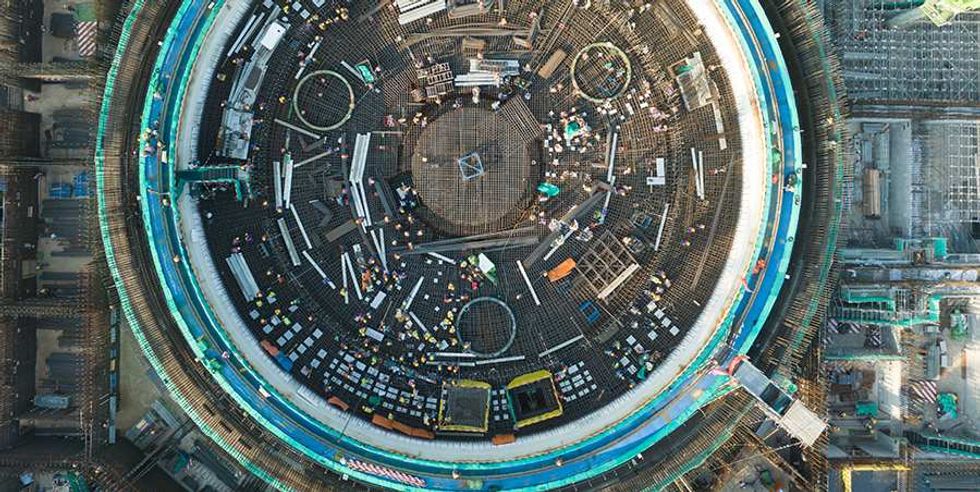
With the US leading production and China driving new reactor development, Bank of America breaks down the who, what, where, when, and why behind nuclear’s return.
Stay ahead of global energy trends with Bank of America Institute.
What We’re Watching
REUTERS/Isabel Infantes
Epstein files wreak havoc on Europe’s political elite. Not so much in the US
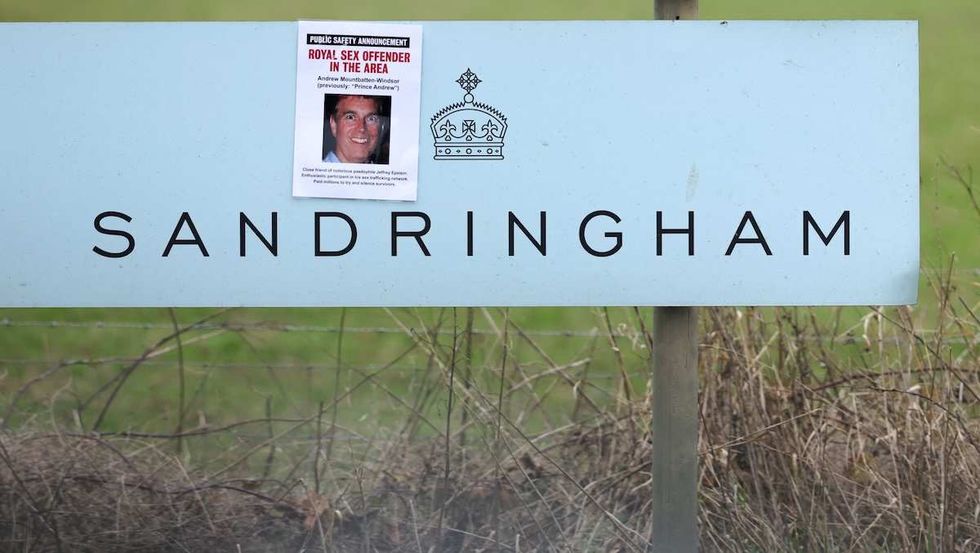
British police arrested former Prince Andrew Mountbatten-Windsor today over allegations that in 2010, when he was a UK trade envoy, he shared confidential government documents with convicted sex offender Jeffrey Epstein. It’s the first time a British royal family member has been arrested, underscoring the havoc that the Epstein files have wreaked on Europe’s political elite – including in Norway and France. The contrast couldn’t be starker with the US, where, despite rising public outcry, no current or former government officials named in the files have faced serious repercussions. A recent poll, meanwhile, revealed that a majority of the American public believes the Epstein files showed the US’s most powerful people are rarely held accountable.
Minimum wage rage shakes Colombia ahead of elections
Cities across Colombia are bracing for protests this afternoon over a court ruling that suspended a massive increase in the minimum wage. President Gustavo Petro, an outspoken left-winger, recently decreed a 23% increase, framing it as a measure to lift up the working poor in Latin America’s most unequal country. Labor unions applauded the move, while business groups have threatened layoffs, and inflation expectations have soared. The government has until Saturday to present a detailed economic justification for the wage hike. The clash comes ahead of May's presidential elections, in which Petro's ally Ivan Cepéda, who called for the protests, is leading the polls. Beyond the unrest, the court ruling has also created wider uncertainty as Colombia uses the minimum wage as a benchmark for everything from health insurance costs and school tuitions to visa application fees and speeding tickets.
Will Bangladesh’s new government implement constitutional reforms?
Alongside last week’s parliamentary election in Bangladesh, 60% of voters approved of the July Charter, a series of constitutional reforms drafted after the Gen-Z-led revolution in July 2024. But on Tuesday, the winners of the parliamentary vote, the Bangladesh Nationalist Party, refused to take an oath as members of the new Constitutional Reform Council. The move called into question whether they would implement the changes, which include term limits on the prime minister, protecting judicial independence, and other checks and balances. The major sticking point is the charter’s call for the creation of an upper house in parliament, which the BNP believes could dilute majorities in the legislature. Once the Reform Council is set up, Bangladesh has 180 days to implement the reforms. We will be watching whether the new government honors the charter, or whether the reforms the Gen-Z activists fought for will be swept under the rug.
Can we rebuild the Internet for democracy?

Restrictions on social media have been a hot topic for years, but they are getting renewed attention this week. At an AI summit in India on Wednesday, French President Emmanuel Macron blasted tech companies opposed to tightening restrictions for young users out of concerns for free speech – calling their arguments “total BS.” Meanwhile, Meta CEO Mark Zuckerberg testified this week in a landmark trial over social media addiction, where plaintiffs argue Big Tech is fueling a teen mental health crisis. All this raises a major question: can the Internet have limitations and prioritize democratic values?
At the 2026 Munich Security Conference, entrepreneur and Project Liberty founder Frank McCourt makes the case that the internet, and the AI systems rapidly reshaping it, must be redesigned to serve people, not platforms.
McCourt argues that today’s tech ecosystem is built on centralized, surveillance-driven incentives that clash with democratic values. As the world shifts from an app-based web to an “agentic” one powered by AI agents, he says we’re at a rare moment to rethink the architecture of the internet itself.
Watch the video here.
Hard Numbers: Former South Korean President sentenced to life, New insurgent group in Nigeria, Air power build-up in the Middle East, And bankers need sleep too
Kyodo
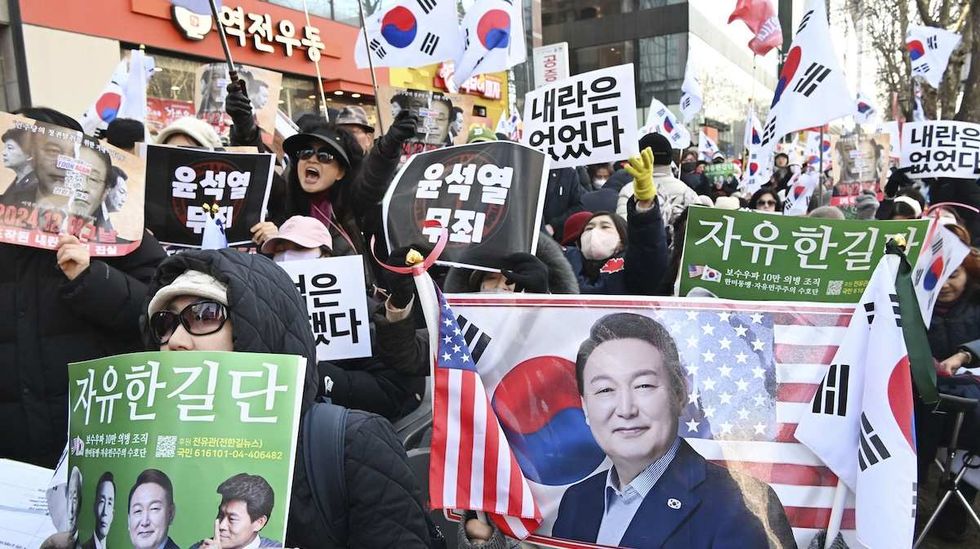
65: The age of former South Korean President Yoon Suk Yeol, who was sentenced to life in prison on Thursday after being found guilty of plotting an insurrection when he declared martial law in 2024. When deciding his sentence, the judge said he took into account his age and the fact that no lethal force was used under martial law.
34: The number of people killed in coordinated attacks on northwestern Nigerian villages this week. Authorities suspect a new insurgent group, Lakurawa, is responsible, amid a growing security crisis in the country.
2003: The last year in which the US’s concentration of air power in the Middle East was as high as it is today. The US has sent dozens of planes and two aircraft carriers to the Gulf as it weighs possible strikes on Iran.
9: The number of hours an investment banker is arguing she should be entitled to sleep a night in a trial set to go to court next week in New York. The plaintiff, whose health condition requires her to sleep nine hours, sued her former employer after they said they could no longer accommodate her needs. The case is sparking debate about healthy work-life balances in corporate culture.This edition of GZERO Daily was produced by Alex Kliment, Zac Weisz, Riley Callanan, and Natalie Johnson.