September 03, 2026
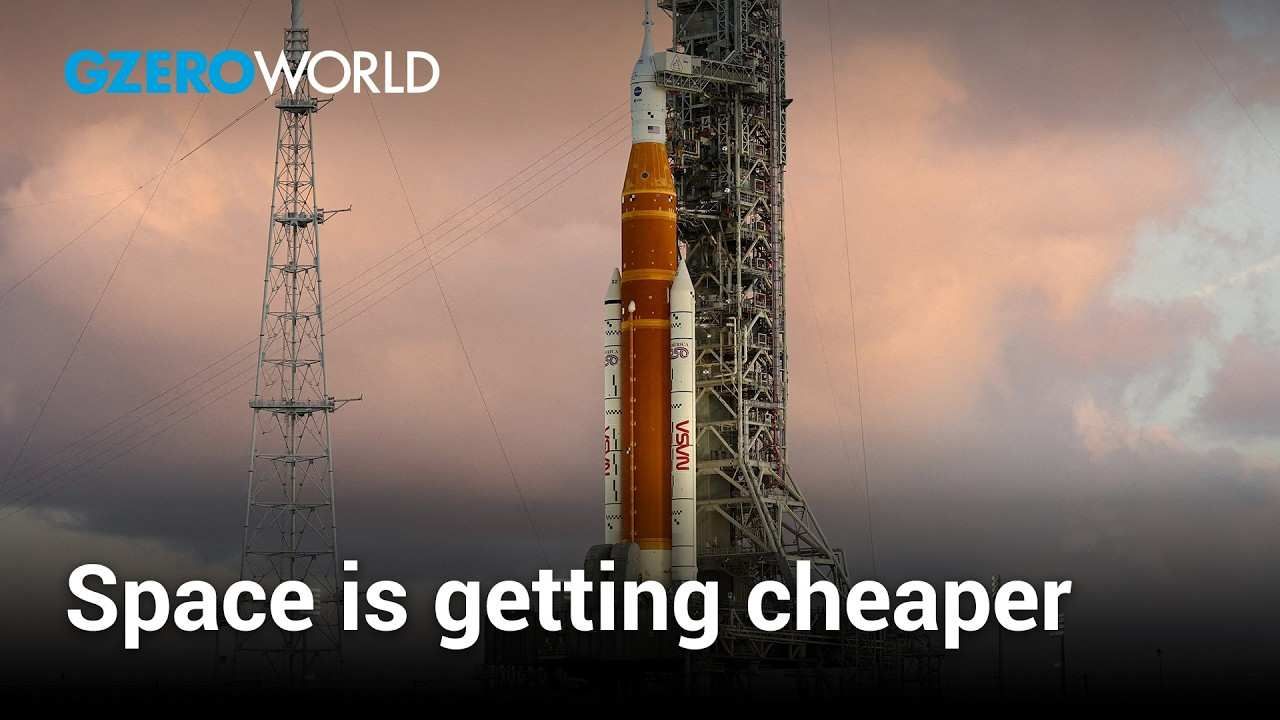
More than 50 years after the Apollo missions, advances in engineering have dramatically lowered the cost of reaching the Moon. But cheaper spaceflight isn’t the only thing that has changed.
On GZERO World, astronaut Chris Hadfield tells Ian Bremmer how new technology and the discovery of vast reserves of frozen water near the lunar poles have changed the possibilities for exploration. With near-constant sunlight and potentially billions of gallons of water available, the Moon could be far more hospitable to a long-term human presence than scientists understood during the Apollo era.
More For You
Argentina's President Javier Milei visits the Western Wall, Judaism's holiest prayer site during his tour in Jerusalem's Old City, February 6, 2024
REUTERS/Ammar Awad
Even as Israel grows increasingly isolated on the world stage, there is one region where a whole swath of newly-elected leaders can't seem to get enough of the Jewish State: Latin America.
Most Popular
Trump's latest turn against Ukraine could be for good | The Debrief with Clayton Allen
President Trump has changed course on Ukraine before. We all remember the Oval Office pyrotechnics (and the reconciliation). But his latest turn toward Russia could prove harder to reverse.
Medical workers treat injured people at Ameth Bek hospital after a drone strike on a market in the disputed Abyei region along the border between South Sudan and Sudan, October 19, 2026.
REUTERS/Medecins Sans Frontieres
South Sudan is accusing neighboring Sudan of launching a drone strike that killed at least 73 people at a market in Abyei, a disputed, oil-rich region of roughly 4,000 square miles claimed by both countries.
Inside China, one kilogram costs a mere $9. But outside of China? $1,150.
© 2025 GZERO Media. All Rights Reserved | A Eurasia Group media company.