What We're Watching
What We're Watching: Imran Khan's long march
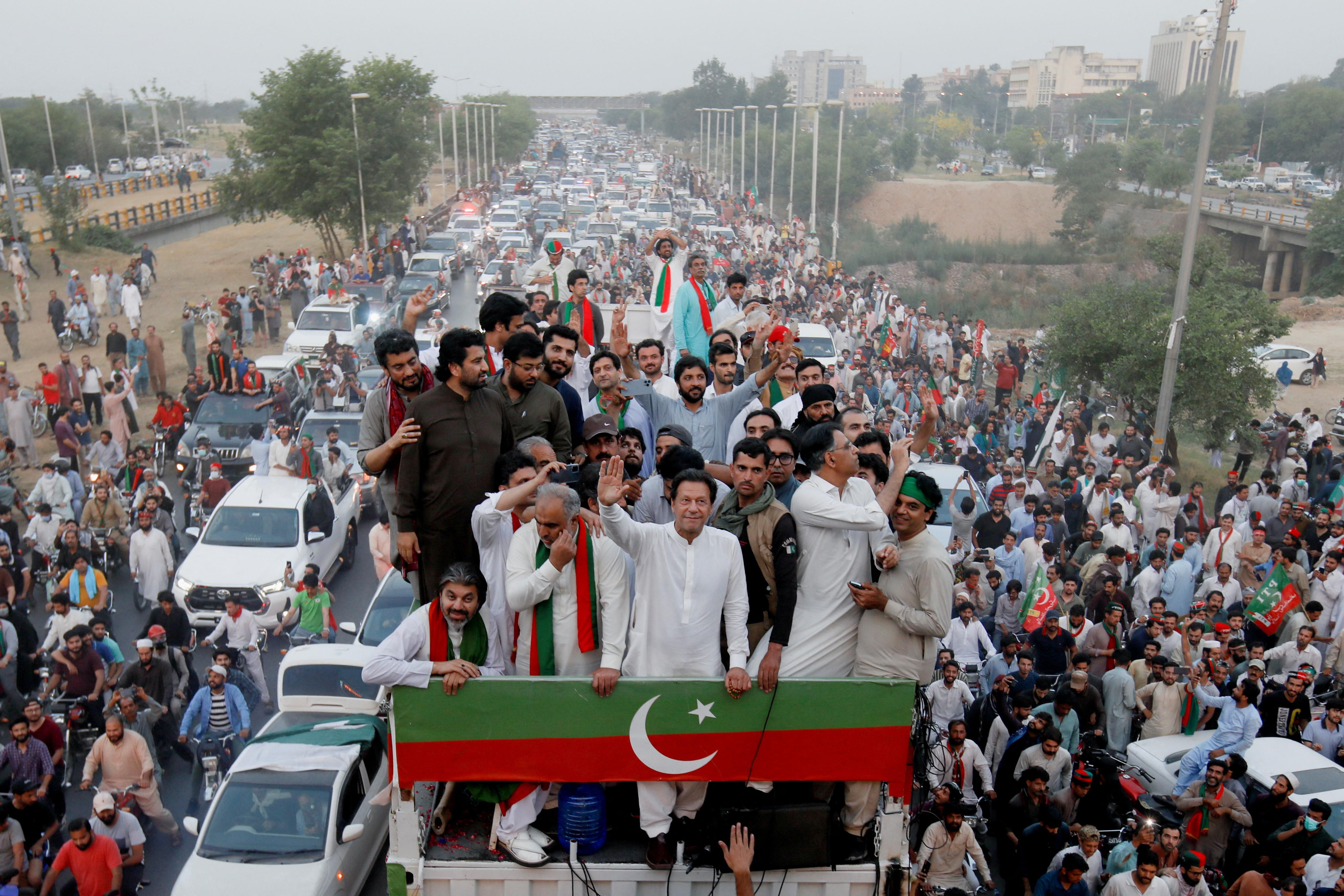
What We're Watching: Imran Khan launches long march from Lahore. Seen here in earlier mass demonstrations.
Imran Khan, the born-again Muslim populist who accuses the US of ousting him from power in Pakistan last April, is on the march – again. On Friday, he launched the “Long March” he’s been threatening for months. The launchpad? Lahore, Pakistan’s cultural capital. The destination? Islamabad, the federal capital. There’s just 230 miles between the two cities – a four-hour drive – but Khan is pacing his march over the next week, aiming to arrive by next Friday. By staggering the journey, he aims to gather mass and political momentum. As he left Lahore on Friday with a crowd of about 10,000, Khan announced that he expects more than a million people to join him as he crosses through the historic Grand Trunk Road, the political heartland of the 220-million-strong country – the same path taken by many earlier political protest movements. The once-progressive cricket hero thrives on right-wing activist politics and has been here before: In 2014, he led a similar march and ended up laying siege to Islamabad for more than six months, paralyzing the capital but not managing to overthrow the government of then-Prime Minister Nawaz Sharif. This time, Shehbaz Sharif, Nawaz’s younger brother, is the PM, and the government has warned Khan that it will respond with force if he crosses certain parts of Islamabad. While Khan has urged his followers to obey the law, the all-powerful military and intelligence services have warned of violence and even a possible terrorist attack, which could unravel the delicate balance in the world’s fifth-largest country. The next few days will be critical for Pakistan’s political future.
Tens of thousands still remain missing after the RSF’s siege of El Fasher. The RSF also remains in control of the city, and the civil war continues to drag on with seemingly no end in sight.
With Israel and the US heading to the polls, could elections change the course of the Middle East’s conflicts? Brett McGurk joins Ian Bremmer to discuss the Iran war, escalating Houthi attacks, and whether Washington has a strategy to contain the turmoil.
Can Washington turn military pressure into a diplomatic strategy? Brett McGurk joins Ian Bremmer on the GZERO World podcast to discuss the Iran war, Houthi attacks, and how elections in Israel and the US could reshape the region.
Could replacing Benjamin Netanyahu change Israel’s direction? Brett McGurk explains why a government led by Gadi Eisenkot would likely maintain Israel’s security doctrine while taking a different approach to the West Bank.