September 28, 2026
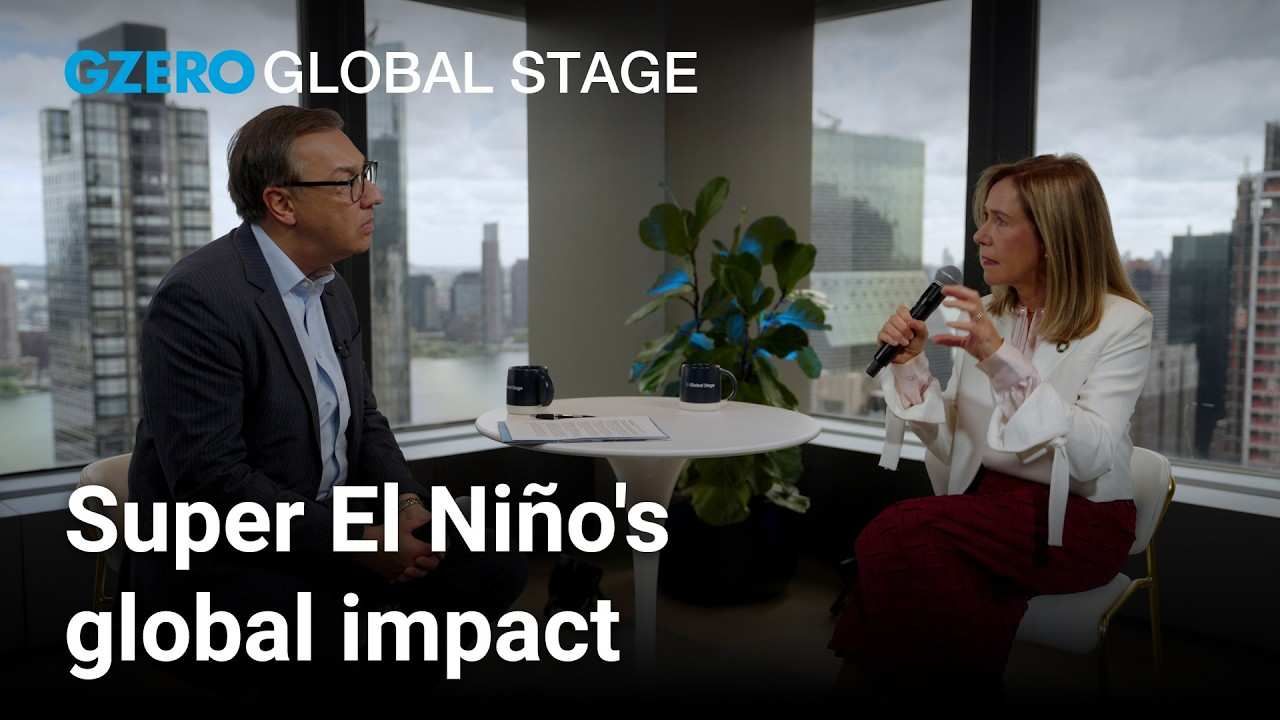
On the sidelines of the 81st United Nations General Assembly, GZERO Media’s Tony Maciulis sits down with Celeste Saulo, Secretary-General of the World Meteorological Organization (WMO), to discuss the developing El Niño, the growing importance of early-warning systems, and how artificial intelligence is changing weather forecasting.
Saulo explains how warming waters in the central Pacific can alter weather patterns thousands of miles away, increasing the likelihood of heavier rainfall in some regions while bringing drier conditions to others. While every El Niño is different, she says years of monitoring and forecasting now allow meteorologists to better anticipate those impacts and give governments and communities more time to prepare.
But a forecast is only useful if people can act on it. Saulo discusses the coordination required to translate global weather data into regional and local warnings, particularly as extreme weather events demand increasingly rapid responses. Effective early-warning systems, she says, depend not only on forecasting but also on understanding risk, communicating warnings, and ensuring communities know how to respond.
AI is accelerating that work. From analyzing vast amounts of data and running forecasting models faster to translating warnings into multiple languages almost instantly, Saulo says the technology is helping meteorologists turn information into actionable warnings more quickly. The challenge now is ensuring those tools and warnings reach people in ways that reflect their language, culture, and local circumstances.
This conversation is part of GZERO Media’s Global Stage series, bringing together leaders and experts to discuss the major issues shaping our world.
More For You
- YouTube
Can sovereignty and cooperation go together? Franck Paris, the new director general of the Paris Peace Forum, says sovereignty without cooperation is "just an illusion."
Most Popular
Paraguayan President Santiago Peña (photo) submitted his resignation on Thursday, November 5, amid a political and financial crisis triggered by the intervention of Ueno Bank, a banking institution linked to the president's former business associates.
Handout / Latin America News Agency via Reuters Connect
The tiny South American nation is in turmoil after a spectacular bank collapse left about half of its 6 million people without access to their money.
The California governor announced the move on Thursday in an open letter in which he called state-sanctioned killing “incompatible” with the state’s values and morally wrong.
- YouTube
In this GZERO Europe, Carl Bildt looks at the challenges facing Serbia’s Student List following its dramatic election victory over longtime nationalist leader Aleksandar Vučić, who had ruled the country for 14 years.
© 2025 GZERO Media. All Rights Reserved | A Eurasia Group media company.