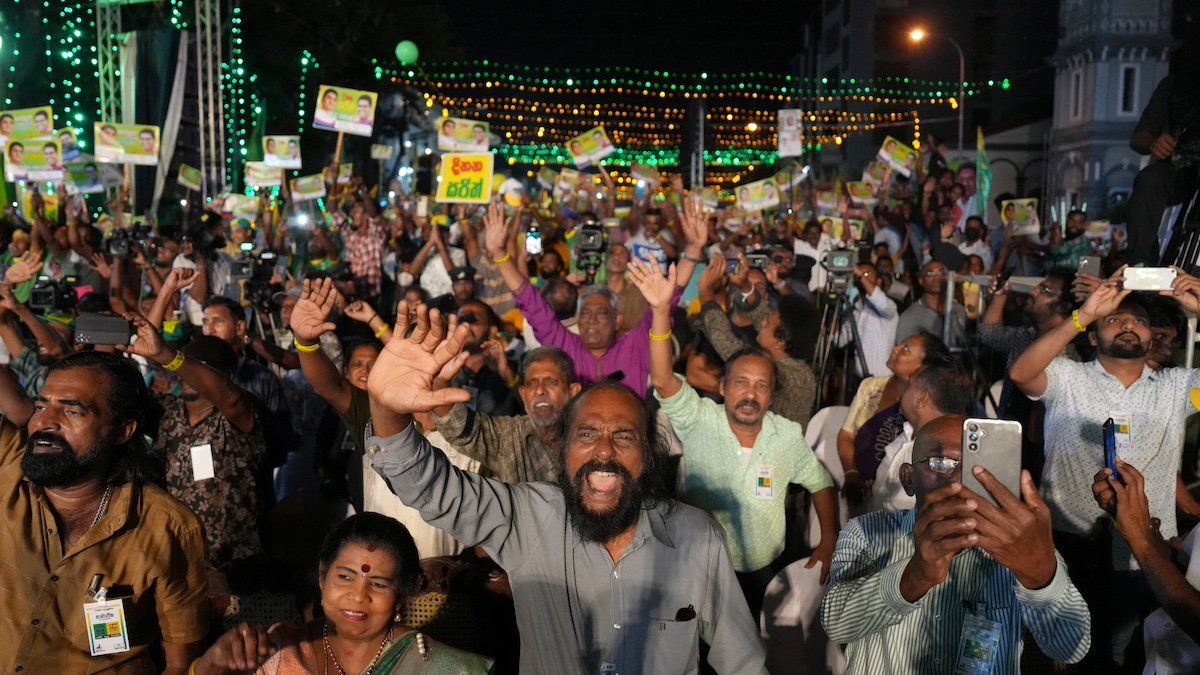
On Sept. 21, Sri Lanka will hold its first presidential vote since the spectacular economic meltdown of 2022, when the pandemic-scarred country defaulted on its massive debts, imports dried up, and widespread shortages of basic goods developed. Images of angry protesters invading the luxurious estates of the president and prime minister appeared on television screens around the world.
Following a government shakeup, new President Ranil Wickremesinghe negotiated a bailout with the IMF that helped to stabilize the situation. He is asking voters this weekend for another five years in office to continue the work of rebuilding the economy, but the tough terms of the IMF program have undermined his support.
We asked Eurasia Group expert Rahul Bhatia what to expect from the upcoming election.
What are the main issues for voters? Is the IMF program a campaign issue?
Economic issues have naturally taken center stage in the election as Sri Lanka continues its fragile recovery. While shortages of everyday essentials such as food, fuel, and medicines have subsided, there is still widespread discontent over the increased cost of living and reduced welfare programs. The IMF bail-out mandated austerity measures such as tax hikes and subsidy cuts, which have increased hardships for many Sri Lankans.
As a result, most candidates are campaigning on promises such as cutting taxes, raising the salaries of government employees, providing subsidies for low-income groups and farmers, and lowering fuel and electricity prices. None of the frontrunners have opposed the IMF program in principle, but most have promised to renegotiate it.
How far has the economy come since the crisis of 2022?
The economy returned to modest growth in the second half of 2023, and inflation, too, has eased to normal levels from its peak of nearly 70% at the height of the crisis. Nevertheless, economic output declined by 9.5% over 2022 and 2023, and it will take time for it to return to pre-crisis levels. About one-quarter of the population still lives below the poverty line, as the economic crisis and subsequent austerity measures have disproportionately affected low and middle-income families. Overall, Sri Lanka’s economic situation remains precarious, and it will need a stable government to complete its recovery.
Who are the frontrunners in this election?
Amid a field of 38 contestants, there are four clear frontrunners: the incumbent Wickremesinghe, opposition leader Sajith Premadasa, the leftist Anura Kumara Dissanayake, and Namal Rajapaksa, scion of the Rajapaksa family that once dominated the island's politics but has been largely discredited by the economic crisis. (Then-president President Gotabaya Rajapaksa fled the country after angry protesters invaded his residence in July 2022.) This means the presidential election will effectively be a three-way contest between Wickremesinghe, Premadasa, and Dissanayake.
What are they offering?
Veteran politician Wickremesinghe is campaigning on steering the country out of its worst economic crisis in modern times. Meanwhile, Premadasa and Dissanayake have sought to exploit the unpopularity of his austerity measures and have promised to ease the burden for Sri Lankans. They have also leveled charges of corruption against Wickremesinghe.
Premadasa comes from a well-known political family, but Dissanayake was a marginal player in Sri Lankan politics until recently. His popularity has risen rapidly over the last three years on the back of the protest movement that ousted Gotabaya Rajapaksa and an effective grassroots campaign. While Premadasa enjoys the support of the country’s Tamil minority, Dissanayake has captured the imagination of the youth.
What are the challenges the next president will face keeping the recovery on track?
To retain the IMF’s support, the government will have to reach a budget surplus, which could prove challenging given the welfare measures the candidates have proposed. The next president will have to balance improving the everyday lives of Sri Lankans and reducing the country’s debt burden.
The next president will also face a parliament dominated by the Rajapaksa-led Sri Lanka People’s Front, which was elected in 2020. Premadasa and Dissanayake, in particular, would find it difficult to pass legislation without a parliamentary majority. Both would thus likely call for parliamentary elections before the end of the year as one of their first actions.
Will these elections reverberate beyond Sri Lanka’s borders?
Given Sri Lanka’s towering debt obligations with foreign creditors and strategic location in the Indian Ocean, many countries have a vested interest in the island nation’s political and economic stability. India would prefer a Premadasa or Wickremesinghe presidency, though it has indicated it would work with any of the four frontrunners. Apart from political stability, New Delhi will prioritize limiting China’s influence on the island—a concern the US and Japan share. It will also seek to bolster connectivity between India and Sri Lanka and push the next president to grant the Tamil provinces a degree of autonomy.
China continues to have a sizeable economic footprint in Sri Lanka, but its influence has waned with that of the Rajapaksas. Former president and prime minister Mahinda Rajapaksa and his brother Gotabaya were close to Beijing and oversaw a range of Chinese infrastructure projects on the island, partially contributing to its debt problems (China still accounts for about half of Sri Lanka's bilateral debt). Nevertheless, Dissanayake is thought to have close ties to China, and if he becomes president, it could allow China to regain some of its influence.
Edited by Jonathan House, Senior Editor at Eurasia Group.