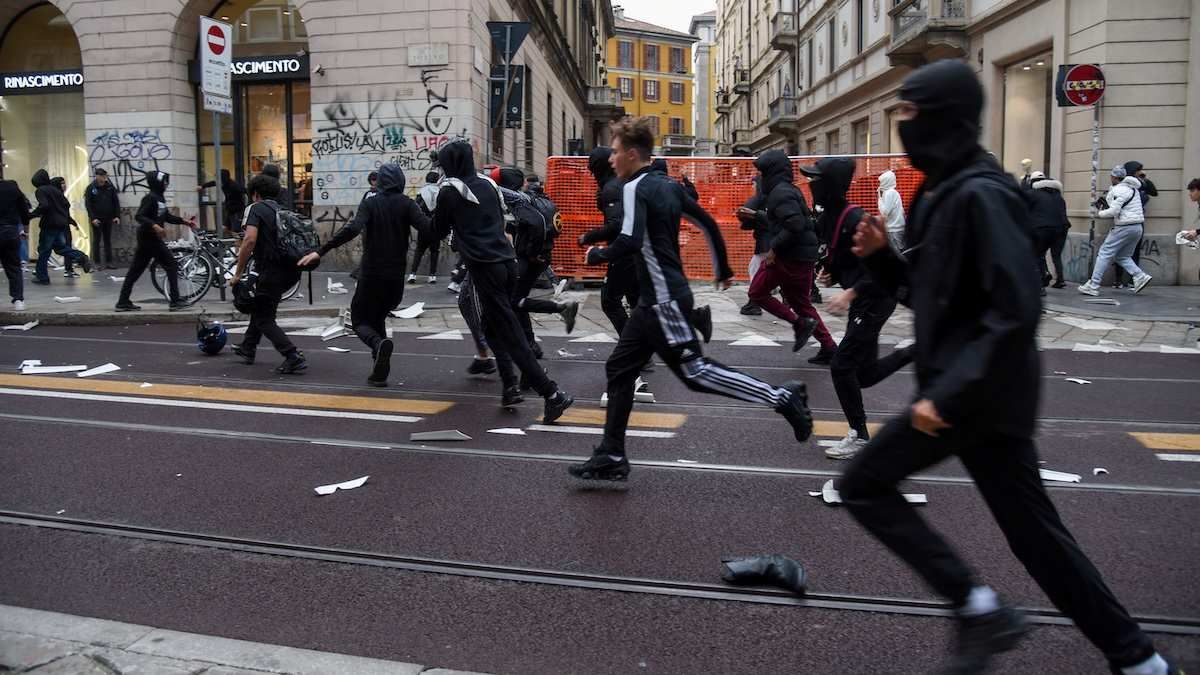
Italy sends the army into Milan
Prime Minister Giorgia Meloni has deployed 500 troops to Milan and tightened nationwide anti-rioting laws in an effort to quell unrest that has gripped the city since the weekend, with rioters smashing storefronts, looting businesses, and surrounding Milan’s iconic Duomo cathedral. For Meloni and her right-wing Brothers of Italy party, which swept to power in 2022 on a tough-on-crime and anti-immigration platform, the unrest — echoing larger riots in France — offers another opportunity to double down on those messages ahead of next year’s elections. And she has good reason to do so: Meloni faces growing competition from parties even further to her right, particularly from Roberto Vannacci and his National Future party, which has been gaining momentum after accusing Meloni of going soft on crime and immigration.
Burkina Faso brings back the death penalty
Burkina Faso’s parliament has unanimously voted to reinstate the death penalty, just eight years after the country’s previous, democratically elected government abolished it. A military coup ousted that government in 2022, and the ruling junta now argues that restoring capital punishment will help combat the al-Qaeda-affiliated Islamist insurgencies that have plagued the country for much of the past decade, killing over 25,000 people and displacing over two million. But the decision goes against a broader trend, particularly in Africa, where countries including Zimbabwe, Ghana, and the Central African Republic have abolished the death penalty in recent years. The move has also provoked fresh criticism of Burkina Faso’s military government, which human rights groups have accused of carrying out extrajudicial killings and cracking down on press freedom.
Will the US and Israel resume Iran strikes after the midterms?
President Trump and PM Benjamin Netanyahu reportedly discussed that possibility earlier this month, and US Secretary of War Pete Hegseth is in Israel today to coordinate Iran policy. In Israel, which sees Iran as an existential threat, neutering Tehran’s nuclear program and potentially toppling the regime are widely supported — even by Netanyahu’s opponents. Ahead of an upcoming election that he could well lose, Netanyahu is eager to resume hostilities, but Trump has so far stopped him. That’s because in the US, by contrast, the so-far inconclusive war is deeply unpopular. Trump’s Republicans are set to take a beating in the midterms, partly because the conflict has stoked inflation, a key voter concern. But with Trump keen to “finish the job,” analysts expect he’ll roll the dice again after the election. As it happens, another US carrier group, along with 10,000 troops, is now steaming back toward the Middle East. Its projected arrival date? Mid-November.