Analysis
Japan’s leader has had a tricky start. But the public loves her.
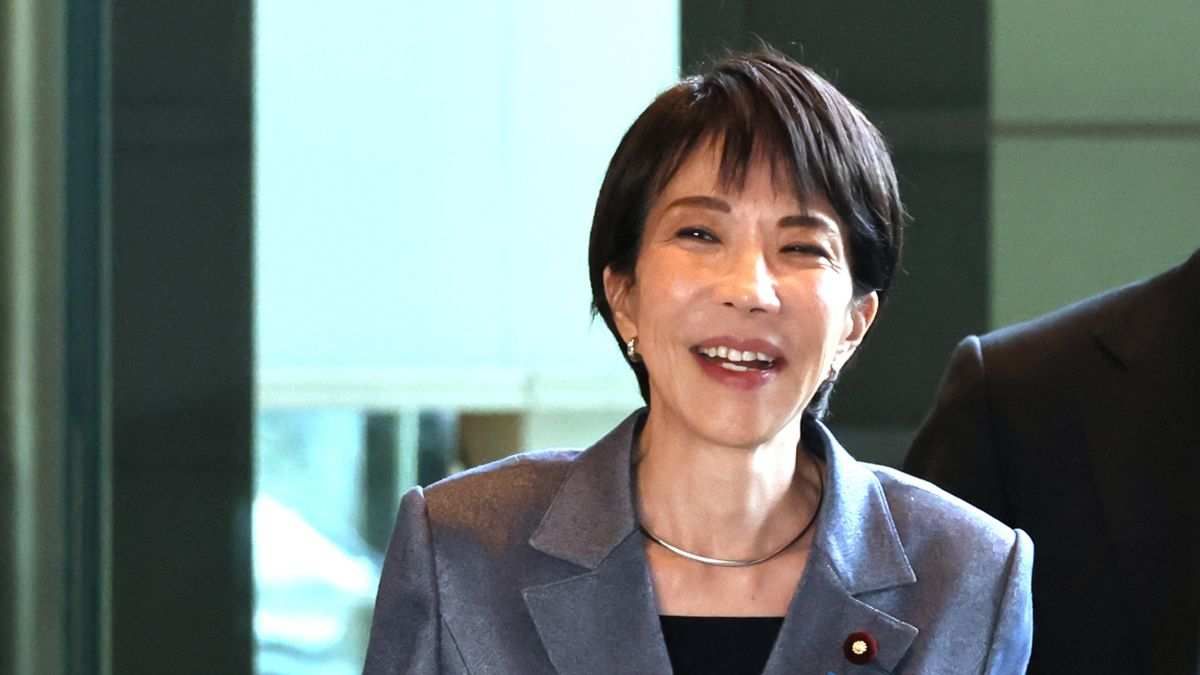
Japanese Prime Minister Sanae Takaichi arrives at her office in Tokyo, Japan, on December 10, 2025.
The Yomiuri Shimbun
Japanese Prime Minister Sanae Takaichi arrives at her office in Tokyo, Japan, on December 10, 2025.
In a show of force against Tokyo, Russian bombers joined Chinese air patrol for a joint flight around two Japanese islands on Tuesday.
The flight was just the latest challenge for Japan’s Prime Minister Sanae Takaichi, who has faced plenty of turbulence in the 50 days since she took office. She started a war of words with China – without support of a key ally, the United States – over Taiwan. The country’s bond yields are at their highest level since the global financial crisis. The economy is contracting, and she drew criticism for organizing a meeting at 3am in a country where overwork is a sensitive issue.
The rocky beginning has prompted one opposition leader, Yoshihiko Noda, to compare Takaichi to former UK Prime Minister Liz Truss, who resigned after just 49 days in office amid economic chaos.
And yet, Takaichi is popular: a recent poll had her approval at 66%. This is the third-highest among recent Japanese prime ministers at the start of their premiership, per NHK polls.
“I think she has surprised people, frankly, that her approval ratings have been so high,” said Eurasia Group’s Japan Director David Boling.
Takaichi defies gravity. There are a few reasons why the new prime minister has been able to overcome some of these issues. Firstly, Takaichi has gained notoriety because she is the first female PM. She’s also been tough on immigration – a popular position in a country that has historically let in very few immigrants and where ultranationalist parties have recently surged on concerns about the pace of cultural change. What’s more, she had a warm meeting with US President Donald Trump in October, bonding with him over beef and baseball. Finally, starting a war of words with China, an old rival, may create uncertainty, but it isn’t necessarily bad politics.
“The China row has probably strengthened her ratings,” said Boling.
Challenges ahead. The top issue for Japanese voters isn’t Taiwan, immigration, or relations with Trump, but rather inflation, according to Boling. Specifically, rice prices are causing major political headaches: The cost of Japan’s staple food has more than doubled since the start of last year. Frustration over skyrocketing prices cost the Liberal Democratic Party its majority in the National Diet, Japan’s legislature – which it led for most of the past 70 years – and prompted former Prime Minister Shigeru Ishiba to resign in October.
“If she’s not able to deal with inflation,” said Boling, “that is absolutely the biggest danger for her.”
The big question. Takaichi faces a major problem when it comes to passing her agenda: her governing coalition is in the minority, so she must gain support from opposition lawmakers to pass most legislation. In light of this, rumors are swirling around Tokyo that the new prime minister will capitalize on her popularity and call an early election – something that is possible within a parliamentary system.
There’s a hitch: Takaichi’s Liberal Democratic Party (LDP) remains unpopular. The party’s approval rating is over thirty points lower than hers. What’s more, the LDP may not receive support from the centrist Komeito party, since it left the governing coalition when Takaichi took charge.
“Komeito is a get-out-the-vote party,” said Boling. “There’s a [Buddhist] sect called the Soka Gakkai that supports them, that really turns out to vote. And Komeito supporters in the past have always voted for LDP candidates. So the question mark now is whether the loss of Komeito is going to affect all those LDP candidates.”
Will Takaichi take the risk? Snap elections can backfire. Though there is a large potential reward for the new PM, she’ll be wary of putting her party’s wobbly reputation on the line.
For a video explainer of Takaichi’s first 50 days in office, watch Zac Weisz’s report here.
As AI creates new opportunities, the people who understand a community best play an important role in determining how those opportunities take shape. Across the US, Microsoft is supporting AI literacy classes as part of a new program developed in collaboration with the Public Library Association, working through trusted local institutions to help people build practical AI skills. By pairing new technology with local knowledge, the initiative is helping communities explore how AI can support their needs and open new possibilities, while putting local leaders and organizations at the center of that work. Read the full story here.
Russia is testing NATO’s red lines with escalating drone attacks and airspace violations. Can Europe defend Ukraine and itself without help from the US? Polish Foreign Minister Radoslaw Sikorski joins Ian Bremmer on GZERO World.
Who among us has not gotten stiffed by a superpower. #PUPPETREGIME
Is Putin's war machine starting to crack? Poland's foreign minister Radoslaw Sikorski discusses Ukraine's battlefield gains and mounting economic pressure on Russia.