GZERO AI
“Like asking the butcher how to test his meat”: Q&A on the OpenAI fiasco and the need for regulation
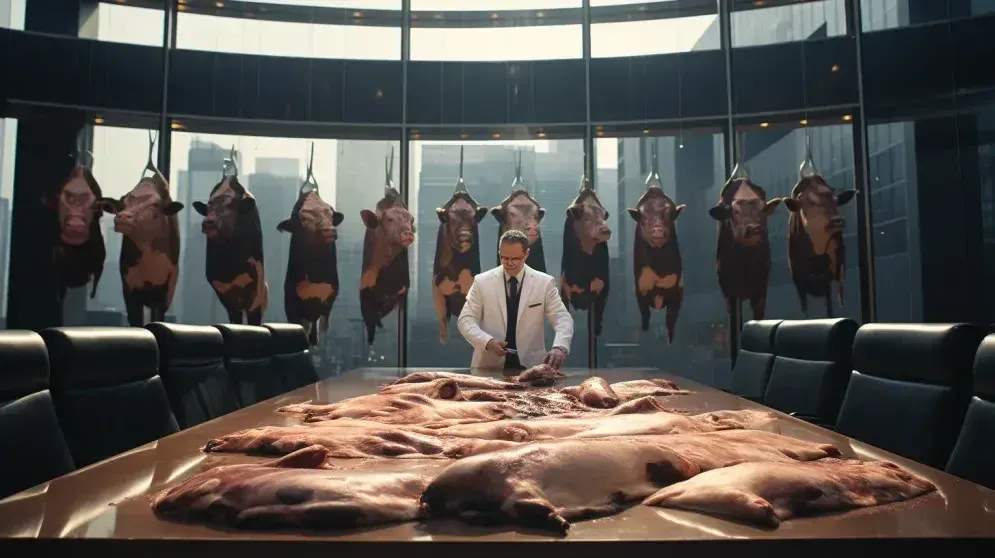
Courtesy of Midjourney
AI-generated art courtesy of Midjourney
The near-collapse of OpenAI, the world’s foremost artificial intelligence company, shocked the world earlier this month. Its nonprofit board of directors fired its high-profile and influential CEO, Sam Altman, on Friday, Nov. 17, for not being “consistently candid” with them. But the board never explained its rationale. Altman campaigned to get his job back and was joined in his pressure campaign by OpenAI lead investor Microsoft and 700 of OpenAI’s 770 employees. Days later, multiple board members resigned, new ones were installed, and Altman returned to his post.
To learn more about what the blowup means for global regulation, we spoke to Marietje Schaake, a former member of the European Parliament who serves as the international policy director of the Cyber Policy Center at Stanford University and as president of the Cyber Peace Institute. Schaake is also a host of the GZERO AI video series.
The interview has been edited for clarity and length.
Schaake: This incident makes it crystal clear that companies alone are not the legitimate or most fit stakeholder to govern over powerful AI. The confrontation between the board and the executive leadership at OpenAI seems to have at least included disagreement about the impact of next-generation models on society. To weigh what is and is not an acceptable risk to accept, there needs to be public research and scrutiny, based on public policy. I am hoping the soap opera we watched at OpenAI underlines the need for democratic governance, not corporate governance.
The governance processes seem underdeveloped in light of the stakes. And there are probably many other parts of OpenAI that lack the maturity to deal with the many impacts their products will have around the world. I am even more concerned than I was two weeks ago.
I do not like the fact that with the implosions of OpenAI's governance, the entire notion of giving less power to investors may now lose support. For Microsoft to throw around the weight of its financial resources is not surprising, but also hardly reassuring. Profit motives all too often clash with the public interest, and the competition between companies investing in AI is almost as fierce as that between the developers of AI applications. The drive to outgame competitors rather than to consider multiple stakeholders and factors in society is a perverse one. But instead of looking at the various companies in the ecosystem, we need to look to government to assert itself, and to develop a mechanism of independent oversight.
Altman has become the face of the industry, for better and worse. He has made conflicting statements on how he sees regulation as impacting the company. In the same week, he encouraged Congress to adopt regulation, and threatened OpenAI would leave the EU because of the EU AI Act – regulation. It is a reminder for anyone who needs it that a brilliant businessman should not be the one in charge of deciding on regulation. This anecdote also shows we need a more sophisticated debate about regulation. Just claiming to be in favor or against means little, it is about the specific objectives of a given piece of regulation, the trade offs, and the enforcement.
He cleverly presented himself as an ally to regulators, when he appeared before Congress. That is a lesson he may well have learned from Microsoft. In that sense, Altman got a much more friendly reception than Mark Zuckerberg ever got. It seems members of Congress listened and even asked him for advice on how AI should be regulated. It is like asking the butcher how to test his meat. I hope politicians stop asking CEOs for advice and rather feel empowered to consider many more experts and people impacted by the rollout of AI, to serve the public interest, and to prevent harms, protect rights, competition, and national security.
There are already different camps with regard to what success or danger looks like around AI. There will surely be tribes that see Altman as having come out stronger from this episode. Others will underline the very cynical dealings we saw on display. We should not forget that there is a lot of detail we do not even know about what went down.
Actually, we should not be distracted by the entertainment aspect of this soap of a confrontation, complete with cliffhangers and plot twists. Instead, if the board, which had a mandate emphasizing the public good, has concerns about OpenAI’s new models, they should speak out. Even if the steps taken appeared hasty and haphazardly, we must assume there were reasons behind their concerns.
I would work on regulation, before, during, and after this drama. In other words, I would not have changed my activities because of it.
Maybe just to repeat that this saga underlines the key problems of a lack of transparency, of democratic rules, and of independent oversight over these companies. If anyone needed a refresher of why those are urgently needed, we can thank the OpenAI board and Sam Altman for sounding the alarm bell once more.
Artificial intelligence now contributes to more than half of cybercrime in Africa
US-backed negotiations are opening a possible path to democratic elections in Venezuela – even as the country’s most popular opposition leader remains outside the room.
Think you know what's going on around the world? Here's your chance to prove it.
The Democratic Republic of Congo has reportedly banned exports of copper and cobalt concentrates – the goal is to force more processing at home and capture a larger share of profits generated from its natural resources.