July 20, 2026
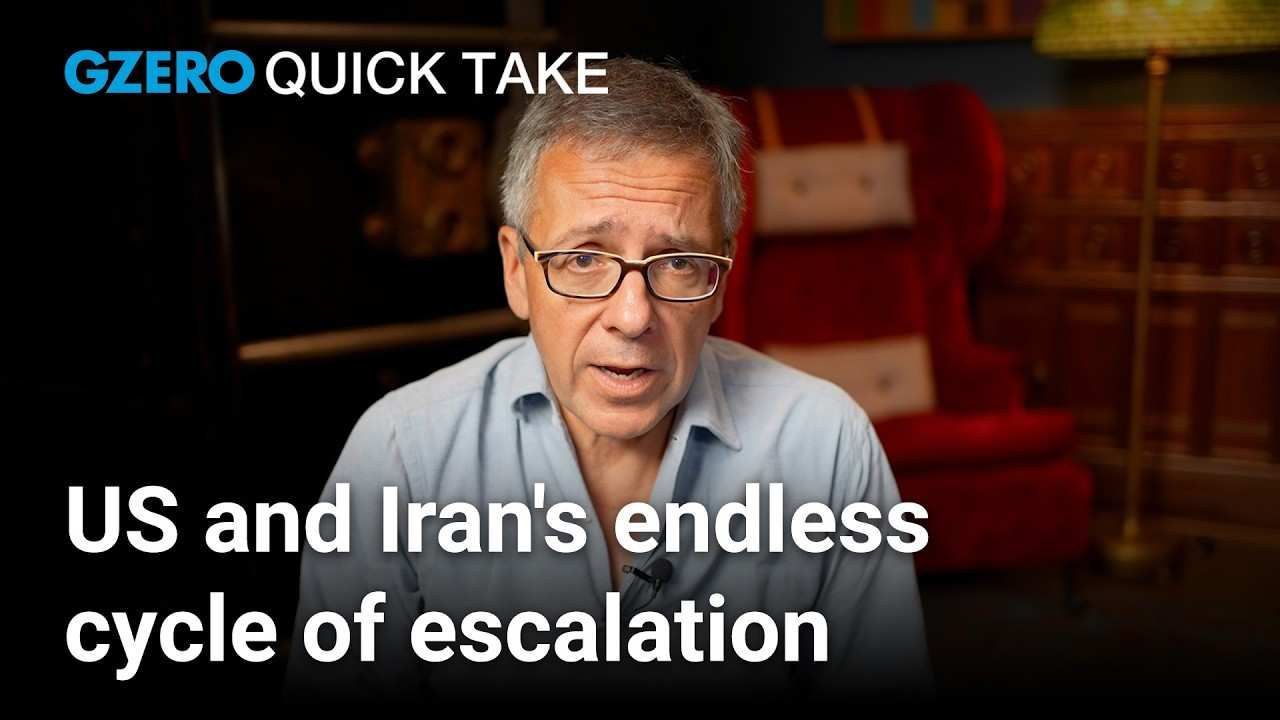
In his latest Quick Take, Ian Bremmer argues that the war between the United States and Iran has entered a more dangerous phase, with both sides demonstrating they can sustain military and economic pressure without forcing the other to back down. The question is, will this standoff bring them back to the table before the conflict escalates further?
“This is a much worse situation than we were in a couple of weeks ago,” Ian says, though he notes the fighting remains “considerably more restrained than both sides have the capacity to engage militarily.”
Ian compares the standoff to President Trump’s earlier trade confrontation with China, arguing that Tehran, like Beijing, has shown it can impose costs Washington underestimated. “Iran will continue to engage in strikes that will shut down at a minimum the Strait of Hormuz,” he says, warning that the US cannot quickly protect Gulf infrastructure or shipping.
Despite the escalation, Ian says neither side can achieve a lasting victory through military force. “There’s no useful outcome coming through more military strikes,” he says, arguing that both Washington and Tehran will ultimately need to return to negotiations.
More For You
Medical workers treat injured people at Ameth Bek hospital after a drone strike on a market in the disputed Abyei region along the border between South Sudan and Sudan, October 19, 2026.
REUTERS/Medecins Sans Frontieres
South Sudan is accusing neighboring Sudan of launching a drone strike that killed at least 73 people at a market in Abyei, a disputed, oil-rich region of roughly 4,000 square miles claimed by both countries.
Most Popular
- YouTube
In this Quick Take, Ian Bremmer says President Donald Trump's approach to the war in Ukraine is putting more pressure on President Volodymyr Zelensky and raising concerns among European allies about the future of NATO.
Protesters set up barricades and burn materials near Place de la Republique in Paris, France, on October 18, 2026, the day following a large demonstration.
Jerome Gilles via Reuters Connect
Ongoing student protests in France descended into looting and riots over the weekend as more than half a million people took to the streets across the country.
After his father was killed in a plane crash in 2023, Pavel was tapped to lead Wagner.
© 2025 GZERO Media. All Rights Reserved | A Eurasia Group media company.