June 12, 2026
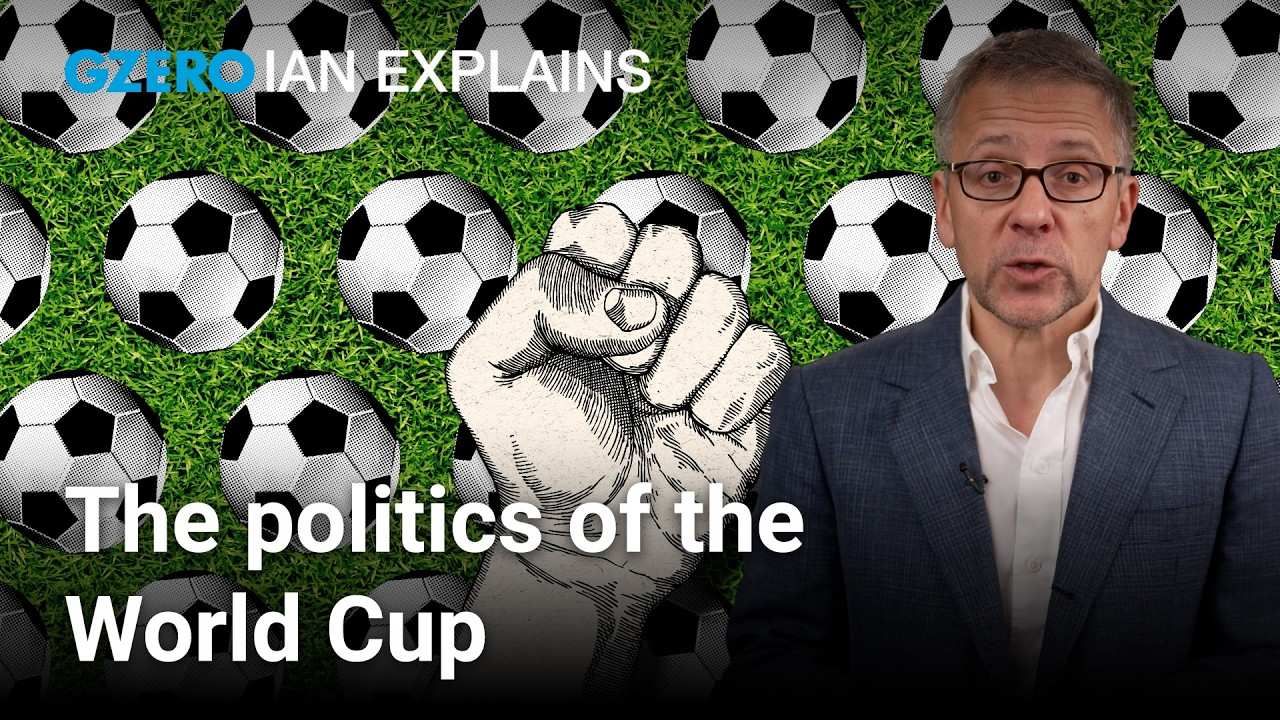
The World Cup is often described as a global sporting event. In reality, it's also one of the world's biggest political stages. For more than a century, countries have used the tournament to project power, express national identity, and settle symbolic scores that extend far beyond the pitch.
In this edition of Ian Explains, Ian Bremmer examines why the World Cup inspires such intense emotions and why international politics so often finds its way into the game. The tournament creates a rare moment when billions of people rally behind national teams that come to represent not just athletic success, but competing ideas of history, identity, and belonging.
That helps explain why World Cup matches can resonate long after the final whistle. The tournament has become a place where national pride, political symbolism, and global attention converge, making it far more than just a competition for a trophy.
More For You
- YouTube
The global aid system is running out of money just as the world’s crises are multiplying. On Ian Explains, Ian Bremmer unpacks why consequences of shrinking aid budgets extend far beyond the borders of the world’s most vulnerable countries.
Most Popular
Think you know what's going on around the world? Here's your chance to prove it.
As America celebrates 250 years, Bank of America is proud to honor our shared history. Discover our commitment.
The skies over Greenland, Iceland, and Spain will briefly darken today as continental Europe experiences its first total solar eclipse in over 25 years.
© 2025 GZERO Media. All Rights Reserved | A Eurasia Group media company.