November 11, 2026
Three years ago, former IMF economist and banker Santiago Peña was elected President of Paraguay by more than a 15-point margin of victory. His win continued a run of dominance by the conservative Colorado Party that has seen it occupy the presidency for 73 of the past 78 years, navigating Paraguay through its dictatorship under Alfredo Stroessner, transition to democracy, and rapid economic development.
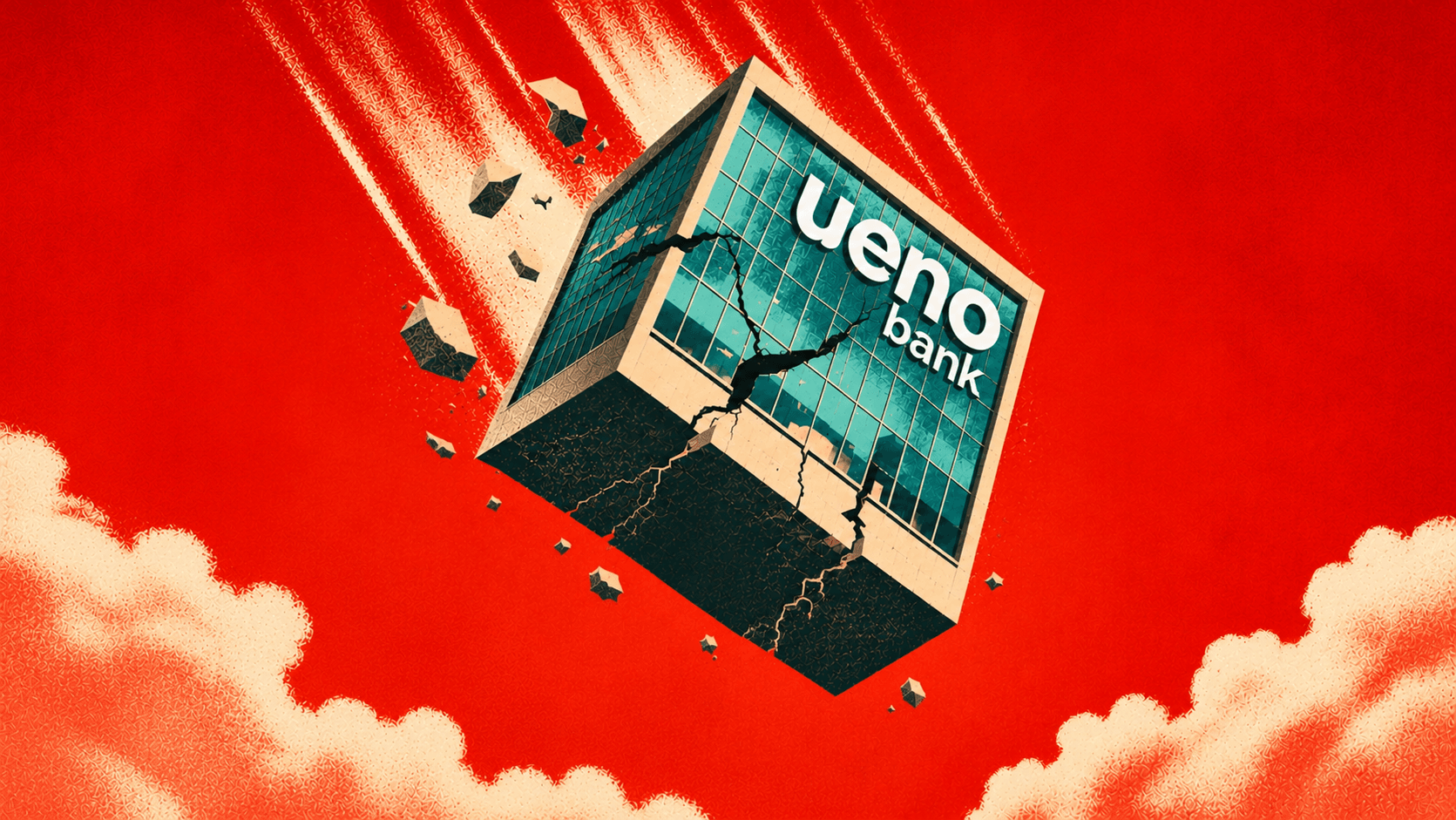
Last week, President Peña resigned after the collapse of a major bank, whose parent company he had been an investor in, left 2.9 million people locked out of their accounts. Congress – over which former President Horacio Cartes wields considerable influence – refused to accept his resignation, instead voting to impeach and remove Peña from office, so that he would not preserve his immunity from criminal prosecution. Now, Peña has been placed under house arrest, Vice President Pedro Alliana has taken power, and the country previously considered one of the most stable in Latin America is working to restore its financial credibility and pay back customers of the now-defunct Ueno Bank.
What happened? Is this a story about corruption or a political power struggle between Peña and Cartes? Yes and yes. And it reveals the cracks beneath a Paraguayan political system that's teetered on the edge of being a one-party state for generations.
The crisis began with the rise of Ueno Bank over the past five years, a fast-growing fintech firm with eye-watering bonuses for its customers and sponsorships across Paraguayan sports. As The New York Timesreported, the bank attracted many Paraguayans who'd never had a bank account before, including young people and Indigenous citizens. At the same time, the bank's CEO Miguel Vázquez set up dozens of other companies and began loaning money, with minimal due diligence, to firms connected to his own group. As more and more money flowed into Ueno, including more than $850 million from the government's coffers, these crooked loans became a systemic risk for Paraguay's economy.
Up until 2025, President Peña had been an investor in the bank's parent company, Ueno Holding. Paraguay's Central Bank, led by Ueno's former president (whom Peña had appointed), supported Ueno's regulatory approval and a merger with another indebted bank under favorable terms. Peña dismissed the public outcry that emerged because of this self-dealing, going so far as to call it "financial terrorism." When a Central Bank employee began asking questions internally about the state of Ueno's balance sheets in July, he promptly found himself reassigned to a new agency.
This all came to a head last week when the bank failed, leaving customers in the dark and prompting Peña's resignation. But Peña's political downfall wasn't just a result of alleged corruption; it was partly engineered by business tycoon, former president, and current Colorado Party leader Horacio Cartes.
Cartes left office in 2018 after failing to rewrite Paraguay's constitution to allow a second term. He was subsequently accused of corruption by the United States (including bribing lawmakers) yet still retained powerful sway over the Colorado Party, with Peña emerging as his protégé. That dynamic led the Trump administration to end sanctions on him, as the State Department under Secretary Marco Rubio looked to improve relations with Paraguay's dominant powerbroker.
Once in office, Peña became more powerful, challenging Cartes's status as Paraguay's kingmaker. The two men warred over who had the right to choose Alliana's running mate in 2028 and likely a future president of Paraguay. When the Ueno scandal broke, Cartes's allies in Congress pursued investigations and later ignored Peña's attempt to step down. Now, with Vice President Alliana having taken power with his blessing, Cartes has reasserted his control over the political system.
Meanwhile, the fallout from Ueno's collapse is continuing – more than 1.2 million customers have been refunded by the government so far (with deposits insured up to $37,000), but teachers are still striking over the uncertainty around what will happen to their pension funds. With many Paraguayans still unable to access their money, frustration towards the political establishment is building – offering a real threat to Cartes and the Colorado Party.
The consequences will be far-reaching. Even though Paraguay is not a large country (with a smaller population than New York City), it's been important to US diplomacy in the region as a member of the Shield of the Americas coalition to combat drug trafficking. Peña, as one of the many conservative candidates elected in Latin America in recent years, was well-liked by the Trump administration.
Paraguay has also played a significant role on China and Taiwan, as the only South American country to recognize Taiwan, while its neighbors pursue closer economic integration with China. At a time when Beijing is exerting pressure on countries to distance themselves from Taipei – Taiwan was forced to close its office in Papua New Guinea last week – a challenge to the Colorado Party is welcome news to Beijing.
The next presidential election isn't until 2028, so it's too early to predict how the scandal will affect the party's performance. And it's worth remembering that past scandals have previously failed to unseat its leaders. But in a global environment where incumbent parties from Hungary to Colombia are losing due to anger about affordability and corruption, the Ueno disaster will be harder for the Colorado Party to overcome.
One of Ueno Bank's slogans on its website reads: "We are disruptive." The company has lived up to its mandate, just not in the way it might have intended.
More For You
- YouTube
As children face growing risks from social media, artificial intelligence, and other global challenges, France is calling for stronger international action to protect younger generations.
Most Popular
A volunteer walks past a COP31 logo at the venue ahead of the United Nations climate change conference, known as COP31, in Antalya, Turkey, November 8, 2026.
REUTERS/Murad Sezer
The UN’s annual climate summit, this year known as COP31, kicked off in Turkey on Monday, as the world gets hotter – and political temperatures rise.
An Exxon gas station located at 46 Main St. in Holmdel. Gas prices are at record highs for this time of the year. Monday, September 14, 2026.
USA TODAY Network via Reuters Connect
Nearly 20 years after leaving the country, Exxon is returning to Venezuela under a preliminary deal to explore production possibilities.
A new YouGov poll, conducted on behalf of the Institute for Global Affairs, reveals how much affordability was top of mind for voters during last week’s midterm elections.
© 2025 GZERO Media. All Rights Reserved | A Eurasia Group media company.