August 10, 2026
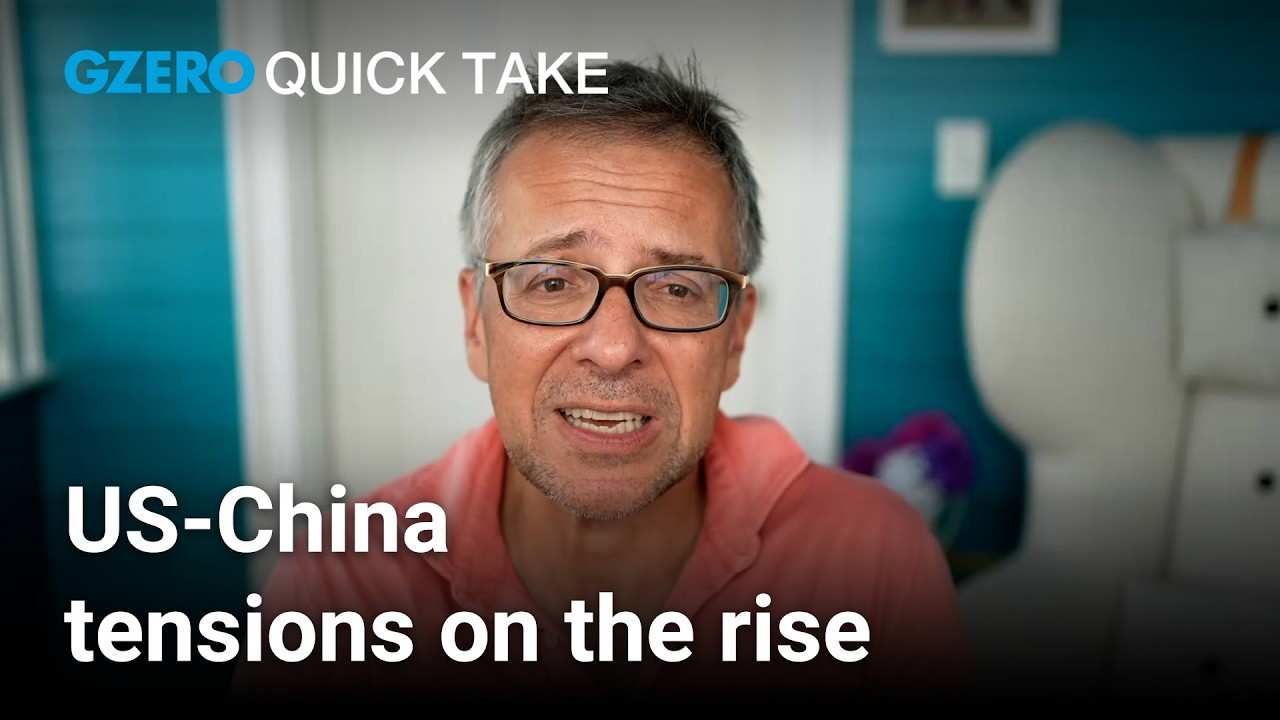
In his latest Quick Take, Ian Bremmer examines the stability of US-China relations and why he believes the period of relative calm between the two countries may be coming to an end.
After President Trump’s initial effort to pressure Beijing economically failed to force China to capitulate, the two countries have shifted toward a more cautious approach, with both sides working to limit confrontation and keep economic ties from deteriorating further.
But Ian warns that the biggest risks may now be coming from areas moving faster than traditional diplomacy, particularly AI, semiconductors and other advanced technologies. “The potential for a growing fight between the US and China, the likelihood that we’re going to have more decoupling between the US and China is going up and up and up,” he says.
With both countries racing to develop their own technology and mistrust continuing to grow, Ian warns that the current US-China entente may not be sustainable and that a breakdown could carry major economic and national security consequences.
More For You
Brazilian voters arrive at a polling station at Cidade Universitaria to cast their ballots in the second round of Brazil's presidential election in Lisbon, Portugal, on October 25, 2026.
Luis Boza via Reuters Connect
Elections have been taking place around the world in recent weeks – and if there’s one thing they have in common, it’s this: voters are fired up.
Most Popular
Airlines across the continent have been affected by threats, now in their second week, with some planes making emergency landings or being escorted by fighter jets.
Did the midterms tank Vance's 2028 chances? | The Debrief with Clayton Allen
On The Debrief, Clayton Allen explains why the vice president’s ties to Trump—and dependence on a fractured MAGA coalition—could make 2028 a race he chooses to skip.
From shopping to services, consumer spending is showing strength across categories. Holiday shopping got an early start, and it’s not just higher earners filling their carts. Bank of America Institute sees continued spending growth recovery for lower- and middle-income households. See what’s driving the trends.
© 2025 GZERO Media. All Rights Reserved | A Eurasia Group media company.