November 17, 2020
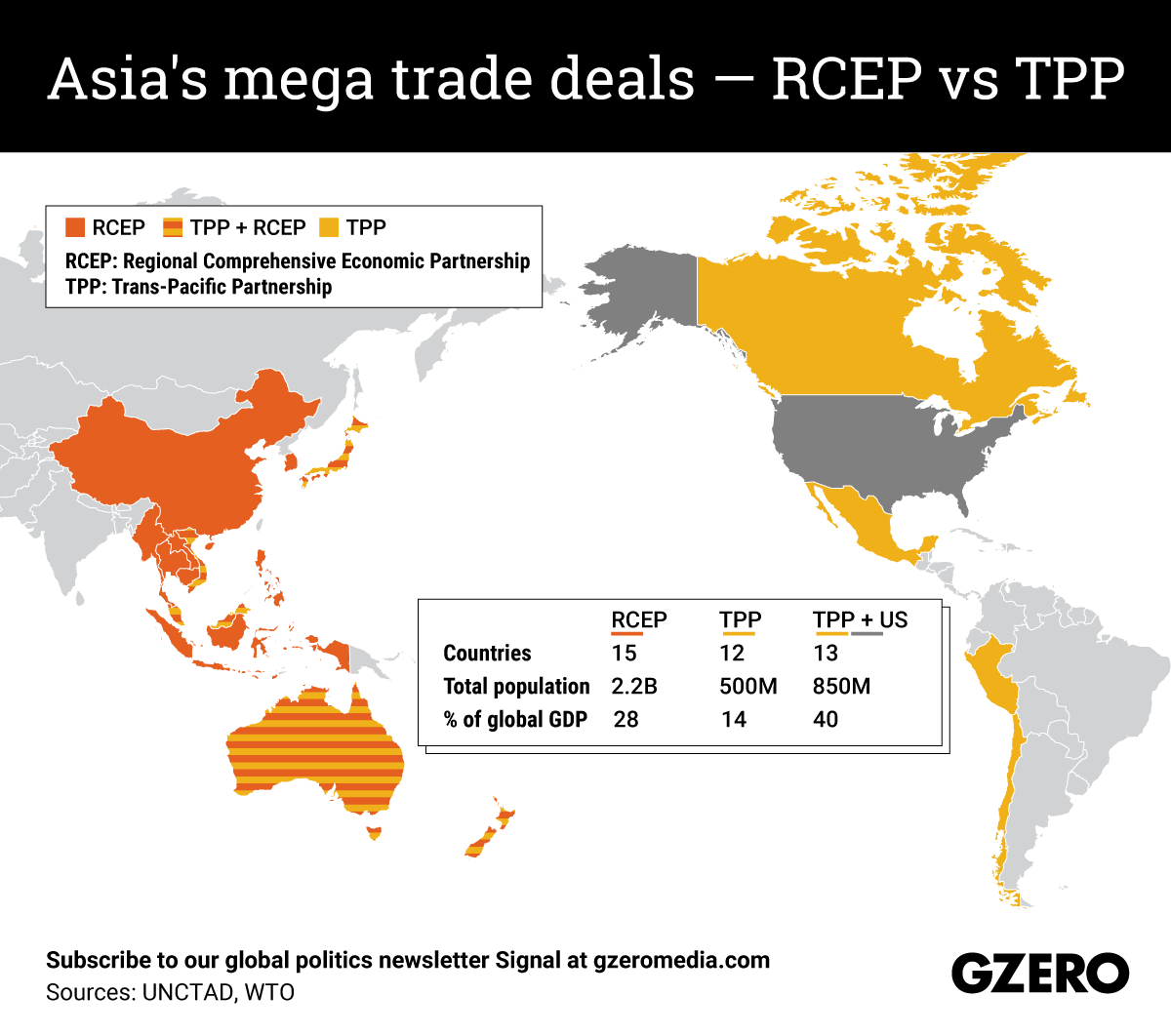
On Sunday, 15 Asia-Pacific countries inked the Regional Comprehensive Economic Partnership, considered the biggest regional trade agreement ever signed. The RCEP includes China, which was left out of the Trans-Pacific Partnership, another mega regional trade deal pushed by the Obama administration in the US... until President Trump walked out of it on his first day in office in 2017. While the RCEP is a much wider agreement, covering more countries and around 2.2 billion consumers, it lacks the depth of the TPP, which carried strong protections for labor, the environment, and intellectual property. With the US, it would also have accounted for a larger share of global GDP than today's RCEP. Here we compare the RCEP to the current TPP, and to what the TPP would look like if the US had stayed in it.
From Your Site Articles
More For You
- YouTube
In this Quick Take, Ian Bremmer breaks down Brazilian President Luiz Inácio Lula da Silva’s historic re-election victory and what it means for the country’s political future and democracy.
Most Popular
- YouTube
Could replacing Benjamin Netanyahu change Israel’s direction? Brett McGurk explains why a government led by Gadi Eisenkot would likely maintain Israel’s security doctrine while taking a different approach to the West Bank.
The competition to master this technology shapes everything from high-level tensions between the US and China to the local politics of where to build data centers.
© 2025 GZERO Media. All Rights Reserved | A Eurasia Group media company.