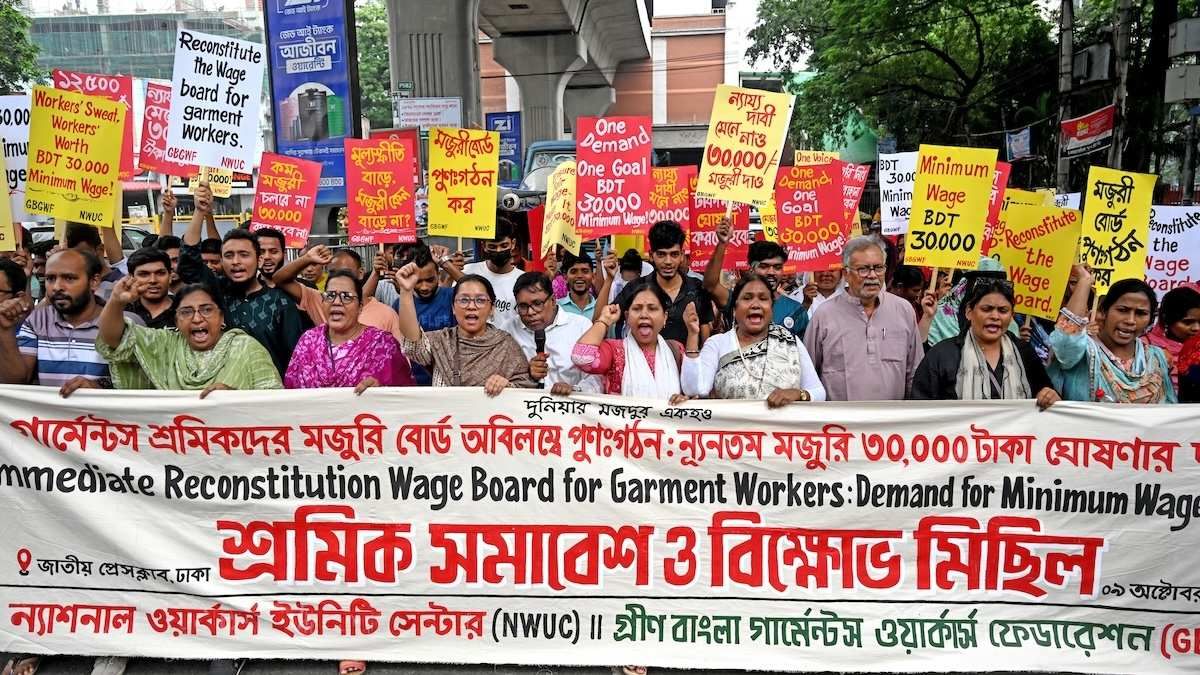
Bangladeshi garment workers demand higher wages
Garment workers in Bangladesh have taken to the streets over the past week, demanding higher wages and forcing more than 600 factories to shut down nationwide. Protests escalated on Sunday in the capital, Dhaka, after police fired tear gas at demonstrators. The industry generates more than $40 billion for Bangladesh per year, about 10% of its GDP, but workers say they aren’t seeing any of that money. They are demanding that the national minimum monthly wage be raised from 13,000 taka ($105), among the lowest in the world, to 30,000 taka ($242). Recently-elected PM Tarique Rahman has scrambled to contain the unrest, announcing a new wage board to review workers’ demands. Worker strikes could have a global impact: Bangladesh is the world’s second-largest garment exporter after China, supplying about 7% of garments worldwide, including to major brands like H&M, Primark, and Uniqlo.
Trump throws a midterm Hail Mary: ending aid to Israel
US President Donald Trumpsaid this morning that the US would halt $4 billion in annual aid to Israel by the end of this year. During an interview with Fox News, the president said Israel is prosperous enough to fund its own defense, but added that commercial arms sales will continue. It’s unclear how Washington will end the assistance early, given the aid agreement expires in 2028. But Trump appears more concerned with politics than logistics: he argued Israel had become too much of a talking point for Democratic candidates like Abdul El-Sayed in Michigan, who is currently polling ahead of his Republican opponent. As we reported yesterday, Israel has become a defining issue for Democrats as public opinion sours on the country. Israeli PM Benjamin Netanyahu has yet to comment on Trump’s announcement, but told the Economist in January that he wanted to “taper off” US military aid in the next decade.
Mexico cracks down on phone usage in schools
Starting today, Mexico will ban phones in elementary and middle schools. The restrictions, championed by President Claudia Sheinbaum, aim to improve students’ focus and learning outcomes. But critics warn the new policy could put children at risk. In parts of the country plagued by cartel violence, parents worry that the ban could prevent them from contacting their children during emergencies or checking that they're safe. In the first half of this year, nearly 10% of Mexicans under the age of 18 were victims of some form of organized crime. Mexico is hardly alone: 114 other countries have already imposed nationwide cellphone bans in schools.