UN General Assembly
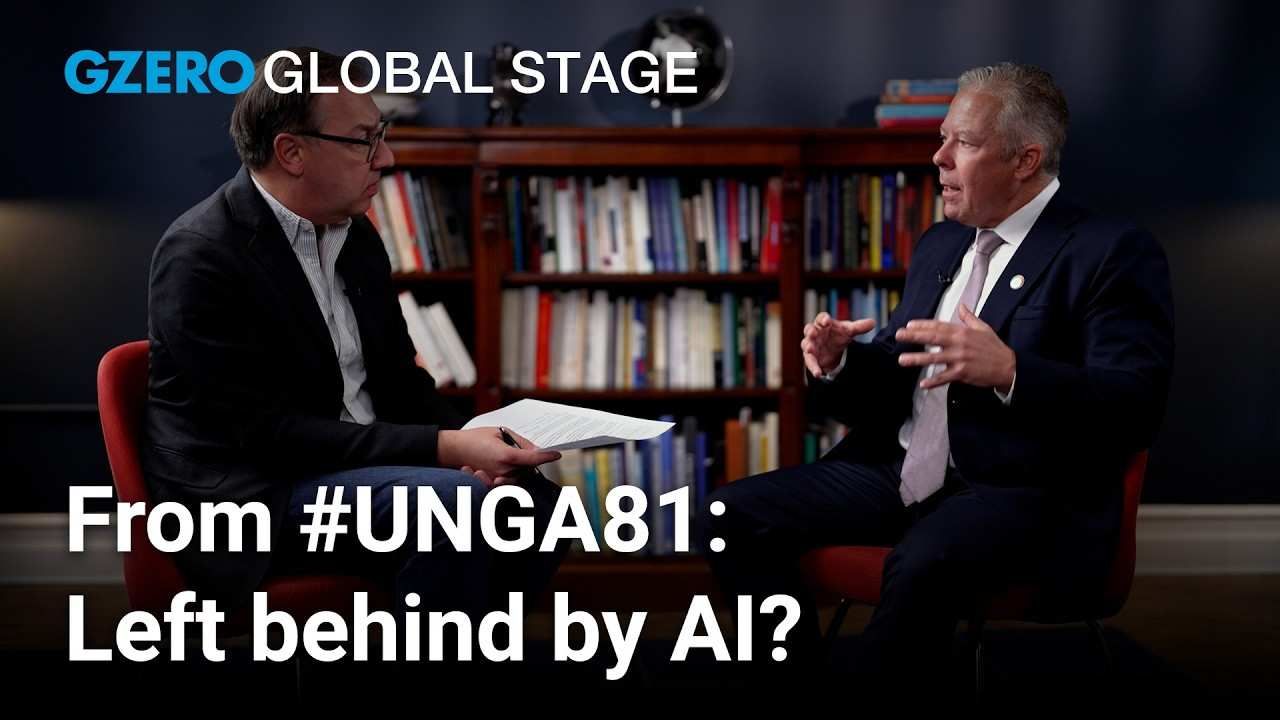
Can AI work for everyone? ITU’s Fred Werner on closing the global AI gap
- YouTube
Werner argues that expanding the benefits of AI globally will require more than simply widening access to the technology. Countries also need the data, connectivity, skills, standards, and safeguards to put AI to meaningful use, particularly as governments grapple with questions around safety and governance. Central to that challenge is closing the global AI skills gap and ensuring people have the knowledge to use these tools responsibly and solve local problems.
Werner also discusses how ITU is putting that approach into practice through its AI Skills Coalition, including a new initiative providing 100,000 digital training scholarships. The goal, he says, is to move beyond the promise of AI and give more people around the world the skills and resources to benefit from it.
This conversation is part of GZERO Media’s Global Stage series, bringing together leaders and experts to discuss the major issues shaping our world.
Over the past two weeks, President of El Salvador Nayib Bukele has sent around 2,000 troops to Haiti to rescue four Salvadoran nationals working in Haiti who were kidnapped by gangs. But the self-proclaimed “world’s coolest dictator” may have bigger ambitions.
In the end, the long-predicted “blue wave” turned into a tsunami as the Democrats, harnessing widespread frustrations over high living costs, opposition to the war in Iran, and misgivings about Trump’s deportation policies, swept back to power on Capitol Hill.
Last night’s wins were not only pivotal, but also broke multiple glass ceilings in American politics.
The elections are widely seen as a referendum on the African National Congress (ANC), the party that has governed South Africa since the end of apartheid, amid frustration over pervasive corruption, crumbling public services, and rising migration.