June 06, 2026
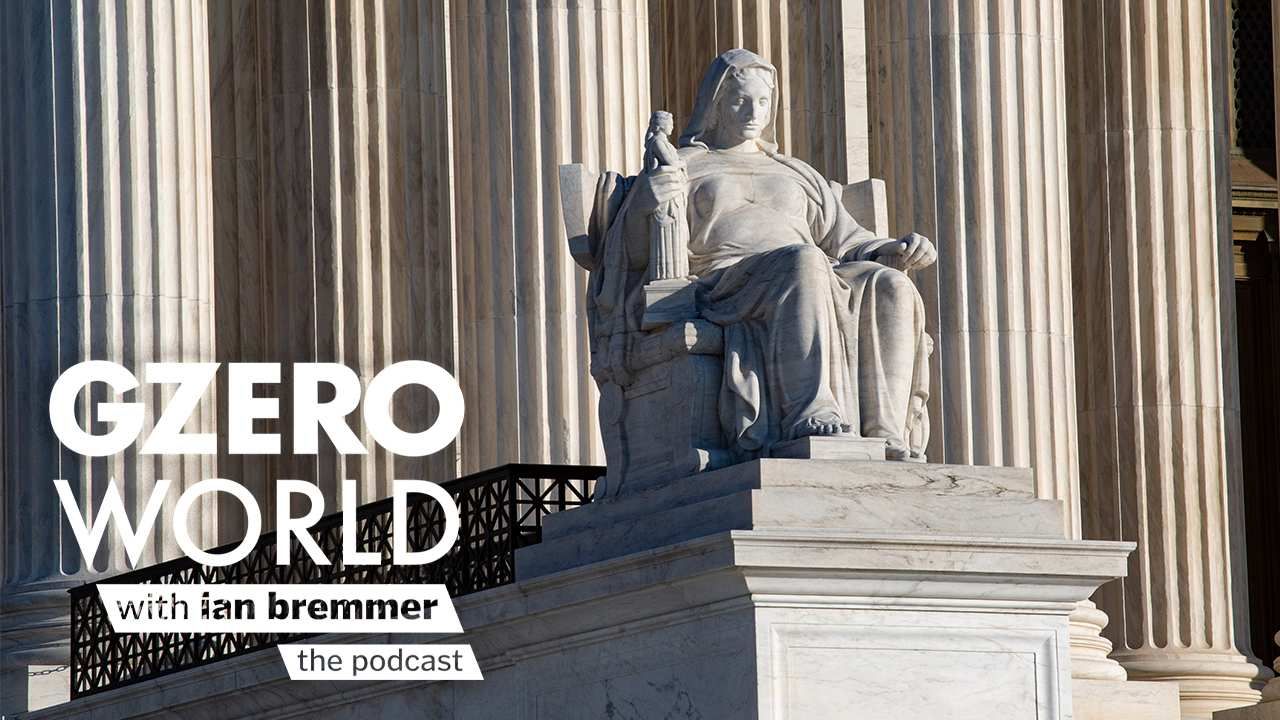
From birthright citizenship to the independence of federal agencies, the Supreme Court is poised to decide a series of cases that could redefine the balance of power in Washington. Yale legal scholar and New York Times Magazine staff writer Emily Bazelon joins Ian Bremmer to assess what's at stake and whether the judiciary remains an effective check on presidential authority.
Bazelon argues that Trump's effort to end birthright citizenship is unlikely to succeed, but says other pending cases involving the Federal Reserve and the Federal Trade Commission could significantly expand presidential control over agencies that Congress intentionally designed to operate independently. "I think it's very likely the court will rule in the president's favor," she says of the FTC case.
The conversation also examines the Court's recent decisions on tariffs and voting rights, including a ruling that further weakened protections against partisan gerrymandering. Bazelon argues that the consequences extend beyond individual cases, contributing to a broader perception that the Court is becoming increasingly political.
Yet despite declining public trust, Bazelon sees reasons for cautious optimism. While Congress has largely failed to constrain executive power, she argues that the judiciary, particularly the lower courts, has repeatedly pushed back against actions that exceed legal authority. The bigger question is whether those guardrails will continue to hold as the Court confronts some of the most consequential constitutional disputes still ahead.
More For You
Medical workers treat injured people at Ameth Bek hospital after a drone strike on a market in the disputed Abyei region along the border between South Sudan and Sudan, October 19, 2026.
REUTERS/Medecins Sans Frontieres
South Sudan is accusing neighboring Sudan of launching a drone strike that killed at least 73 people at a market in Abyei, a disputed, oil-rich region of roughly 4,000 square miles claimed by both countries.
Most Popular
- YouTube
In this Quick Take, Ian Bremmer says President Donald Trump's approach to the war in Ukraine is putting more pressure on President Volodymyr Zelensky and raising concerns among European allies about the future of NATO.
Protesters set up barricades and burn materials near Place de la Republique in Paris, France, on October 18, 2026, the day following a large demonstration.
Jerome Gilles via Reuters Connect
Ongoing student protests in France descended into looting and riots over the weekend as more than half a million people took to the streets across the country.
After his father was killed in a plane crash in 2023, Pavel was tapped to lead Wagner.
© 2025 GZERO Media. All Rights Reserved | A Eurasia Group media company.