GZERO Europe
Ukraine's NATO & EU ambitions
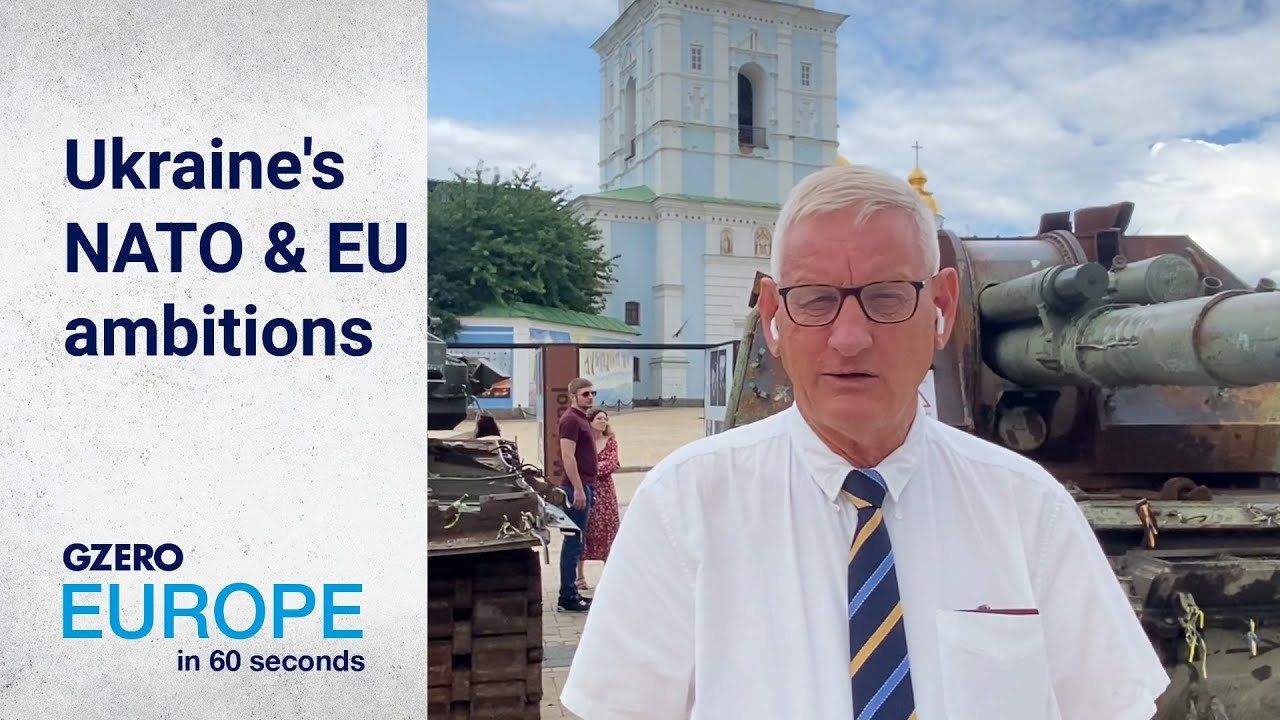
Ukraine's NATO & EU ambitions | Europe In: 60 | GZERO Media
Carl Bildt, former prime minister of Sweden, shares his perspective on European politics.
First question, is Ukraine going to be a member of NATO?
Well, eventually it will. There's no question about it. There was no even formal limitation issued in the news for fairly obvious reasons. The country is in war at the moment. But at the same time, no question, there were substantial commitments by NATO, even more substantial commitment by the different G-7 nations to build up the armed forces of Ukraine long term, integrate them into NATO. And no question that Washington Summit next year is going to be a lot of discussions on when NATO formally has go to admit Ukraine as a member.
Second question, will Ukraine be a member of the European Union?
Well, same answer. It will be at some point in time, but that's going to be somewhat more drawn out process necessarily. I would hope that by the autumn of this year, that we will have first opinion by the European Commission to say yes and a decision by the heads of government, heads of state and government of the European Union in December to start accession negotiations.
In this Quick Take, Ian Bremmer breaks down Brazilian President Luiz Inácio Lula da Silva’s historic re-election victory and what it means for the country’s political future and democracy.
Could replacing Benjamin Netanyahu change Israel’s direction? Brett McGurk explains why a government led by Gadi Eisenkot would likely maintain Israel’s security doctrine while taking a different approach to the West Bank.
The competition to master this technology shapes everything from high-level tensions between the US and China to the local politics of where to build data centers.