Analysis
Why the Houthis are widening the Iran war
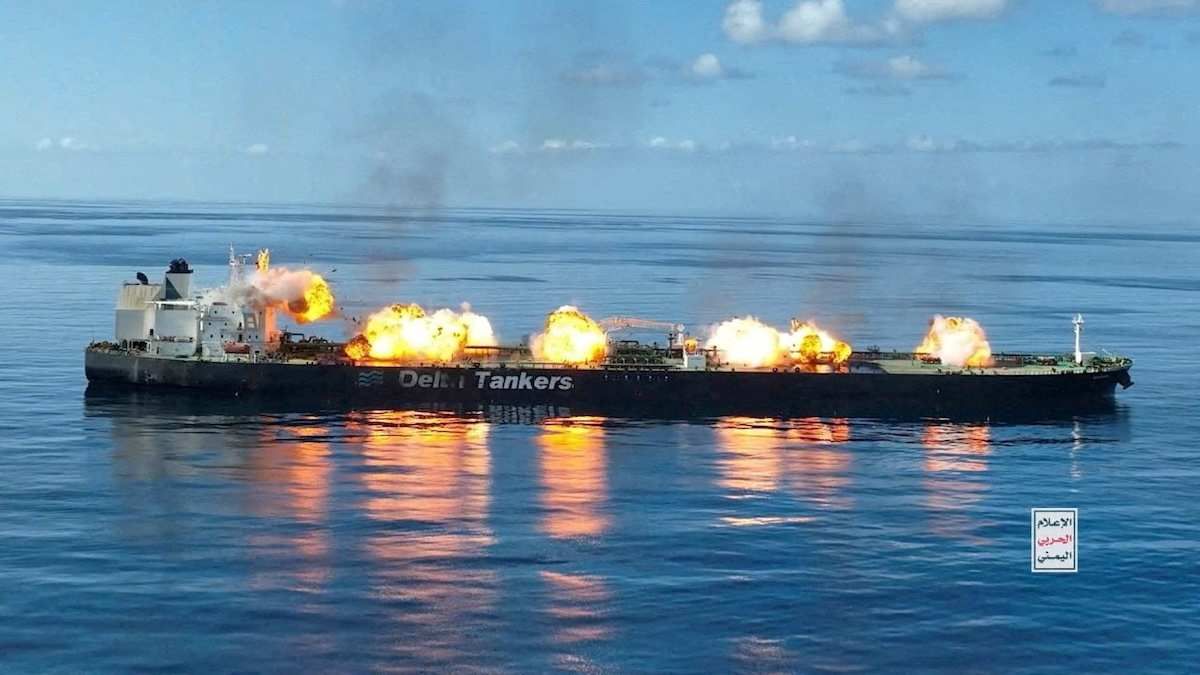
Explosions take place on the deck of the Greek-flagged oil tanker Sounion on the Red Sea, in this handout picture released August 29, 2024.
Houthi Military Media/Handout via REUTERS
The Iran war expanded to a new front this week. The Houthis, an Iran-backed militia which controls most of Yemen, said they attacked two Saudi oil tankers in the Red Sea today as part of a blockade on shipping to and from Saudi Arabia through the Bab el-Mandeb Strait.
The consequences are far-reaching. Saudi Arabia, the world’s largest exporter of crude oil, has increasingly relied on the Red Sea while the Iran war disrupts shipping through the Strait of Hormuz. According to the trade analytics firm Kpler, the blockade could obstruct around 4% of the world’s oil from entering the market, piling fresh pressure on a global economy already rattled by the Iran war.
Given the stakes, we're breaking down who the Houthis are and why they're getting involved in the conflict now.
Who are the Houthis? The Houthis are an ultra-conservative Muslim religious group from northern Yemen rooted in Zaydism, a branch of Shia Islam. In the early 2000s, the Houthis launched an insurgency against the central government over what they viewed as widespread corruption and mismanagement.
During the Arab Spring in 2011, the grievances of the Yemeni people reached a fever pitch, and protests forced the country’s longtime authoritarian leader, Ali Abdullah Saleh, to resign. Saudi Arabia, Yemen’s northern neighbor, backed Abdrabbuh Mansur Hadi as the new leader – a move that the Houthis resented. They launched a military campaign against the new Saudi-backed government, ultimately triggering a grueling civil war.
That conflict, currently frozen, has left roughly 150,000 dead and spiraled into one of the world’s largest humanitarian crises. According to the United Nations, an estimated 4.5 million people, roughly 14% of the population, are displaced by the fighting.
What’s the Houthis’ link to Iran? Iran has supported the Houthis since at least 2009. Alongside Iranian proxies Hezbollah in Lebanon, Hamas in Gaza, and various Shia militia groups in Iraq, the Houthis are a key part of Tehran’s regional “Axis of Resistance” against US-allied countries and governments. In 2014, the year the Houthis captured Yemen’s capital city of Sanaa, experts say Iran’s financial support increased, with Tehran supplying the group with weapons – including drones and cruise and ballistic missiles.
How significant is the risk? The Houthis have disrupted shipping in the Red Sea before. Beginning in late 2023, they made headlines by attacking ships in the Red Sea with missiles, drones, and hijackings in response to Israel’s war with Hamas in Gaza. As a result, oil shipments going through the Bab el-Mandeb Strait fell from 9.3 million barrels per day in 2023 to just 4.1 million in 2024.
Avoiding the Bab el-Mandeb Strait will be costly for Gulf exporters and for the trade market. One option is routing ships around the Cape of Good Hope in South Africa, adding two or three weeks to journeys between Asia and Europe. Some Gulf states are looking at other export options with overland routes – Iraq, for example, is eyeing pipelines through Jordan, Syria, and Turkey. But the process is also proving expensive and, currently, inefficient - adding around $1 million in costs of rerouting per voyage.
How will Saudi Arabia respond? As Ian Bremmerexplained this week, Houthi attacks would “be bringing the Saudis directly into this war.” A forceful response from Saudi Arabia against the Houthis in Yemen could potentially reignite that country's catastrophic civil war. We aren’t there yet, but the risk of the Iran war spreading directly into another simmering regional conflict is increasing.
In this special edition of “ask ian,” Ian Bremmer reflects on the life and passing of his beloved dog, Moose.
2.8 is way above the UN target of 1.5 degrees that was set by the 2015 Paris Agreement.
Prime Minister Giorgia Meloni has deployed 500 troops to Milan and tightened nationwide anti-rioting laws in an effort to quell unrest that has gripped the city since the weekend.
President Trump has changed course on Ukraine before. We all remember the Oval Office pyrotechnics (and the reconciliation). But his latest turn toward Russia could prove harder to reverse.