
Skip to content
Search

Latest Stories

The United States will no longer play global policeman, and no one else wants the job. This is not a G-7 or a G-20 world. Welcome to the GZERO, a world made volatile by an intensifying international battle for power and influence. Every week on this podcast, Ian Bremmer will interview the world leaders and the thought leaders shaping our GZERO World.

Presented by

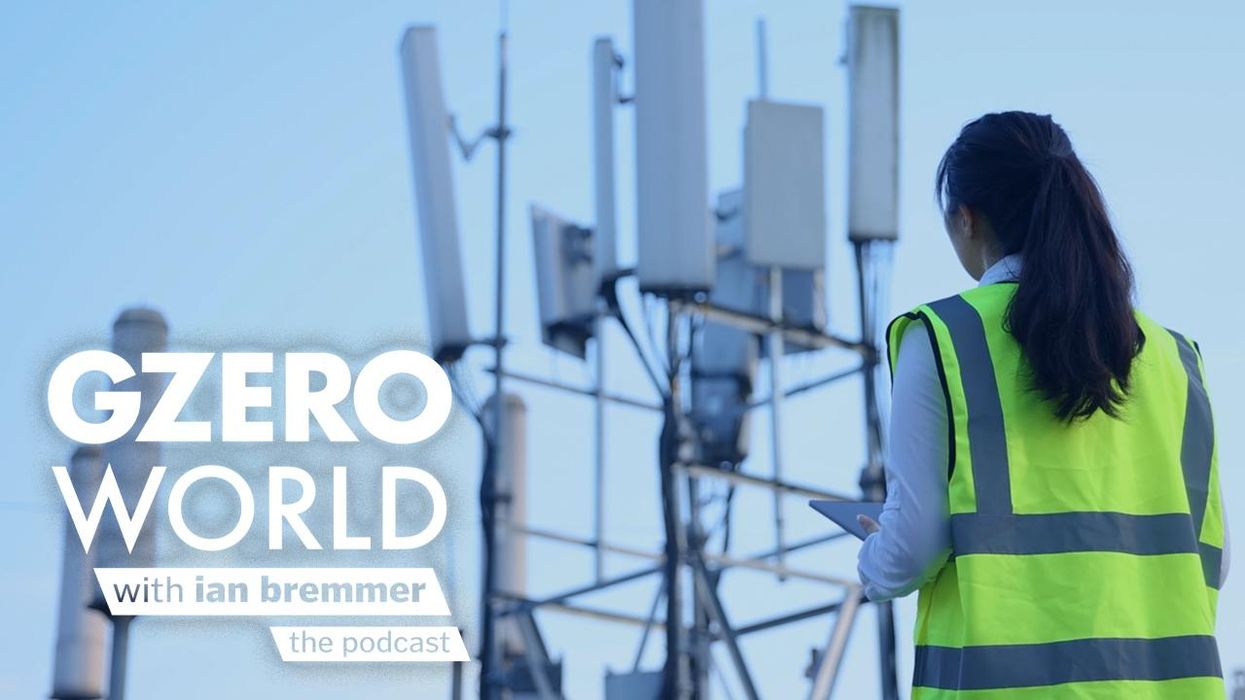
logo: GZERO World with Ian Bremmer (the podcast), overlaid on image of woman engaged in cyber technology.

Podcast: How the US will fight cyber wars

Listen: Jen Easterly is optimistic about the state of America’s cyber defenses, she tells Ian Bremmer on the GZERO World podcast. As director of the US Cybersecurity and Infrastructure Security Agency, she is tasked with defending the country from all cyber threats, foreign and domestic, at a time when the stakes are very high.


Listen: Jen Easterly is optimistic about the state of America’s cyber defenses, she tells Ian Bremmer on the GZERO World podcast. As director of the US Cybersecurity and Infrastructure Security Agency, she is tasked with defending the country from all cyber threats, foreign and domestic, at a time when the stakes are very high. The next decade will be a turning point in the global cyber arms race. From Russian-backed ransomware attacks against America’s largest oil pipeline to the phone scammer who won’t leave you alone during dinner, we’re living in a brave new world.

While Russia is the more urgent cyber threat, says Easterly, China could do more damage in the long term. As for non-state actors like ISIS carrying out major cyberattacks, there is "low probability, but high impact.” The bigger problem, she adds, may be nations that use cyber to do somewhat lawful things like collecting intelligence, but then use such practices for nefarious purposes. The US government has finally gotten serious about protecting itself from cyberattacks, but still needs cooperation from the private sector to drive down risk to the nation, Easterly explains, noting that the Cyber Incident Reporting for Critical Infrastructure Act will now require whoever operates critical infrastructure to report attacks coming from state and non-state actors.
Subscribe to the GZERO World Podcast on Apple Podcasts, Spotify, Stitcher, or your preferred podcast platform, to receive new episodes as soon as they're published.
Next Page

More from GZERO World Podcast

Lebanon's best chance for peace, with Kim Ghattas


While the world’s attention has focused on the Strait of Hormuz and the escalating conflict between the United States and Iran, another potentially transformative front has opened in Lebanon. Israeli attacks against the Iranian-backed group Hezbollah have left more than 4,000 people dead and displaced over a million. Now, a fragile ceasefire has raised a question diplomats have struggled with for decades: Can Hezbollah actually be disarmed?

Keep reading... Show less

As Hezbollah’s power weakens and Israel occupies parts of southern Lebanon, could the country finally reclaim its sovereignty? Or is it headed toward another war? Journalist Kim Ghattas joins Ian... More >

Inside Ukraine's strategy to pressure Putin, with Dmytro Kuleba

For more than four years, Russia has wagered that it can outlast Ukraine. The Kremlin has more troops, more resources, and a greater tolerance for casualties, betting that Kyiv — and its Western allies — will eventually lose the will to keep fighting.

But that assumption is being tested. Ukraine is carrying out increasingly sophisticated strikes deep inside Russian territory, forcing Moscow to defend military bases, energy infrastructure, and even symbolic strongholds like Crimea. At the same time, NATO support has strengthened, Europe is expanding its defense cooperation with Kyiv, and President Donald Trump has struck a noticeably warmer tone toward Ukraine than he did just months ago.

Keep reading... Show less

Ukraine is bringing the war to Russia, challenging one of the conflict's biggest assumptions: that time is on Vladimir Putin's side. Former Ukrainian Foreign Minister Dmytro Kuleba joins Ian Bremmer... More >

The human cost of Iran's war, with Yeganeh Torbati

Iran’s government emerged from the war with a powerful new story to tell: it withstood attacks from the United States and Israel, kept its grip on power, and gained fresh leverage in the region. But that is not how the conflict looks from inside the country.

For ordinary Iranians, the conflict has brought more fear, deeper economic pain, and little sign that the political change many hoped for is any closer. The protest movement that shook the country has been pushed underground by a brutal crackdown, while the government uses internet restrictions to make it harder for people to organize, communicate, and show the world what is happening.

On the latest episode of the GZERO World podcast, Ian Bremmer speaks with New York Times Iran correspondent Yeganeh Torbati about life inside Iran during the war. They discuss why Tehran feels more emboldened, how ordinary people are navigating repression and a worsening economy, why some Iranians feel betrayed by Donald Trump’s promises of support, and whether the frustrations that drove millions into the streets could eventually erupt again.

Iran’s regime has survived the war, but ordinary Iranians are still living with fear, repression, and a collapsing economy. Yeganeh Torbati joins Ian Bremmer to explain what comes next for the people... More >

America at 250: Patriotism, Trump, and America's future, with Bill Maher

America turns 250 at a time when even celebrating the country can feel political. In the latest episode of the GZERO World podcast, Ian Bremmer sits down with comedian and political commentator Bill Maher to discuss patriotism, polarization, and the arguments Americans are having over what their country represents.

Keep reading... Show less

As America marks its 250th birthday, Bill Maher joins Ian Bremmer to discuss patriotism, political division, Donald Trump, and why the country is still worth celebrating.... More >

GZERO Podcasts

As Hezbollah’s power weakens and Israel occupies parts of southern Lebanon, could the country finally reclaim its sovereignty? Or is it headed toward another war? Journalist Kim Ghattas joins Ian... More >

Listen: What does global energy transition look like in a time of major geopolitical change, including rebalancing of trade? In this special episode of "Energized: The Future of Energy,” host JJ... More >

Creating artificial human retinas in zero gravity. Mining rare minerals on the moon. There seems to be no limit to what could be possible if we continue to take our more important industries to... More >

As Hezbollah’s power weakens and Israel occupies parts of southern Lebanon, could the country finally reclaim its sovereignty? Or is it headed toward another war? Journalist Kim Ghattas joins Ian... More >

In this episode of The Ripple Effect: Investing in Life Sciences, host Dan Riskin speaks with Patrick Horber, President of Novartis International, and David Gluckman, Vice Chairman of Investment... More >