
Skip to content
Search

Latest Stories

The United States will no longer play global policeman, and no one else wants the job. This is not a G-7 or a G-20 world. Welcome to the GZERO, a world made volatile by an intensifying international battle for power and influence. Every week on this podcast, Ian Bremmer will interview the world leaders and the thought leaders shaping our GZERO World.

Presented by

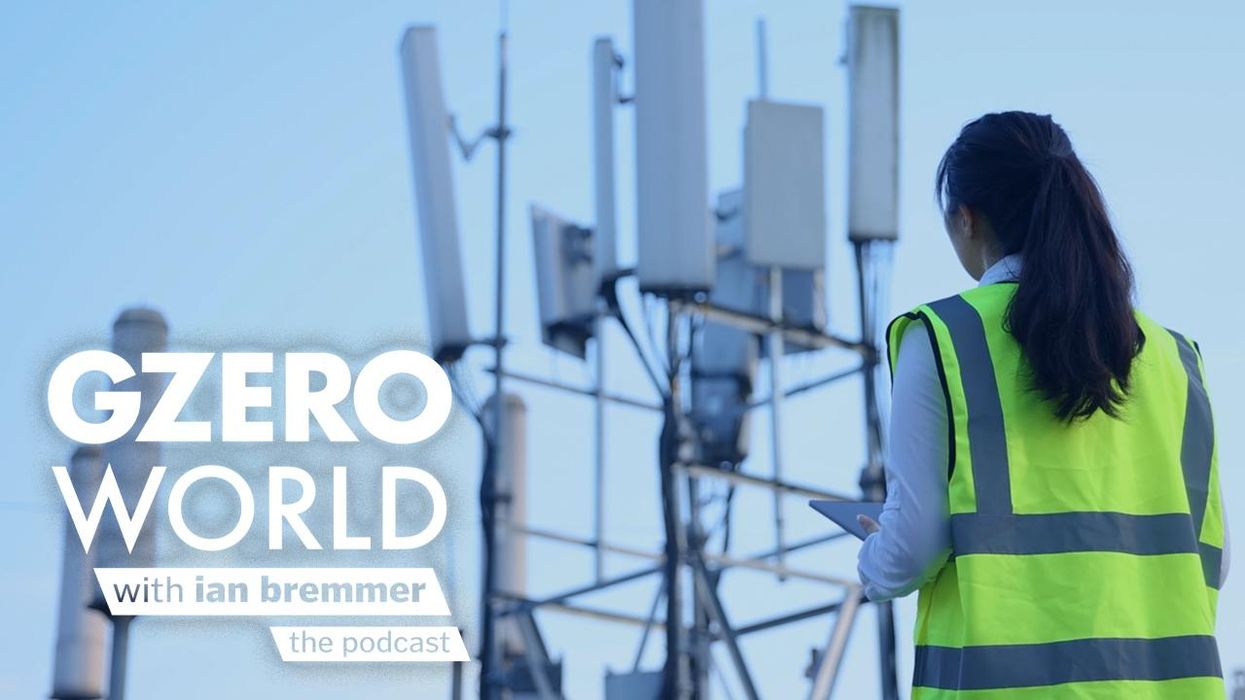
logo: GZERO World with Ian Bremmer (the podcast), overlaid on image of woman engaged in cyber technology.

Podcast: How the US will fight cyber wars

Listen: Jen Easterly is optimistic about the state of America’s cyber defenses, she tells Ian Bremmer on the GZERO World podcast. As director of the US Cybersecurity and Infrastructure Security Agency, she is tasked with defending the country from all cyber threats, foreign and domestic, at a time when the stakes are very high.


Listen: Jen Easterly is optimistic about the state of America’s cyber defenses, she tells Ian Bremmer on the GZERO World podcast. As director of the US Cybersecurity and Infrastructure Security Agency, she is tasked with defending the country from all cyber threats, foreign and domestic, at a time when the stakes are very high. The next decade will be a turning point in the global cyber arms race. From Russian-backed ransomware attacks against America’s largest oil pipeline to the phone scammer who won’t leave you alone during dinner, we’re living in a brave new world.

While Russia is the more urgent cyber threat, says Easterly, China could do more damage in the long term. As for non-state actors like ISIS carrying out major cyberattacks, there is "low probability, but high impact.” The bigger problem, she adds, may be nations that use cyber to do somewhat lawful things like collecting intelligence, but then use such practices for nefarious purposes. The US government has finally gotten serious about protecting itself from cyberattacks, but still needs cooperation from the private sector to drive down risk to the nation, Easterly explains, noting that the Cyber Incident Reporting for Critical Infrastructure Act will now require whoever operates critical infrastructure to report attacks coming from state and non-state actors.
Subscribe to the GZERO World Podcast on Apple Podcasts, Spotify, Stitcher, or your preferred podcast platform, to receive new episodes as soon as they're published.
Next Page

More from GZERO World Podcast

The human cost of AI, with Geoffrey Hinton


Computer scientist and Nobel laureate Geoffrey Hinton joins Ian Bremmer on the GZERO World podcast to talk about artificial intelligence, the technology transforming our society faster than anything humans have ever built. The question is: how fast is too fast? Hinton is known as the “Godfather of AI.” He helped build the neural networks that made today’s generative AI tools possible and that work earned him the 2024 Nobel Prize in physics. But recently, he’s turned from a tech evangelist to a whistleblower, warning that the technology he helped create will displace millions of jobs and eventually destroy humanity itself.

Keep reading...Show less

Computer scientist and Nobel laureate Geoffrey Hinton joins Ian Bremmer on the GZERO World podcast to talk about artificial intelligence, the [...]

More >

Gaming out a US-Venezuela war with ambassador James Story

The Trump administration is ramping up pressure on Venezuela, with the USS Gerald R. Ford deployed to the region, CIA covert operations approved by the White House, and strikes on suspected narco‑trafficking vessels attributed to Caracas. Many analysts now see regime change as the ultimate goal. On the GZERO World Podcast, Ian Bremmer and former US Ambassador James Story game out what a US intervention in Venezuela might look like—and more importantly, how the US would manage the aftermath.

Keep reading...Show less

The Trump administration is ramping up pressure on Venezuela, with the USS Gerald R. Ford deployed to the region, CIA covert operations approved by [...]

More >

Andrew Ross Sorkin says the next financial crisis is coming

In 1929, unchecked speculation and economic hype helped fuel the worst financial crash in modern history. Nearly a century later, New York Times journalist and CNBC anchor Andrew Ross Sorkin sees troubling parallels. On the GZERO World podcast, he joins Ian Bremmer to talk about his new book, "1929: Inside the Greatest Crash in Wall Street History—and How It Shattered a Nation," and whether today’s economy is headed for another cliff.

Keep reading...Show less

In 1929, unchecked speculation and economic hype helped fuel the worst financial crash in modern history. Nearly a century later, New York Times [...]

More >

China has become an "engineering state," with Dan Wang

What can the US learn from the benefits–and perils–of China’s quest to engineer the future? Tech analyst and author Dan Wang joins Ian Bremmer on the GZERO World Podcast to discuss his new book "Breakneck," China’s infrastructure boom, and the future of the US-China relationship. Over the last two decades, China has transformed into what Wang calls an “engineering state,” marshaling near unlimited resources to build almost anything–roads, bridges, entire cities overnight. That investment has created astounding growth, but also domestic challenges and soaring debt.

Keep reading...Show less

What can the US learn from the benefits–and perils–of China’s quest to engineer the future? Tech analyst and author Dan Wang joins Ian Bremmer on the [...]

More >

GZERO Podcasts

Computer scientist and Nobel laureate Geoffrey Hinton joins Ian Bremmer on the GZERO World podcast to talk about artificial intelligence, the [...]

More >

Listen: What does global energy transition look like in a time of major geopolitical change, including rebalancing of trade? In this special episode [...]

More >

Listen: Creating artificial human retinas in zero gravity. Mining rare minerals on the moon. There seems to be no limit to what could be possible if [...]

More >

68 million: The ceasefire between Israel and Hamas is tentatively holding, but conditions on the ground in Gaza remain dire. Most Palestinians are [...]

More >

Transcript Listen: “The equivalent of what we spent in World War II was spent in the course of a year and a half to support the US economy, and that [...]

More >

Listen: Investing in health and science research isn’t just about curing diseases. It has huge impacts across society, from creating jobs to driving [...]

More >

Listen: As populations grow and communities evolve, transportation authorities and urban infrastructure are seeking ways to modernize.In this episode [...]

More >