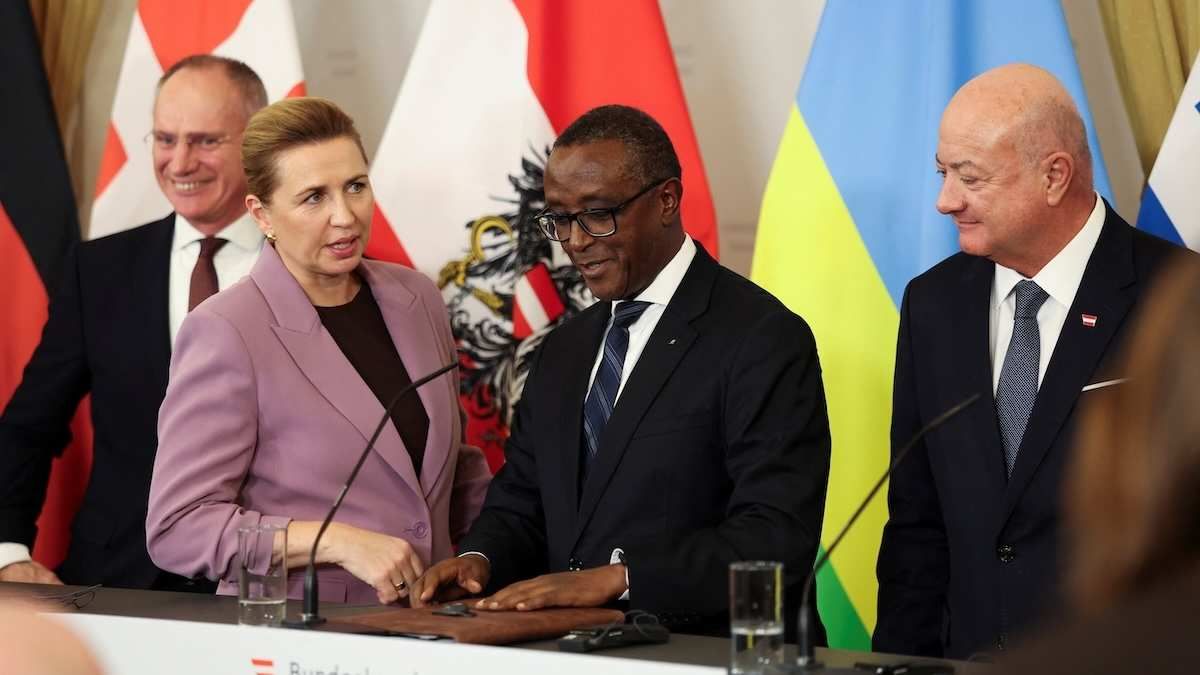
EU countries to deport rejected asylum seekers to Rwanda
Five EU nations reached an agreement on Monday to send migrants with rejected asylum claims to Rwanda. Germany, Austria, the Netherlands, Greece, and Denmark all signed on to the deal, which is set to take effect in 2027. It marks a dramatic shift in European migration policy: just a decade ago, EU nations welcomed more than a million asylum seekers fleeing war in Syria. Since then, governments across the political spectrum have taken a harder line on immigration as far-right parties capitalize on surging anti-migrant sentiment. The agreement mirrors a controversial deal struck between the United States and Rwanda in 2025, under which Rwanda agreed to accept up to 250 deportees. But human rights groups have raised concerns about the new European arrangement as Rwanda’s government has faced mounting criticism for its crackdown on press freedoms, political dissent, and arbitrary arrests.
India’s Supreme Court hears voter rolls case
The top court in the world’s largest democracy will hear a challenge today to the government’s recent mass purge of voter rolls. Back in June, electoral authorities began scrubbing some 130 million names allegedly belonging to people who were ineligible, duplicates, or dead. Critics said the move, rushed through ahead of state elections, lacked proper oversight and deliberately disenfranchised tens of millions of people, especially Muslims. September saw mass protests over the issue, led in part by the new Cockroach Janta online opposition movement, which has become a growing headache for Prime Minister Narendra Modi’s Hindu nationalist government. The Supreme Court will hear a petition to scrap the voter purge and probe the Electoral Commission’s process for removing names. It’s a delicate moment for India’s democracy – if the court finds wrongdoing, it will tarnish the entire electoral system. If not, suspicions of foul play will continue to fester.
UN debates who is responsible for autonomous weapons
Government envoys are meeting in Geneva this week to discuss whether to start talks to regulate autonomous weapons. Development of these weapons, specifically drones that can independently search for, select, and strike targets without human intervention, has increased in recent years. Both Russia and Ukraine have used fully autonomous drones to launch attacks. Proponents of greater regulation say states must agree on answers to who is accountable for the use of these weapons and whether robots should be allowed to kill humans. Meanwhile, the US and Russia oppose a legally binding resolution, as they don’t want to curb their power to develop new weapons in the high-tech arms race. But if an agreement isn’t struck, the issue might not return to the table for a while. This UN conference meets only every five years, and negotiations to limit specific weapons can happen only with consensus, which looks unlikely.