July 25, 2026
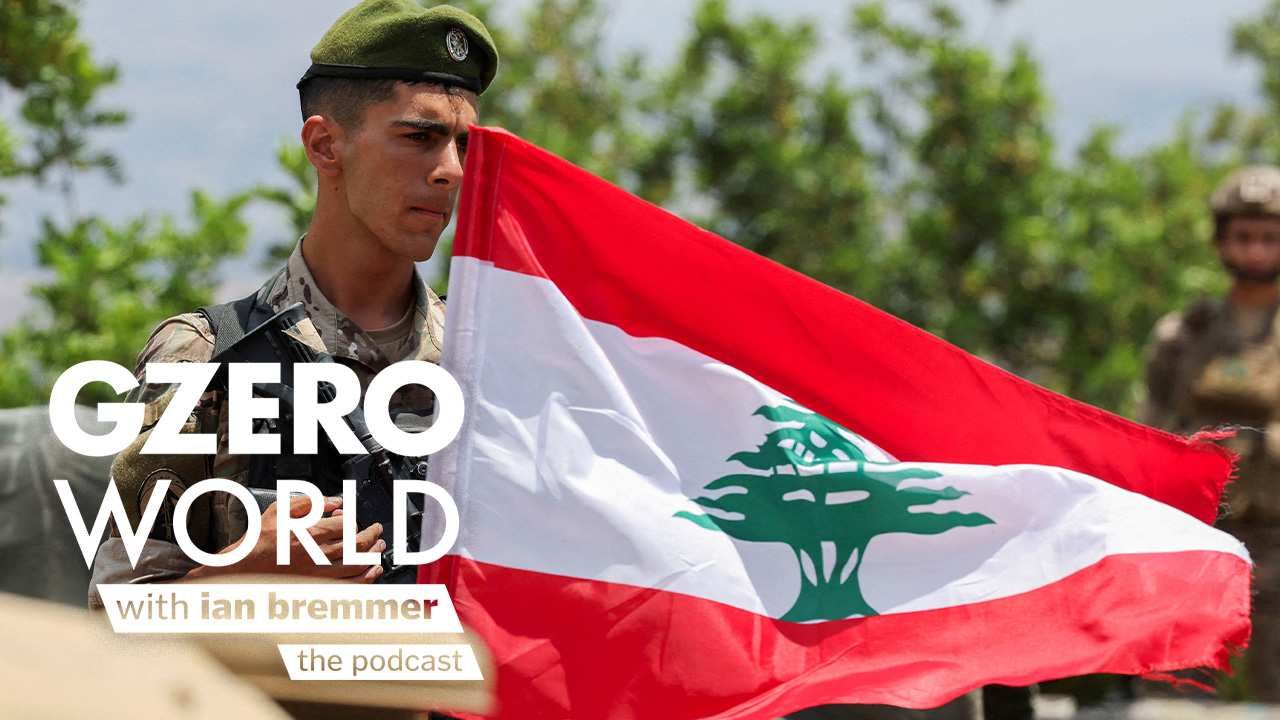
While the world’s attention has focused on the Strait of Hormuz and the escalating conflict between the United States and Iran, another potentially transformative front has opened in Lebanon. Israeli attacks against the Iranian-backed group Hezbollah have left more than 4,000 people dead and displaced over a million. Now, a fragile ceasefire has raised a question diplomats have struggled with for decades: Can Hezbollah actually be disarmed?
On the GZERO World Podcast, Ian Bremmer speaks with Lebanese-born journalist and Middle East expert Kim Ghattas about Iran’s shrinking regional influence, Israel’s possible plans for a long-term buffer zone, and Lebanon’s best chance in decades to reclaim control of its territory. Hezbollah remains armed, but Ghattas argues that it is substantially weaker, while the fall of Syria’s Assad regime has severed a crucial link in Iran’s regional network.
Forcing the Lebanese Army to confront Hezbollah could trigger another civil war. Instead, Ghattas says Lebanon must gradually constrain the group, strengthen state institutions, and show Hezbollah’s supporters that diplomacy can deliver more than armed resistance. That will require Israeli withdrawals, international support, and difficult negotiations over the political future of Lebanon’s Shia community.
“You constrain their capacity to operate. You crowd them out,” Ghattas says. “You demonstrate that diplomacy works and delivers for the Lebanese people in terms of aid, in terms of improved relations with the US.”
More For You
Medical workers treat injured people at Ameth Bek hospital after a drone strike on a market in the disputed Abyei region along the border between South Sudan and Sudan, October 19, 2026.
REUTERS/Medecins Sans Frontieres
South Sudan is accusing neighboring Sudan of launching a drone strike that killed at least 73 people at a market in Abyei, a disputed, oil-rich region of roughly 4,000 square miles claimed by both countries.
Most Popular
- YouTube
In this Quick Take, Ian Bremmer says President Donald Trump's approach to the war in Ukraine is putting more pressure on President Volodymyr Zelensky and raising concerns among European allies about the future of NATO.
Protesters set up barricades and burn materials near Place de la Republique in Paris, France, on October 18, 2026, the day following a large demonstration.
Jerome Gilles via Reuters Connect
Ongoing student protests in France descended into looting and riots over the weekend as more than half a million people took to the streets across the country.
After his father was killed in a plane crash in 2023, Pavel was tapped to lead Wagner.
© 2025 GZERO Media. All Rights Reserved | A Eurasia Group media company.