This week, I explain how the world is seeking a new insurance policy, talk to the Cuba expert Michael Bustamente about what the US wants from the communist-run island, and assess the effects of the UAE’s decision to OPEC-xit. Plus, your weekly rec from my dog Moose.
Let’s get to it,
- Ian
The world hedges its bets on America
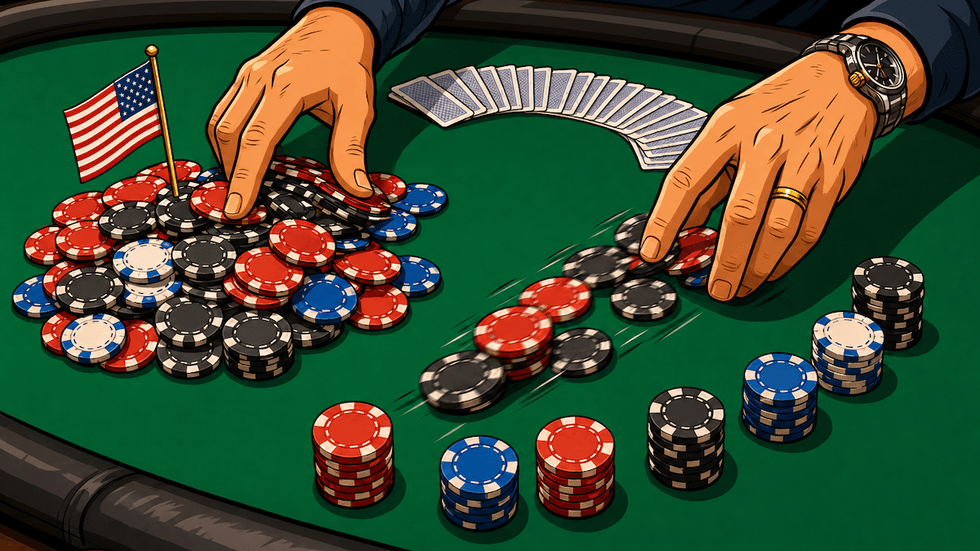
Since returning to the White House last January, Donald Trump has antagonized most of the world’s major governments in one form or another. In particular, he has targeted Iran, Venezuela, Cuba, most of Europe, Canada, and even Greenland for various forms of coercion, and his tariffs have set teeth on edge pretty much the world over. More importantly, the president has redefined what the global superpower will and will not do – and might redefine it all again sooner rather than later.
The result? When it comes to Washington, governments are hedging bets on the future of American power and what it might mean for them.
Some have more leverage than others to push back on Trump’s attempts at pressure. His interactions with those countries have often led to outcomes many call “TACO” – Trump Always Chickens Out. Those with less political and economic muscle cross the president at their peril. That’s the “FAFO” category – F Around and Find Out.
Governments in both categories are working hard to strengthen ties with the United States in the near term (by locking in market access, security guarantees, and Trump’s goodwill as long as they’re available) while building new trade and security ties elsewhere to reduce long-term dependence on Washington. Call it strategic sequencing. If you’re strong enough for the TACO camp, you have options. But if your lack of heft leaves you in the FAFO zone, you’d best give Trump as much of what he wants as you can afford while building toward TACO.
Let’s take a quick lap around the world to see how other governments are placing their bets.
We can start with those most reliant on the United States. Given its dependence on trade with the US and the centrality President Trump has placed on Latin America’s importance for US national security, Mexico falls squarely in this camp. To avoid the risk of direct US intervention inside her country (a risk underlined with news that two CIA officers died following a drug raid in northern Mexico last week), President Claudia Sheinbaum knows she must tighten ties with Washington on border security and the fight against drug cartels. She has also cut aid to Cuba, which remains squarely in Trump’s sights, and placed tariffs on Chinese goods that enter the US via Mexico.
Other Latin American countries face the same necessities. Argentina’s President Javier Milei needs US financial support to stabilize the country’s economy. Panama has tightened cooperation with Washington to limit Chinese-linked investment. Honduras, Bolivia, Chile, El Salvador, and Ecuador have each strengthened their Trump administration ties. The region’s recent rightward turn could help boost these endeavors.
US allies in East Asia and the Persian Gulf likewise understand the need to keep Trump’s favor. Japan’s Prime Minister Sanae Takaichi’s hawkish attitude toward China has won her fans in Washington, and her strong relationship with Trump remains an economic and security necessity. Trump will expect her to keep Japan’s promise to invest $550 billion in the US and deepen bilateral defense cooperation. South Korea and (especially) Taiwan face similar realities.
In the Middle East, meanwhile, the war with Iran has made US security ties an even more urgent near-term necessity for the Gulf states. Saudi Arabia, the United Arab Emirates, and Qatar have each cut deals with Washington to deepen strategic ties. The Saudis and Emiratis have won access to advanced US defense technologies. All three have committed to invest much more in the US and to buy more American-made products.
Yet, the Latin American, East Asian, and Gulf Arab courtship of President Trump has less to do with long-term strategic alignment with America than with the need to avoid the clear and present dangers that come with Trump’s ill will. All these governments understand that trade ties with China, defense deals with other partners, and other forms of bet-hedging are essential to avoid long-term dependence on an increasingly unreliable Washington. The South American trade bloc Mercosur has struck a landmark deal with the EU. The Saudis signed a nuclear deal with Pakistan in 2025 to hedge against any future security neglect from Washington, and Gulf states have increased defense and intelligence-sharing among themselves. Japan is loosening its restrictions on arms exports to allies.
More interesting is the complex recalibration adopted by India’s Prime Minister Narendra Modi, a leader who has felt both Trump’s warm embrace and cold shoulder. India is aggressively diversifying its trade ties (see the landmark agreement with the EU announced earlier this year). But it’s also continuing to build ties with the United States, its most important trade partner. In fact, as India works toward a new deal with the US, it’s likely to selectively open its markets to US agricultural products, a big domestic political win for Trump, and to pledge to buy $500 billion worth of US goods.
US-India security ties, on the other hand, have cooled. A ten-year US-India defense framework agreement and Indian purchases of US military hardware had helped institutionalize their collaboration, but Modi continues to covet India’s strategic independence. Uncertainty about Washington’s longer-term willingness to sell India advanced weaponry – and the personal rift between Trump and Modi over the US president’s claim he deserves a Nobel Prize for brokering a ceasefire between India and Pakistan – have jaded Delhi’s attitude toward Trump’s intentions.
Europe and Canada, meanwhile, have taken concrete steps to advance from FAFO to TACO. Aside from Europe’s groundbreaking trade deals with India, Mercosur, and Indonesia, its leaders have also become much more serious about relieving their dependence on NATO-based US security guarantees, investing much more money, time, and attention on building a collective European defense. That’s a long-term project, for sure, but moving from rhetoric to active planning is a big deal – just look at Germany suspending its debt brake for defense spending last year. And the European willingness to face down Trump over his demand for control of Greenland has changed the transatlantic temperature. Canada’s Prime Minister Mark Carney’s bid to bring together “middle powers” to avoid excess reliance on Washington, his effort to broker a new trade alignment between East Asia and the EU, and his defense procurement plans with Europe shift Canada further from Washington’s shadow than it has been in more than a century.
China, of course, belongs in its own gated TACO community. In 2025, Trump launched an effective boycott of Chinese goods to try to force an economically vulnerable Beijing to accept trade terms more favorable to the United States. Instead, China retaliated with restrictions on the export of critical and rare earth minerals, essential ingredients for a vast array of digital-age consumer and military technologies.
That move forced the US president to back down and offer concessions, including on Chinese access to American-made semiconductors and other technologies that Trump and his predecessor Joe Biden were once determined to restrict. In response, Trump has made clear to trade hawks within his administration that until Washington has crafted a hedging strategy for these all-important minerals – projects that will take years to develop – the United States must avoid direct conflict with China.
But for all these governments, there’s an America problem that’s larger than Trump. Most recognize that he didn’t single-handedly invent growing domestic demand for a new US role in the world, and they know they can’t expect the current confusion over America’s trajectory to end with the inauguration of the next president.
That’s why other countries, friends and foes alike, aren’t simply Trump-proofing their trade and security strategies. They’re hedging America’s longer-term uncertainty and unreliability. Today’s transactions can solve short-term problems, but the new order now under construction – a world that needs America less – will continue in the years ahead.
_________
🔔 Be sure to subscribe to GZERO Daily to get the world’s best global politics newsletter every day on top of my weekly email. Did I mention it’s free?
Walmart’s $1 billion investment is strengthening associate careers
Chris, an Army veteran, started his Walmart journey over 25 years ago as an hourly associate. Today, he manages a Distribution Center and serves as a mentor, helping others navigate their own paths to success. At Walmart, associates have the opportunity to take advantage of the pathways, perks, and pay that come with the job — with or without a college degree. In fact, more than 75% of Walmart management started as hourly associates. Learn more about how over 130,000 associates were promoted into roles of greater responsibility and higher pay in FY25.
The UAE opts for OPEC-exit
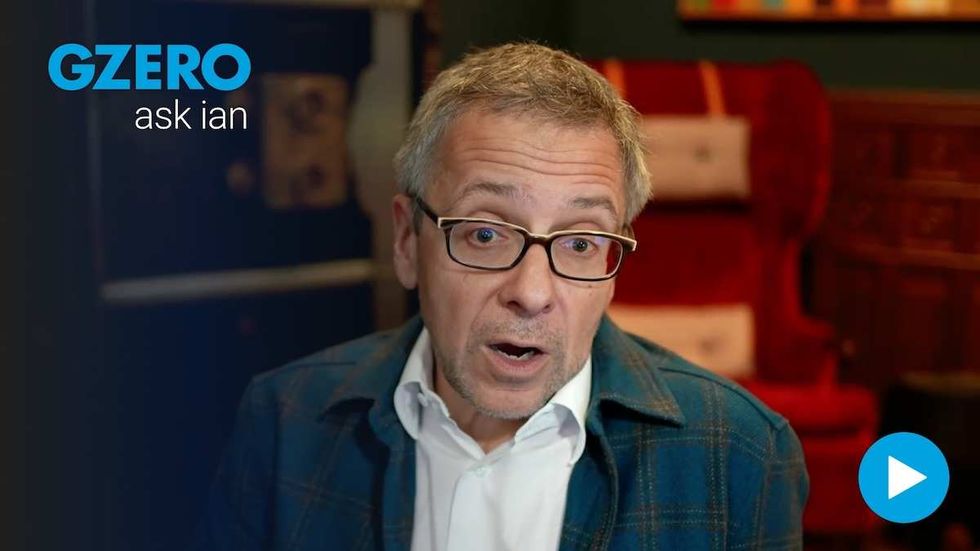
The UAE decided this week to leave OPEC, the cartel of oil-exporting states led by Saudi Arabia. But what does this mean for the Middle East?
Here’s my answer, in three bullets:
- The UAE-Saudi rift widens. The Emiratis’ exit from OPEC isn’t the only thing separating these two Gulf monarchies. They're also on opposite sides of the civil wars in Yemen and Sudan. They’re competing to become regional hubs for state-of-the-art data centers. They’ve taken opposing positions on the Iran war: the UAE and Israel want to cripple the Islamic Republic, while the Saudis prioritize regional stability. In short, Riyadh and Abu Dhabi are increasingly at odds.
- Abu Dhabi takes a step closer to Washington. The Trump administration has pushed for the Emiratis to exit OPEC for some time, seeing its own interests (cheaper oil) as conflicting with those of the cartel (oil that's more expensive). Don’t be surprised if the UAE soon leaves other regional institutions.
- Countries are picking sides. Two major blocs have emerged across the Middle East and South Asia: the UAE, Israel, and India on the one side, and Saudi Arabia, Pakistan, Egypt, and Turkey on the other. Both are aligned with the United States on security and intelligence, but broader tensions between these two blocs will soon emerge.
Watch the latest Ask Ian to learn more.
Did Cuba miss its chance?
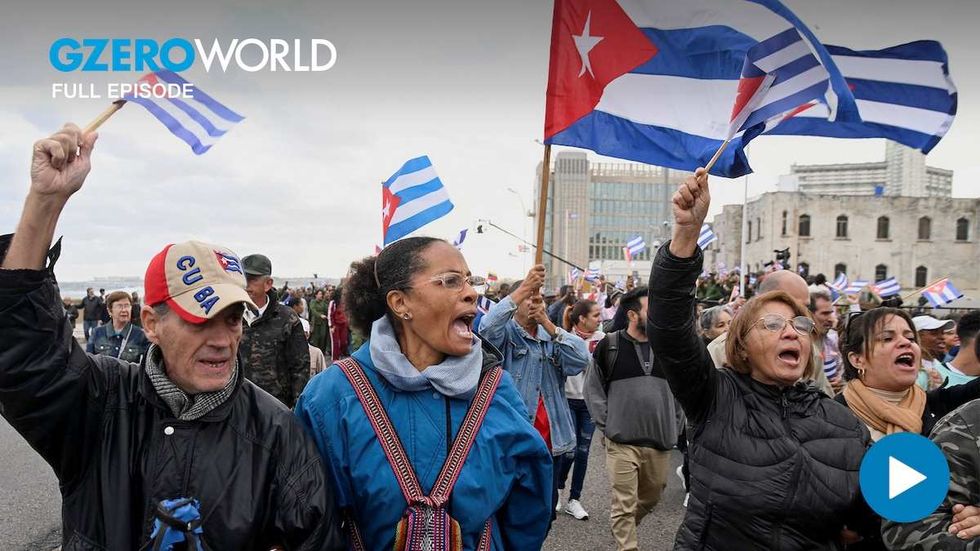
The United States is imposing an oil blockade on Cuba, forcing the island state to contend with regular blackouts and piling garbage. On this week’s edition of GZERO World, I spoke to University of Miami historian Michael Bustamante about how the communist-run country may have missed its moment back when Barack Obama was president.
Between 2014 and 2016, the Obama administration moved to normalize relations with Cuba, lifting some sanctions, reopening embassies, and visiting Havana. For a brief moment, it felt like a turning point. Bustamante, who was there, calls it the most “hopeful” period he ever witnessed on the island. Young, educated Cubans were choosing to stay, to start businesses, to see where things were going.
But the Cuban government saw the opening differently. Rather than doubling down on reform and US investment, they played it safe, assuming the normalization was permanent. “They saw the Obama opening as, ‘the United States has definitively turned the page,’” Bustamante says. So when Donald Trump won and Fidel Castro died within weeks of each other in late 2016, there were so few US business ties in place that the US president had almost nothing to unwind. A missed opportunity that, Bustamante argues, helped bring Cuba to where it is now.
Watch the video here.
Moose’s treat of the week

If I got paid a nickel every time Moose touted the importance of creative response to crises, I’d have a lot of nickels, and the esteemed Tatsuo Masuda has just given him plenty more to bark about. Global energy shocks have quickened climate change progress before, and the current squeeze of the Strait of Hormuz can do it again, he insists. Check out his must-read piece for the World Economic Forum.
_________
Want to understand the world a little better? Subscribe to GZERO Daily for free to get your daily fix of global politics delivered to your inbox.