January 19, 2026
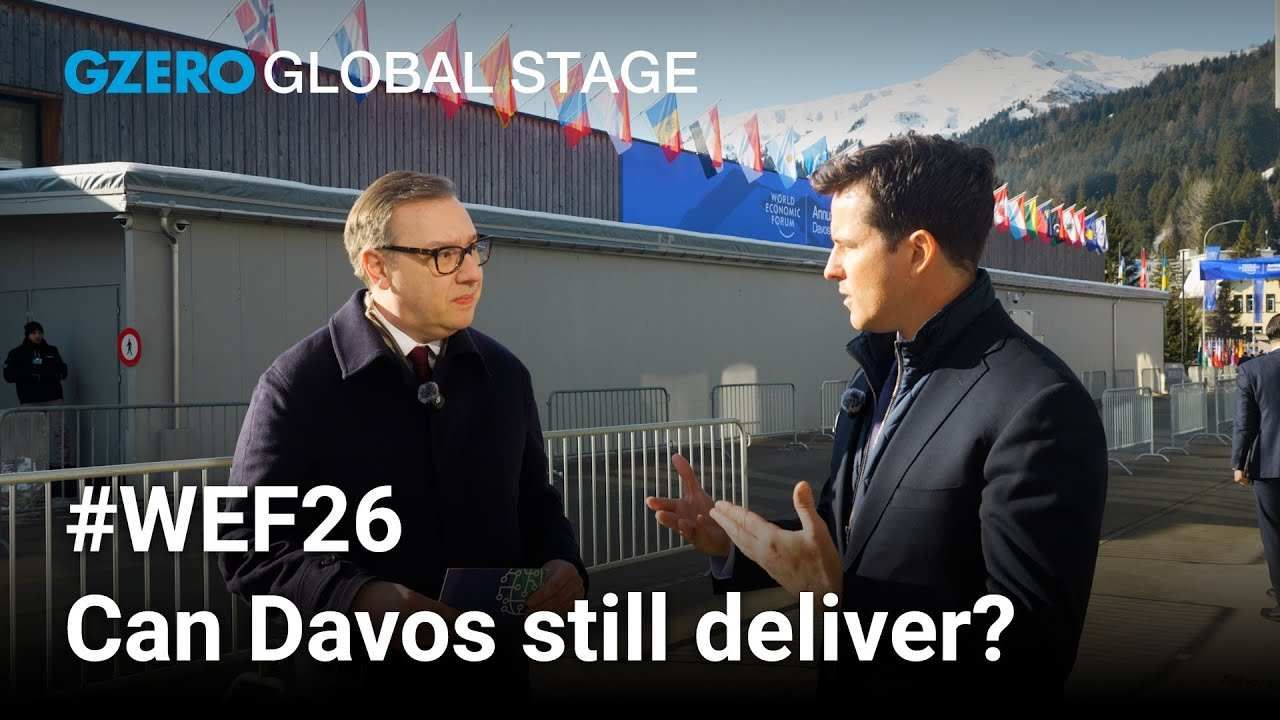
At the 2026 World Economic Forum, GZERO's Tony Maciulis spoke with Matthew Blake, Managing Director at the World Economic Forum, about a defining transition for Davos and the state of the global economy.
With founder and former chairman, Klaus Schwab, no longer leading the Forum (after 55 years), Blake explains how continuity and evolution coexist at a moment of historic uncertainty. From geopolitical fragmentation to record participation by global leaders, he argues that platforms for dialogue remain essential. As Blake describes, Davos is “a place where people can come together, discuss sometimes contentious issues at scale, and try to build bridges to move the world forward together.”
Blake also weighs in on why the global economy has proven more resilient than expected, the risks posed by rising sovereign debt, and how investment in AI could shape the next phase of growth. The key challenge ahead, he says, is ensuring that innovation and opportunity are shared broadly, warning that “a bifurcation of winners and losers is not an acceptable outcome.”
This conversation is presented by GZERO in partnership with Microsoft, from the 2026 World Economic Forum in Davos, Switzerland. The Global Stage series convenes global leaders for critical conversations on the geopolitical and technological trends shaping our world.
See more at https://www.gzeromedia.com/global-stage
More For You
YouTube
In this special edition of “ask ian,” Ian Bremmer reflects on the life and passing of his beloved dog, Moose.
Most Popular
2.8 is way above the UN target of 1.5 degrees that was set by the 2015 Paris Agreement.
Protesters run along a street strewn with debris during a protest over the state of public services and the rising cost of living in Milan, Italy, October 18, 2026.
REUTERS
Prime Minister Giorgia Meloni has deployed 500 troops to Milan and tightened nationwide anti-rioting laws in an effort to quell unrest that has gripped the city since the weekend.
Trump's latest turn against Ukraine could be for good | The Debrief with Clayton Allen
President Trump has changed course on Ukraine before. We all remember the Oval Office pyrotechnics (and the reconciliation). But his latest turn toward Russia could prove harder to reverse.
© 2025 GZERO Media. All Rights Reserved | A Eurasia Group media company.