You probably know some of the more familiar German words in English: Schadenfreude, say. Or Angst. Maybe Realpolitik. And if nothing else: Hamburger.
But here’s a deeper cut for those in the know: Drahtseilakt.
It means “highwire act,” and it describes what German Chancellor Friedrich Merz, the unpopular leader of Europe’s largest economy, needs to do as he meets with US President Donald Trump for the second time in Washington today.
“Merz has shown he is able to talk tough to the Trump administration while at the same time ensuring he doesn't do anything to rock the boat that further undermines core European interests,” says Mij Rahman, head of Europe research at Eurasia Group.
That skill will be tested this afternoon, in a few key areas.
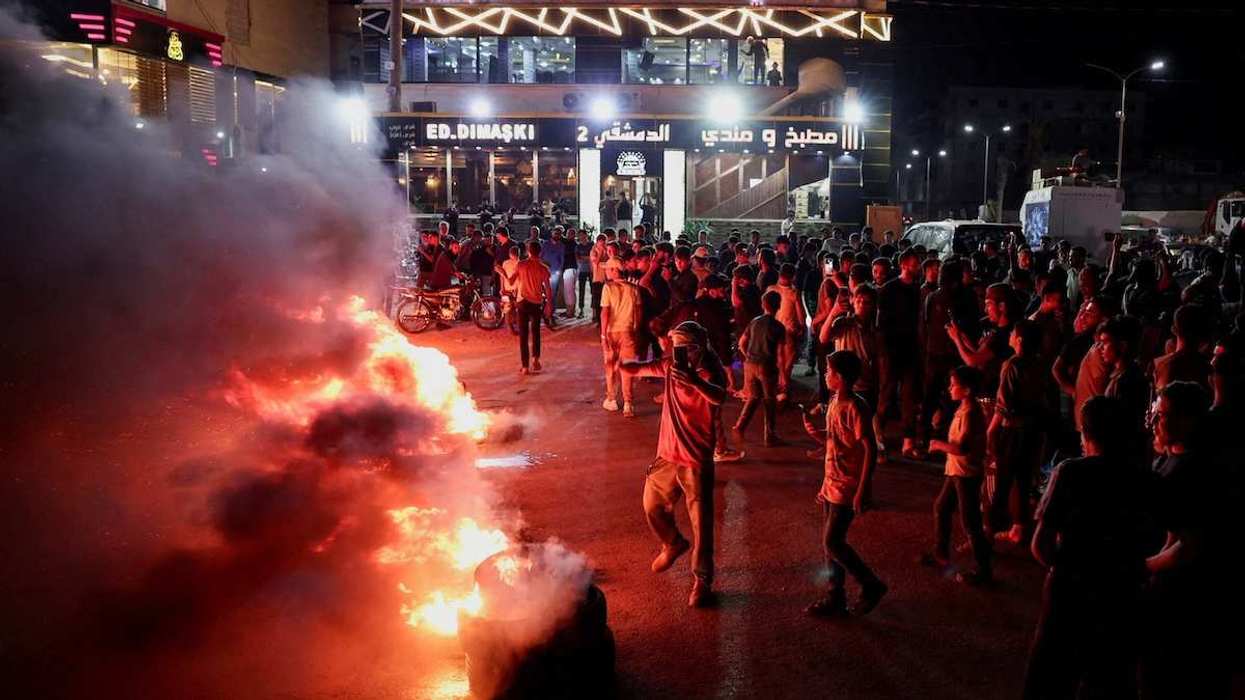
First, keep the focus on the war he wants to talk about. Merz’s visit comes as the deepening US-Israeli war with Iran threatens to destabilize the broader Middle East and send shockwaves through global energy markets.
Although the US sidelined Europe entirely from the campaign, Merz has said it’s “not the time to lecture” Trump about it. That’s largely because Europe wants to keep the US president engaged on the other major conflict happening right now: in Ukraine.
There, a recent flurry of US diplomacy has so far yielded no breakthroughs – Russia still insists on territorial concessions that Ukraine refuses to make, Ukraine insists on clear security guarantees that the US is reluctant to give, and Europe is only just beginning to feel its way towards a Russia strategy that works in a world where the US is a less reliable partner.
Trump may publicly press Merz to voice support for his Iran campaign, which will put the German chancellor on a tightrope: he’ll need to give the US president the praise he expects while also making clear the negative impacts that a prolonged Iran war could have on Europe in terms of energy prices and migration flows.
And he’ll need to do all of this while also keeping the main focus on Ukraine, where Europe wants Trump to pressure Russia more forcefully by enforcing and expanding existing sanctions against the Kremlin.
Second, turn back the clock on trade. After much Sturm und Drang (upheaval) in the US-EU trade relationship during Trump 2.0, the two sides reached a compromise framework last year in which Europe dropped tariffs on the US in exchange for a 15% blanket tariff rate from the US.
But the US Supreme Court’s recent ruling against Trump’s tariffs has blown that up. Now, Washington is pitching a deal that combines a baseline 10% rate with additional sector-specific tariffs that are based on previous “Most Favored Nation” agreements.
Europe doesn’t like that more scattershot approach, says Rahman, worrying that it provides further footholds for Trump to pressure the EU over issues such as free speech, tech regulation, or defense spending. Merz’s job today is to deftly nudge Trump back towards a blanket deal.
Third, show a common front on China. Part of Merz’s appeal to Trump will be that the world’s largest economy (the US) and the world’s largest economic bloc (the EU) may have much to gain by presenting a more common front against China, which both view as a threat to their economic prosperity and technological dominance.
It’ll help that Merz was just in Beijing last week, where he explored deeper cooperation with China as a hedge against US trade hostility, while also criticizing Chinese currency and trade policies, which have contributed to an “unhealthy” German trade deficit with China.
Lastly, make a good showing for the home crowd. Merz is unpopular at home, where his CDU party’s approval rating has sunk to just 26% amid a prolonged economic slowdown, inability to enact significant reforms, and a failure to grapple effectively with the continuing rise of the anti-immigrant Alternative for Deutschland.
With a slew of crucial state elections coming up this year, most of which are shaping up to be losses not only for Merz’s party but also for his grand coalition partners, the center-left SPD, Merz is under pressure to show that even if his domestic policy is adrift, his foreign policy chops can still deliver for Deutschland.