Skip to content
Search

Latest Stories

Puppet Regime is up for a Webby Award!   VOTE HERE
Analysis

Another milestone for a bleak civil war

Sudan marks a grim milestone today: three years of a civil war widely described as the world’s worst humanitarian crisis.

At least 59,000 people have been killed. There have been multiple accusations of genocide in Darfur. Fourteen million people – roughly a quarter of the population – have been forced from their homes, while 19 million face acute hunger. Now, the Iran war is driving up food and fuel prices in an already devastated economy.


And yet, there is still no end in sight to the fighting between the Sudanese army and its former ally, the paramilitary Rapid Support Forces (RSF). Drones have also expanded the battlefield, with those living far from the frontlines also facing threats – unmanned aerial vehicles have killed nearly 700 people so far in 2026, per the UN.

The conflict has grown more complicated due to murky foreign involvement. Three of the same countries that pushed for a humanitarian truce in November – the UAE, Saudi Arabia, and Egypt – along with Russia, have been accused of trying to shape the conflict through a mix of weapons transfers, financial and logistical support, and diplomatic backing.

Despite the international entanglement, the war in Sudan has drawn far less attention than the conflicts in Ukraine and, more recently, Iran.

It’s a topic Ian Bremmer discussed in a GZERO World interview last year with US Senator Mark Warner, who reflected on why the United States – under former President Joe Biden and in the early months of President Donald Trump’s second administration – had failed to act decisively. The Trump administration, for its part, has since led a delegation that presented both sides with a preliminary ceasefire proposal last year, but little has materialized.

Warner argued that neither side in Sudan’s civil war merits US support – “both teams are bad” – but said Trump, in particular, has a unique opportunity to pressure Saudi Arabia and the UAE to stop financing the violence. “It would be a huge policy win,” he said.
More For You

How the Iran war made China stronger
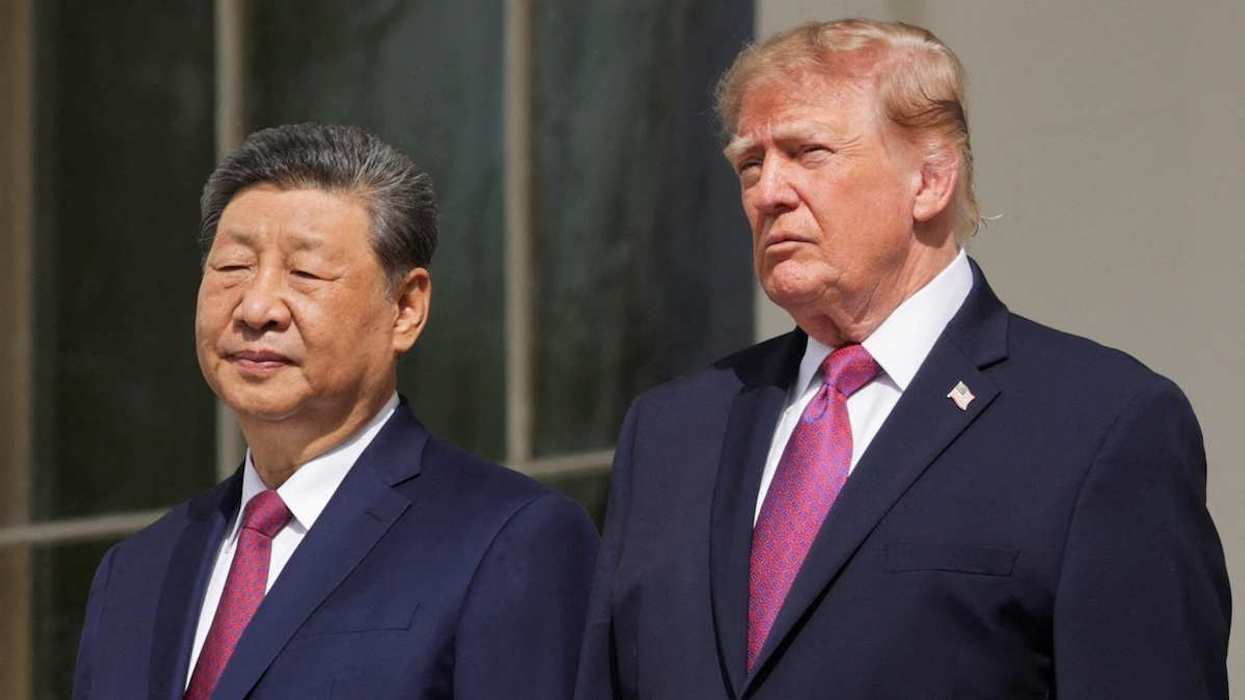
The conventional wisdom was that a destabilizing war in the oil-producing heart of the Middle East would badly hurt China, the world's leading oil importer, and its sputtering economy. It hasn’t worked out that way. So far, China is weathering the US-Israeli war with Iran better than many of its neighbors and looks set to emerge relatively stronger. [...]
​Hungarian Prime Minister Viktor Orban, Leader of the Dutch Party for Freedom Geert Wilders, French far-right leader Marine Le Pen, and Italy's deputy Prime Minister and Minister of Infrastructure and Transport Matteo Salvini in Budapest, Hungary, on March 23, 2026.

Hungarian Prime Minister Viktor Orban, Leader of the Dutch Party for Freedom Geert Wilders, French far-right leader Marine Le Pen, and Italy's deputy Prime Minister and Minister of Infrastructure and Transport Matteo Salvini attend the first so-called "Patriots' Grand Assembly" of nationalist groups from Europe, in Budapest, Hungary, on March 23, 2026.

REUTERS/Marton Monus
Hungary’s recent election saw far-right Prime Minister Viktor Orbán and his Fidesz party lose power after riding a wave of anti-migrant and anti-European Union populism for 16 years. Orbán conceded defeat to Péter Magyar and his center-right Tisza party, which captured over two thirds of the seats in Parliament.The election has been hailed as a [...]
​A photo of a syringe filled with images from the drug supply chain.

A photo of a syringe filled with images from the drug supply chain.

Natalie Johnson
Unregulated chemicals are entering the United States from China and being injected into Americans’ bloodstreams. No, not fentanyl. We’re talking about peptides, which are short chains of amino acids that regulate hormones and spur changes in the body. Their rise, often dubbed the “biohacking” boom, has been spurred by the success of the weight [...]
​Viktor Orban and Peter Magyar

Viktor Orban and Peter Magyar

Miguel Saenz-Flores
For sixteen years, Prime Minister Viktor Orban has won every fight: four consecutive parliamentary supermajorities for his party, Fidesz; a constitution rewritten to his specifications; courts, media, and oligarchs brought to heel. He turned Hungary into what scholars politely call an "electoral autocracy" and what his critics less politely call a [...]