It was the jam session that rocked Asia. In January, a video of Japanese Prime Minister Sanae Takaichi and South Korean President Lee Jae Myung drumming to K-Pop hits went viral, heralding a new diplomatic era between their countries. Now it seems the band is back together and taking it on the road. This week, the two leaders are meeting again in Lee’s hometown of Andong. The two-day summit is focusing on security, energy, and critical minerals, with another meeting slated to take place in Takaichi’s birthplace later this year.
On Tuesday, Lee stated that the two countries “agreed to strengthen cooperation in the sectors of liquefied natural gas and crude oil.” South Korea will also join “PowerASIA”, a $10 billion Japanese initiative to increase cooperation between Southeast Asian countries in the building and common use of petroleum storage facilities for oil reserves.
But the two leaders appear to differ on China’s engagement in the future of the region. In discussions of the security of the Korean peninsula, Lee emphasized that South Korea, China, and Japan should pursue common interests to achieve peace and stability, but did not mention North Korea by name. Taikachi, however, said that she and Lee “discussed responses to North Korea, including its nuclear and missile programs,” and the need for close coordination between South Korea, the US and Japan - but did not reference China’s role, a fact noted by the Asian press.
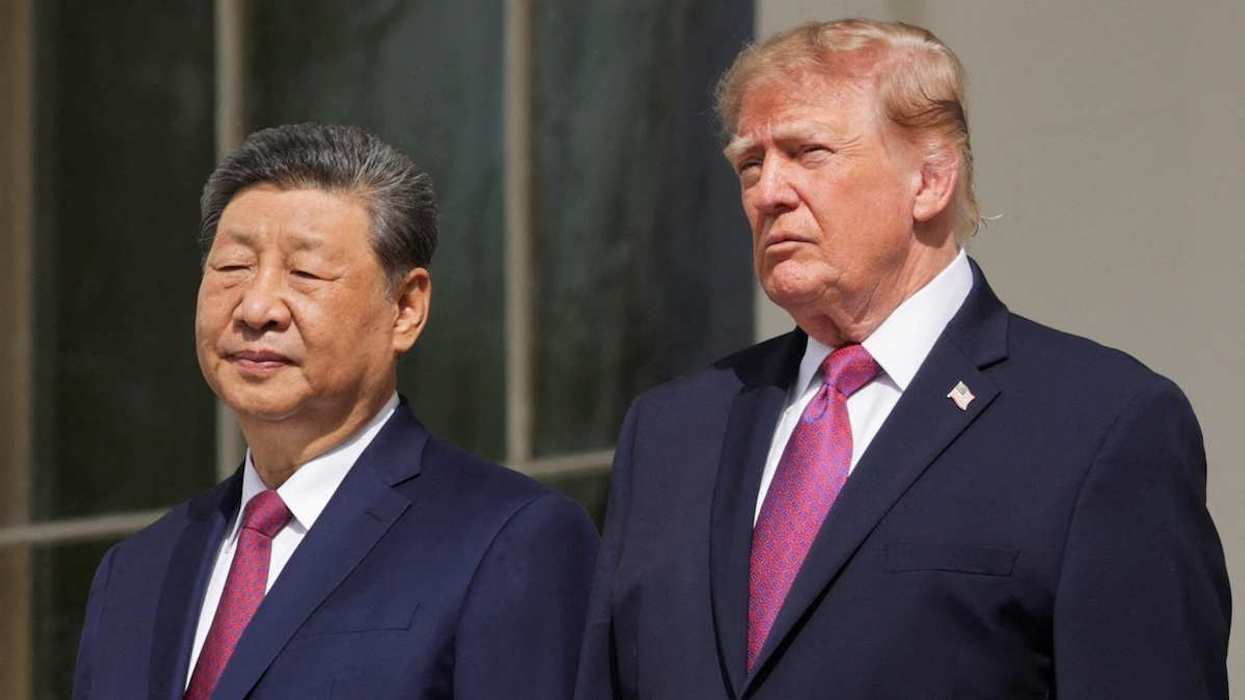
Why the difference? Takaichi enjoys a positive relationship with US President Donald Trump and has been cultivating closer ties with Washington. Trump reportedly called her after his recent meeting with Chinese Supreme Leader Xi Jinping to brief her on the conversation, and Tokyo and Seoul announced their summit immediately after Trump and Xi’s meeting concluded.
In contrast, Takaichi’s relationship with China is frosty at best. Last November she raised the ire of Beijing when she said that Chinese military aggression against Taiwan could be considered a threat to Japan’s survival and justify military intervention. China responded by pulling tourists, suspending flights between the two countries, and cancelling seafood imports.
Trump’s recent ambiguous language on Taiwan, however, has also made Asian allies nervous, and the US war in Iran has severely affected Asian economies. According to Lee, the current international environment and trade order “are unprecedentedly volatile” and “it is an urgent task of our time to deepen bilateral relations" between Japan and South Korea.
Oil shocks are hitting hard. The closure of the Strait of Hormuz due to the US-Iran war has severely impacted energy markets in Japan and South Korea. Japan sources 93 percent of its crude oil imports from the Middle East; South Korea, 70 percent. High energy prices have fueled inflation: Japan hit a three-year high of 4.9% in April, while Korea saw a two-year high of 2.6%. They’ve also affected air travel: South Korea produces 30% of the world’s jet fuel, including 82% of that imported to the US West Coast. In March, due to fears of shortages, Seoul rerouted some of that fuel to Japan.
Critical minerals and electronics are also a concern. Both Japan and South Korea are working to “de-risk” and reduce their dependence on China for critical mineral processing, key to the production of electronic components. Japanese and Korean companies are aggressively pursuing deep sea mining to secure alternative sources of lithium, cobalt, nickel, and rare earths. This would create a more resilient supply chain not just for domestic industries, but also for allies including the United States.
The two leaders will also be keeping an eye on a possible 18-day strike by tens of thousands of Samsung workers in South Korea which could worsen an already acute global shortage of memory chips tied to the AI boom. A disruption could hit everything from Nvidia-linked AI systems to manufacturing of laptops, automotive electronics, and military hardware.
And there was a human element as well. The two countries share a difficult past due to Japan’s colonial occupation of Korea from 1910 to 1945. But in the spirit of reconciliation, they announced they would conduct DNA analysis of the remains of Korean forced laborers recovered from a 1942 Japanese coal mine disaster. Lee described the move as “a small but meaningful first step for both countries in cooperating on historical issues,” striking a harmonious, if symbolic, note for the future.