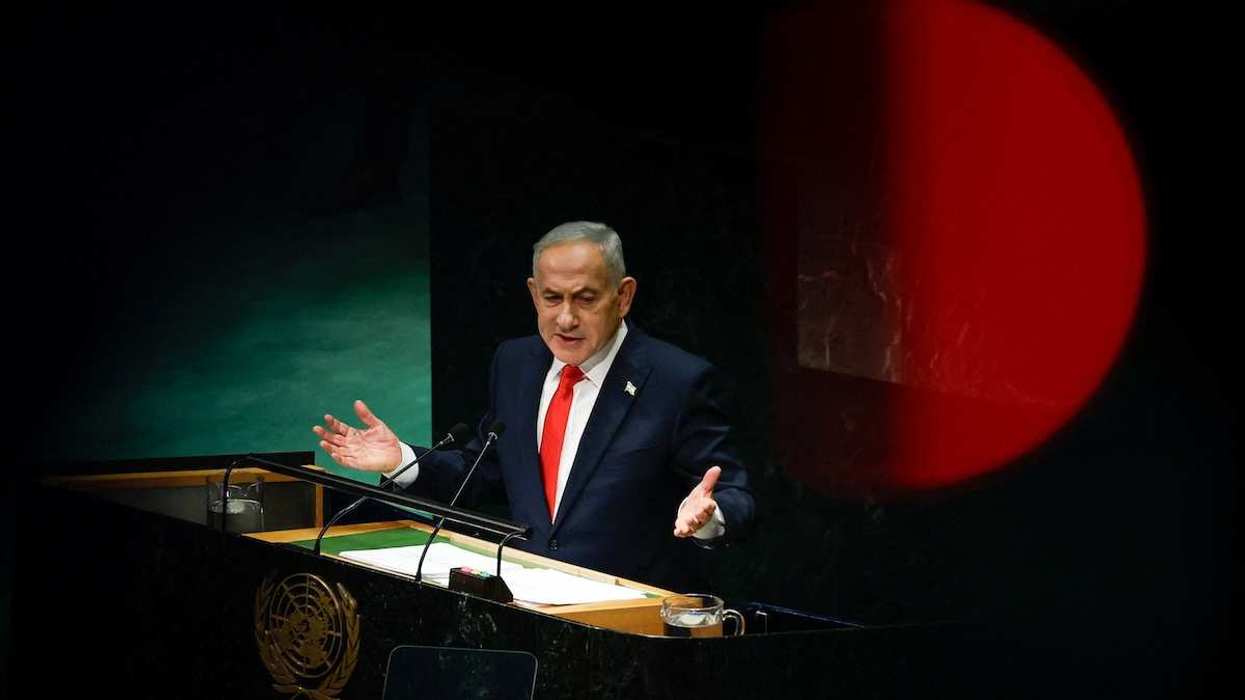
This week, far-right Israeli minister Bezalel Smotrich used an alleged arrest warrant from the International Criminal Court against him to insert fresh impetus into the effort to build settlements in the West Bank, saying on Tuesday that he wanted to make the settlements “irreversible.” He also ordered the eviction this week of Palestinian residents from a West Bank hamlet.
Smotrich’s move comes as violence by Jewish extremists against Palestinians in the West Bank has surged this year. In the first three months of 2026 alone, the number of Palestinians displaced by violence in the West Bank surpassed last year’s total, according to data from the UN’s Office for the Coordination of Humanitarian Affairs (OCHA). The trend had already been increasing going into this year: incidents of crimes, including arson, harassment, and property damage against Palestinians jumped 25% in 2025 from the year prior, according to the Israeli Defense Forces (IDF).
“There hasn’t really been any period that I can recall where settlers’ violence was so high,” Ibrahim Dalalsha, founder of Horizon Center, a think tank based in the West Bank city of Ramallah, told GZERO. “There are communities that are actually experiencing this on a daily basis, attacks against fields, crops, property, cars – all of that.”
The ultimate aim of these extremists, who are typically referred to as “settlers,” is clear: they want Israel to outright annex the West Bank, whether legally or illegally. Israel took the 2,200-square-mile enclave from Jordanian control during the Six-Day War of 1967, and has occupied it militarily ever since, while steadily expanding Jewish-only settlements that are widely considered illegal under international law. Even that doesn’t go far enough for extremists like Smotrich, who, in 2017, authored a detailed plan to take full control of the area. While the Israeli government has controversially approved vast settlement blocs, particularly in areas contiguous to Israel itself, extremist groups have tried to set up an archipelago of wildcat outposts, using violence to force Palestinian inhabitants out.
The recent surge of this kind of violence began in 2022, when Prime Minister Benjamin Netanyahu, after a relatively weak performance in the elections, was forced to form a coalition government with Smotrich and another far-right politician, Itamar Ben-Gvir. As the price of their support, which enabled him to return as PM and avoid a high-profile corruption trial, the two men demanded that Netanyahu take a more favorable approach to settlements in the West Bank, according to Nimrod Novik, distinguished fellow with the Israel Policy Forum.
“They were the only ones who were willing to provide him with everything he would ask for that relates to undoing his trial,” Novik, who was once an advisor to former PM Shimon Peres, told GZERO, “provided that he gives them a free hand in pursuing their respective whims.”
Settler violence accelerated after the Hamas attacks of Oct. 7, 2023: many Israelis, grappling with a mix of horror, fear and confusion after 1,200 of their citizens were killed and another 250 taken hostage, no longer distinguished between the Gaza-based militant group and Palestinians living in the West Bank, per Novik.
With the help of government funds and the police, settlers have been creating new settlements at a rapid clip since. The current coalition government itself has approved over 100 such communities. But settler groups have also formed settlements that the Israeli authorities don’t recognize, known as “outposts,” benefitting from a security system where law enforcement is reluctant to charge them – meanwhile, Palestinians could now face a death sentence if convicted of terror.
But there is another factor stoking settler violence, says Novik: later this year, Israel will hold a general election.
Current polls suggest that former PM Naftali Bennett will topple Netanyahu, ending the reign of Israel’s longest-serving leader. And that spells trouble for the extremist settlers. Though he is hardly centrist, Bennett and his allies would likely take a very different approach from that of the current coalition, according to Aaron David Miller, a former US diplomat who is now a senior fellow at the Carnegie Endowment for International Peace.
“They will certainly not embrace or endorse any of the racist Jewish supremacist policies that Ben Gvir and Smotrich have pursued. They will abandon the wholesale effort to reconceptualize the West Bank as occupied territory,” Miller told GZERO. “And they will be tougher on settler terrorism and violence.”
Even if Bibi manages to hold on, Novik said, the next coalition will look different from the current one – and less favorable for the settlers. Several leading Israelis, including the former head of the Shin Bet and the IDF’s current chief, have lambasted the level of settler violence. Meanwhile, many Israelis feel security forces must do more to curb settler violence: a plurality of Israelis (45%) believe security forces are too lenient toward these extremists, according to polling in April by the Israel Democracy Institute, compared to 25% who believe they’ve been too harsh.
For Palestinians in the West Bank, however, hopes tied to an election in which they have no vote are modest.
“What we’re looking for is an Israeli responsible government that sees the whole thing in perspective, and puts an end to [the violence by settlers],” said Dalalsha, “because that is the essence of coexistence between Palestinians and Israelis.”