Hungary’s recent election saw far-right Prime Minister Viktor Orbán and his Fidesz party lose power after riding a wave of anti-migrant and anti-European Union populism for 16 years. Orbán conceded defeat to Péter Magyar and his center-right Tisza party, which captured over two thirds of the seats in Parliament.
The election has been hailed as a triumph of the democratic process: voter turnout exceeded 74%, the highest level in the country’s history. Voters were Hungary for change, and despite high-profile endorsements by foreign politicians – including an in-person appearance by US Vice President JD Vance – and an election playing field tipped in Orbán’s favor, Hungarians were not deterred from choosing new leadership.
While Magyar is without a doubt conservative (even hailing from Orbán’s right-wing party Fidesz before breaking away), he marks a major departure from the populist movement Orbán pioneered.
Hungary is not alone. Over the past decade, far-right parties have made electoral gains across Europe, including Poland, Italy, France, and Germany. But in the past few years, the far right has also experienced setbacks. The results in Hungary now prompt the question: has right-wing populism peaked in Europe? According to Mujtaba Rahman, Eurasia Group’s managing director of Europe, populists in Rome, Warsaw, and Paris will all face these questions in a series of “very consequential elections” in 2027.
The right's rise...and fall? In Italy, Prime Minister Giorgia Meloni’s Brothers of Italy Party will be seeking a second mandate by the end of next year. The party won the general election in 2022 on a platform of natalism, anti-LGBTQ policies, and anti-migrant sentiment. Now, the Italian PM has is focusing on other issues, namely the economy and the judiciary. In fact, she wanted to remove “negligent judges,” whom she argued were slowing her work to fight crime. She held a referendum that would have brought judicial reforms, but duly lost – the defeat was widely seen as an indictment of her government, and a blow to the image of invincibility she’d cultivated since entering office.
This year, however, the Italian PM zeroed in on the judiciary, namely “negligent judges,” whom she argued were slowing her work to fight crime. The opposition derided her attempts at judicial reforms as an effort to increase political influence over the courts, and the changes were defeated in a referendum widely seen as an indictment of her government, and a blow to the image of invincibility she’d cultivated since entering office.
In Poland, the Law and Justice Party, or PiS, came to power in 2015 on a nationalist, socially-conservative, anti-elite platform. During its eight years in power, it provided generous support payments to families with children, but was also accused of undermining democratic norms, such as restricting press freedom and giving the justice minister control over prosecutors.
PiS won the largest share of votes in the 2023 parliamentary election, but it lost the ability to govern because opposition parties united behind the country’s centrist prime minister, Donald Tusk, and his Civic Coalition party to form a majority bloc in Parliament. Nevertheless, PiS remains a strong force, with Karol Nawrocki winning the presidency last year.
In France, Marine Le Pen took over her father Jean Le Pen’s party, the National Front, in 2011, taking it from a fringe movement to one of France’s most powerful political forces. She broadened its appeal among working-class voters and qualified for a runoff election against President Emmanuel Macron in 2022, winning 23% of the vote. In France’s 2024 snap parliamentary election, her party, renamed National Rally, topped the first round with 33% of the vote, but was blocked by a coalition of left and centrist parties.
Recent municipal elections showed mixed results for France’s right, with socialist candidates retaining power in Paris and Marseille, while the National Rally, now led by Jordan Bardella, expanded its base in smaller towns. What’s more, US officials who met with National Rally leaders were reportedly “underwhelmed” after hearing their pitch to spur the economy and trim widening debt, a potential knock to the party ahead of next year’s election.
What’s turning voters off populism in Europe? There are several factors. According to Rahman, US President Donald Trump “devalued nationalist populism in some countries.” In Italy, for instance, Trump’s popularity sits at 19%, half of what it was a year ago. Meloni, who was the only European leader to attend Trump’s inauguration, and whom he called “a great leader and a friend,” now appears wary of being tarnished by association and putting some distance between herself and the US leader, notably by strongly rejecting his demands for assistance in the Iran war.
In Orbán’s case, aligning himself with Trump may have backfired: after Vance’s in-person campaign endorsement, betting markets showed the Hungarian leader’s chances of winning dropping by three percent.
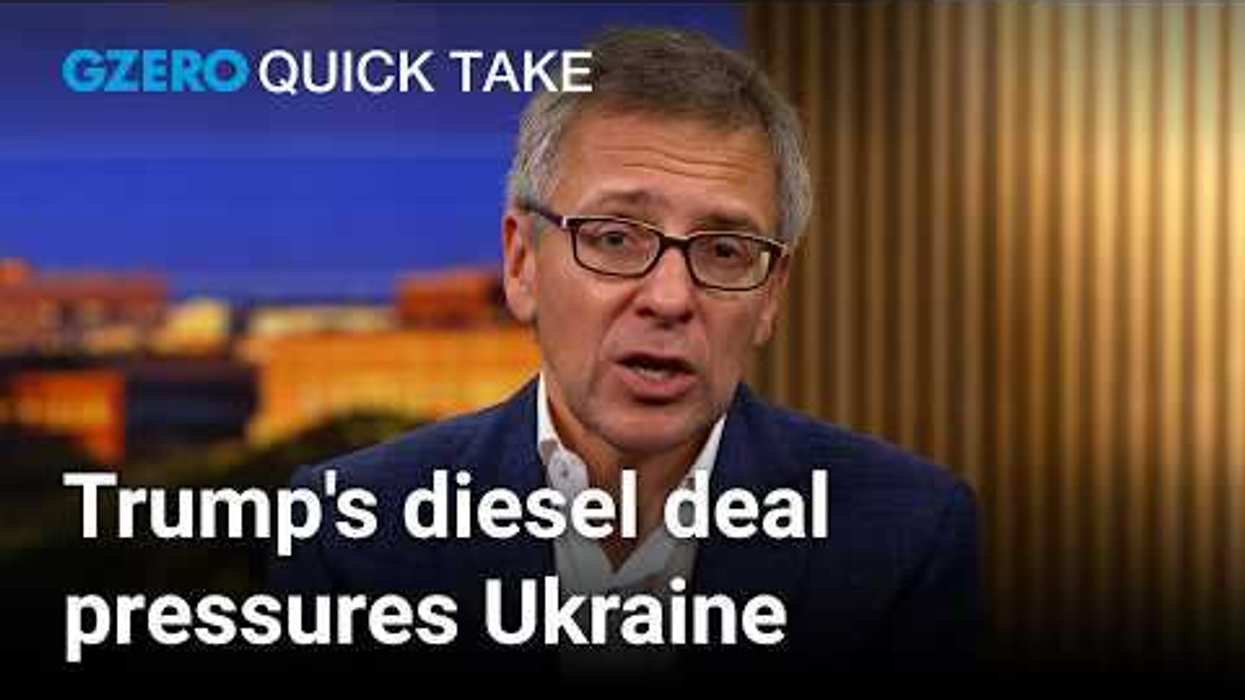
But Orbán and his party were also accused of cronyism and corruption, including using EU funds for “white elephant” construction projects and awarding billions in state contracts to oligarchic friends – all of this helped sink the economy during his fourth term and ultimately came back to bite him. As Ian Bremmer put it in a recent Quick Take, the Hungarian people “have not done well at all,” Ian says, “and they’re angry about it.”
Support for right-wing populist governments could also be declining for more familiar reasons: when they fail to deliver a better standard of living for ordinary people and when they reach the end of their political shelf life. “Unpopularity through incumbency is part of the explanation in Poland, Italy, and now Hungary,” says Rahman. When incumbents lose their populist touch, the public loses faith in them.
The wider implications for Europe. According to Rahman, Magyar’s priority will be to resurrect Hungary’s relationship with Europe, which had frayed as Orbán moved closer to Russia. “Overall, the sense of a rising populist tide has ended,” Rahman explains. But, he cautions, “a recession generated by the Iran war may bring a new wave of inchoate anger against 'elites.'” Right-wing populism may be down – but it’s not yet out.