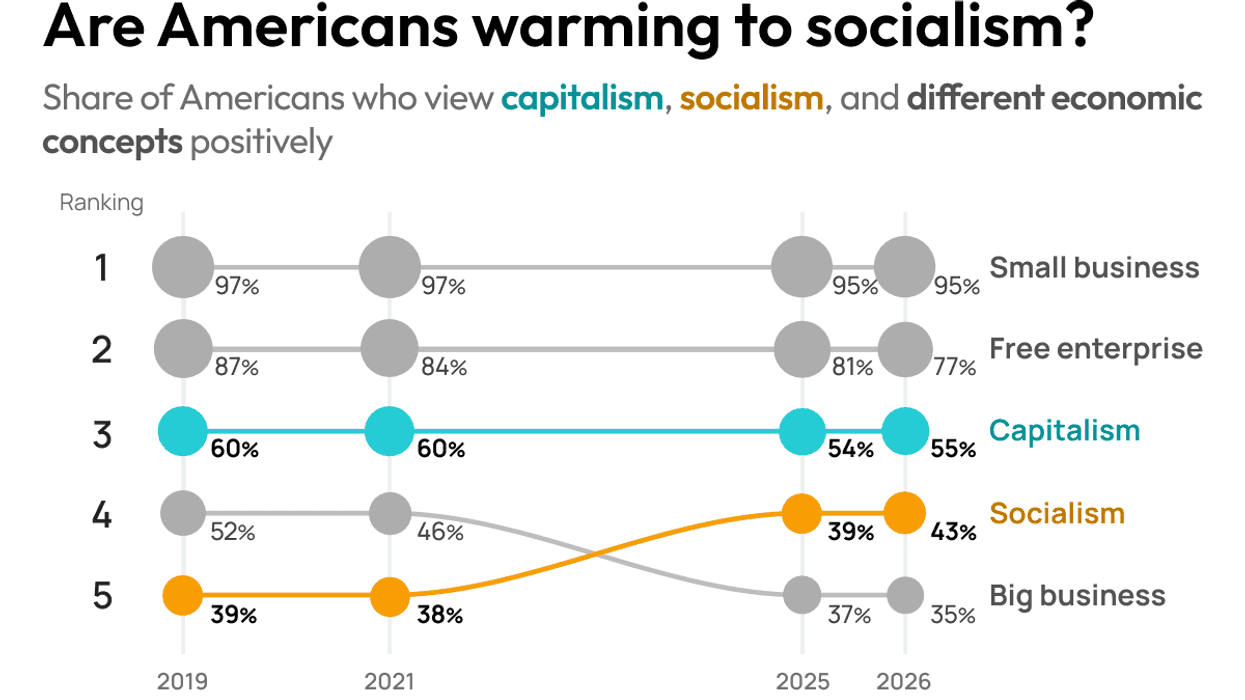
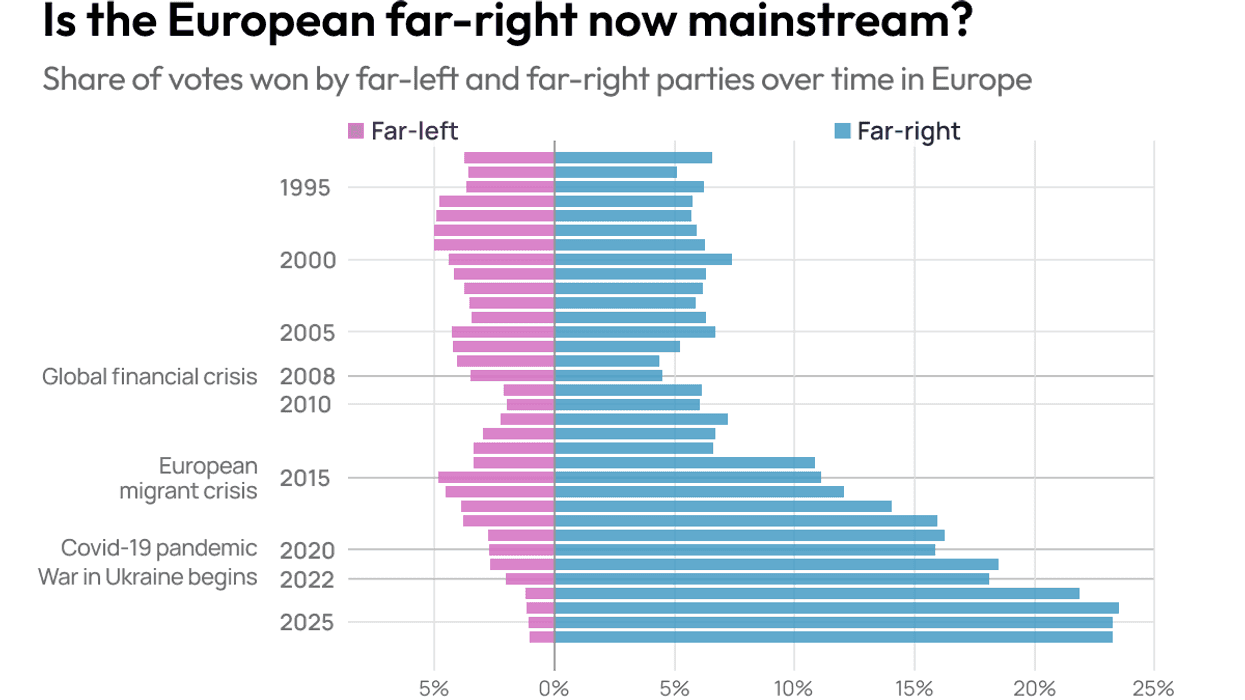
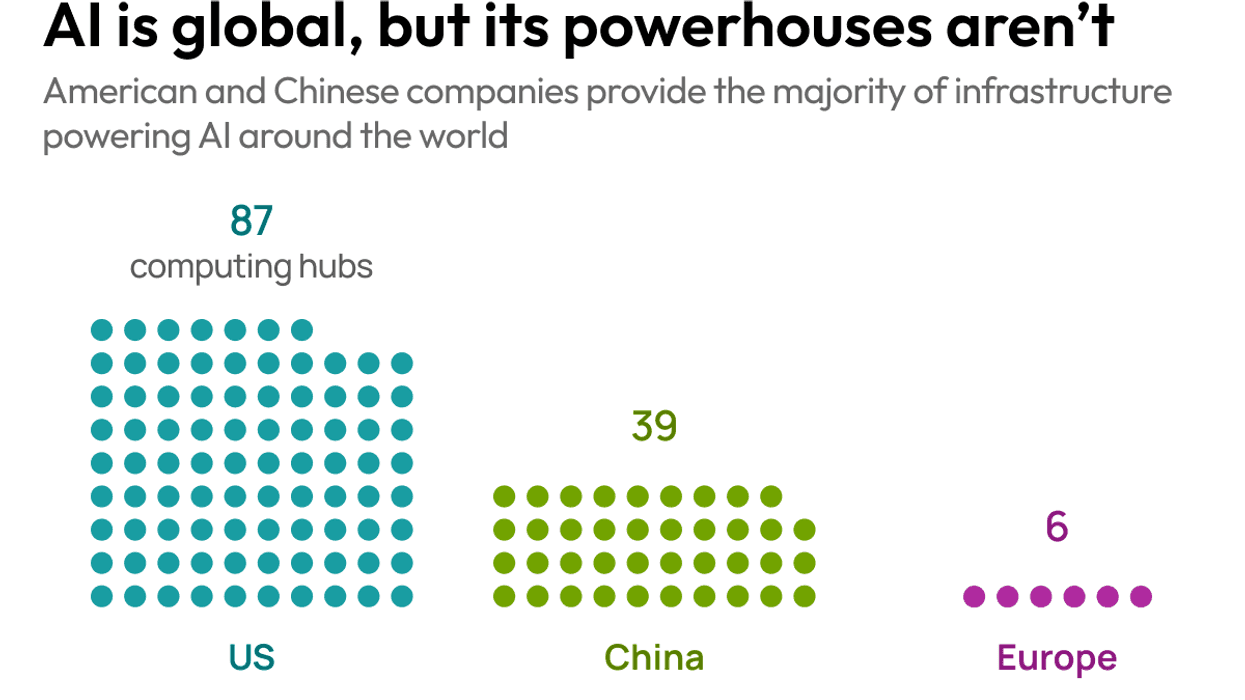
The US government reportedly plans to fund MAGA-aligned groups in Europe. The stated aim is to oppose European laws on online speech. However, if the money is also used to boost right-wing political parties in Europe, as it allegedly will, then there’s a flaw in the strategy: US President Donald Trump isn’t too popular in Europe, as this Graphic Truth shows. Right-wing groups in Europe could thus be reluctant to accept these funds if it means they must link themselves to the Trump administration.
Graphic Truth
Graphic Truth: Europe isn't loving Trump

By Eileen Zhang,
Eileen Zhang
Zac Weisz
Zac reports on global affairs, covering everything from elections and international relations, to conflicts in Africa, Europe, and the Middle East. With the Trump administration keen to alter the world order, though, there’s a heavy emphasis right now on US politics – an area with which he is intimately familiar. He also reports on the cross-section between sports and geopolitics. Prior to joining GZERO, Zac was a senior national politics correspondent at National Journal, where he covered the 2024 presidential election from its inception to the dramatic finish, as well as major congressional actions during the Biden administration. Prior to journalism, Zac worked as an economic analyst for Oxford Economics, calculating the impact of various tax policies, as well as the United Kingdom’s exit from the European Union. Born in London, he currently resides in New York City, where you can find him playing football (the original version) or watching it on television while attempting to cook up a storm.