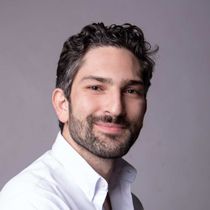
Juan Pablo Guanipa, a former Venezuelan lawmaker close to opposition leader María Corina Machado who had been imprisoned for months, stepped out of prison on Sunday into a caravan of cheering supporters. His release – alongside several other high-profile opposition figures – marked what looked like a breakthrough moment in a broader wave of liberations after the United States captured Venezuelan strongman Nicolás Maduro.
Hours later, unidentified armed men intercepted him in Caracas and took him away. By dawn, authorities announced he would be placed under house arrest for allegedly violating release conditions. In the span of a night, Guanipa’s brief taste of freedom became a snapshot of Venezuela’s fragile opening: progress that is real but can be contested.
Guanipa’s case comes amid the most significant internal shift in Venezuela since the post-election crackdown of 2024 froze political life through fear, repression, and fragmentation. Since the American intervention, authorities have released more than 400 political prisoners, including many high-profile opposition leaders, journalists, and activists. Human rights groups estimate that roughly 700 people remain detained for political reasons. These releases have not ended the Venezuelan repressive apparatus that remains in place after Maduro’s capture. But they have begun to alter the psychological balance of a civil society that had been largely paralyzed politically for two years.
Pressured by the United States, Venezuela’s National Assembly has advanced an Amnesty Law presented as a sweeping framework to pardon “political offenses” dating back to the Chavistas’ rise to power in 1999 — the socialist movement founded by Hugo Chávez that has dominated the country’s politics for decades. The goal, at least on paper, is to close criminal cases tied to protests and political unrest. But opposition figures and civil society groups argue that, despite its broad language, the draft is effectively limited to a narrow list of political episodes, potentially leaving out detainees prosecuted under other statutes, as well as unresolved issues such as political bans and the status of exiles.
Even so, the mood inside the country is shifting. Alongside the new sweeping reform of the oil industry and Venezuela’s gradual reintegration into global economic markets, most Venezuelans report growing optimism about their political and economic future. Recent surveys suggest that, for the first time in years, more than half of the population plans to remain in the country rather than emigrate.
Washington is managing the moment with an emphasis on stabilization rather than sudden rupture. Secretary of State Marco Rubio has been explicit about sequencing: stabilization first, then recovery, and later a transition to a democracy. President Donald Trump has adopted a more transactional tone, publicly celebrating prisoner releases while focusing on energy flows, security, and maintaining leverage over the transition process. Together, these positions suggest a US strategy aimed less at rapid democratization than at controlled evolution.
That external posture leaves Venezuela facing several possible futures. One is a gradual, negotiated transition resembling Spain’s reforms after the death in 1975 of its dictator, Francisco Franco, an example Rubio has mentioned. In this model, change is driven from within the system, accompanied by institutional reconstruction and phased political opening. Another option is the consolidation of a functional authoritarian model tolerated internationally because of its strategic utility. It’s a kind of “Saudi Arabia of the Caribbean” — stable, energy-relevant, and geopolitically aligned. Recent signals from Trump introduce a third, hybrid possibility: a national unity government in which former adversaries share power to contain instability and confer legitimacy, echoing South Africa’s post-apartheid settlement.
These scenarios will be settled by Washington’s leverage over both the opposition and the regime now led by interim President Delcy Rodríguez. But for now, the most consequential signals are emerging on Venezuelan streets and campuses. On Jan. 23, the country saw its first major anti-government protests in more than a year. These student demonstrations were neither purely symbolic nor tightly choreographed. At the Central University of Venezuela, students confronted Rodríguez face-to-face, demanding the release of remaining detainees. Such scenes would have been unthinkable months earlier. They suggest that the threshold of fear – a central pillar after the crackdown that followed the widely-contested 2024 election results – is beginning to shift.
The Jan. 3 operation “didn’t dismantle the system,” says Venezuelan political scientist Guillermo T. Aveledo. “Democratic forces in Venezuela could try to test the limits of the current stability,” he says. “Reorganization and activism could reveal the system’s structural limits and its actors’ capacities.”
In fact, opposition figures who spent over a year in hiding are reappearing in public. Leaders such as Delsa Solórzano and Andrés Velásquez, close allies of Machado, have reemerged. Even traditionally cautious institutions are testing limits: Venevisión, a major private television network long associated with self-censorship, has resumed coverage of the opposition and openly challenged recent restrictions.
Within the opposition itself, rhetoric is evolving. Calls to restore the disputed 2024 election results and recognize Edmundo González as the legitimate president are gradually receding. This is less an acceptance of the status quo than a strategic pivot toward demanding a new electoral process under new guarantees.
Machado has also signaled her intention to return to Venezuela, a move that could energize mobilization but also complicate Washington’s preference for a measured pace. If popular pressure accelerates electoral demands beyond what US policymakers consider manageable, tensions could emerge between Venezuelans pushing for faster change and an external strategy built around stabilization.
Guanipa’s re-arrest is a reminder that advances can be reversed overnight and that coercive tools remain intact. “It puts at risk the fragile balance that sustains Venezuela’s regime,” Miguel Ángel Santos, a Venezuelan research scholar at the University of Chicago, said. “Calling people into the streets forces the authorities into a dilemma: either repress — under the watch of the United States — or become irrelevant.”
The window is open. It’s not wide, nor stable, nor guaranteed. But for the first time in two years, something is moving simultaneously on the street, in the political elite, and in the international architecture surrounding Venezuela.