News
Senegal
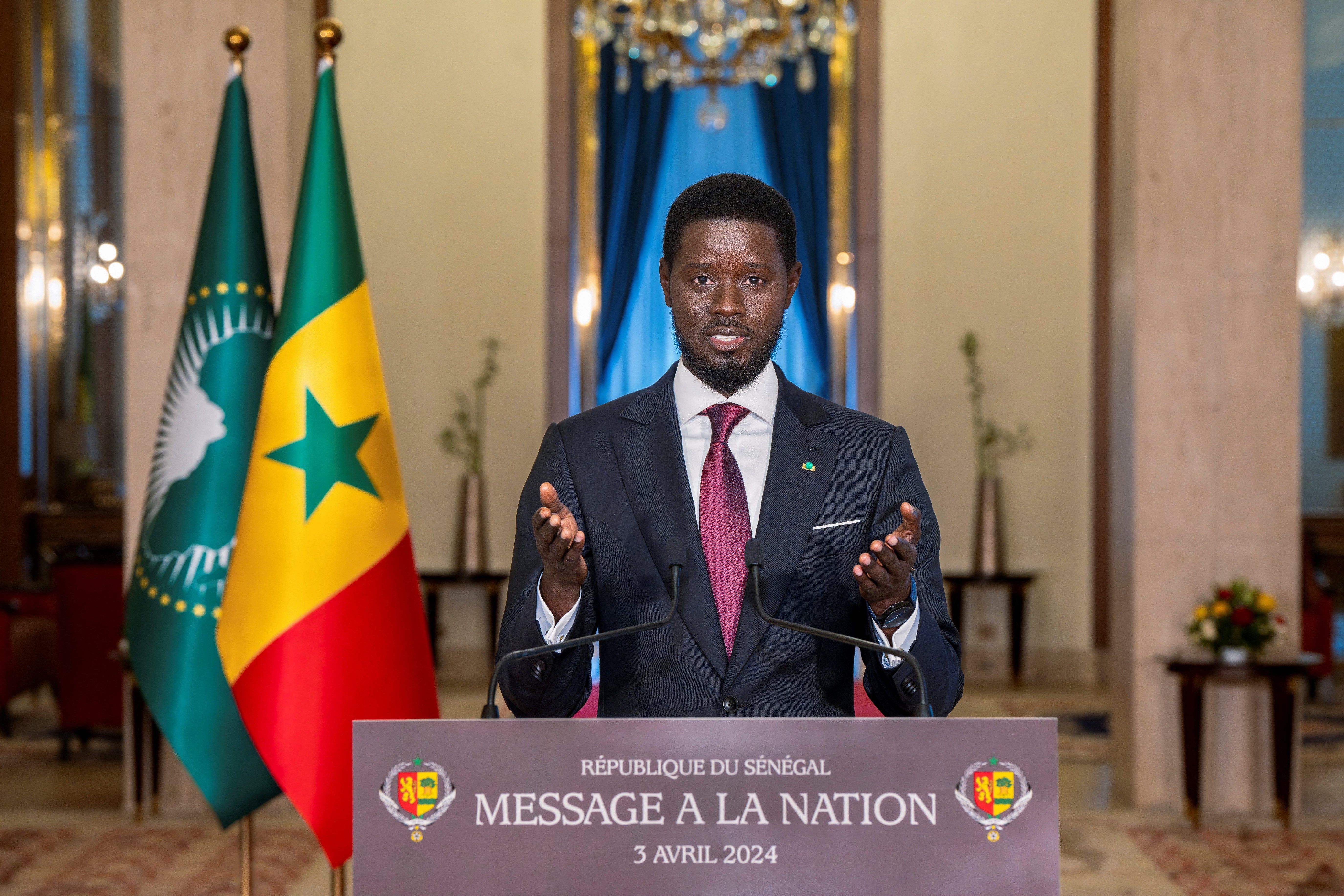
Senegal's newly elected president Bassirou Diomaye Faye addresses the nation ahead of Senegal's independence day at the presidential palace in Dakar, Senegal, April 3, 2024.
REUTERS/Abdou Karim Ndoye
If there was any hope for a free and fair election in the Sahel this year, Senegal was it. Voters were supposed to head to the polls on Feb. 25, but President Macky Sall called off the election in early February without naming a new date.
What happened? Karim Wade, son of Sall’s predecessor and a political rival, was running for president, but a constitutional court blocked his candidacy, alleging he held dual French and Senegalese citizenship. Wade claims he had renounced his French citizenship, and his party recently launched an investigation into two of the court’s justices. Then, in a masterstroke of political judo, Sall backed the investigation – and used it as an excuse to call off the election.
This comes just a year after Ousmane Sonko, another would-be contender, was sentenced in absentia to two years in jail for "corrupting youth" by encouraging the debauchery of an underage massage parlor employee – whom he was simultaneously acquitted of raping and issuing death threats against.
The approved candidate list is short, including Sall’s hand-picked successor, Prime Minister Amadou Ba, former Dakar Mayor Khalifa Sall, and former Prime Minister Idrissa Seck. But because Sonic and Wade are excluded, there’s no clear front-runner.
Protests have broken in response to the postponement, and African leaders and the Economic Community of West African States are pushing Sall to set a new date.
The rub: President Sall stays put extralegally, thrusting the former rock of West African stability into crisis.
China has defied Western sanctions for years and buys as much as 90% of Iran’s oil exports.
Think you know what's going on around the world? Here's your chance to prove it.
President Bola Tinubu faces strong headwinds in his bid for a second term.
Critics have said that Zelensky – now in his seventh year in office – has been in power for too long.