GZERO North

Trudeau’s Hard Numbers: Election victories, LGBTQ rights, Indigenous boil water advisories, Public service growth, Fiscal deficit, Poverty and Popularity​

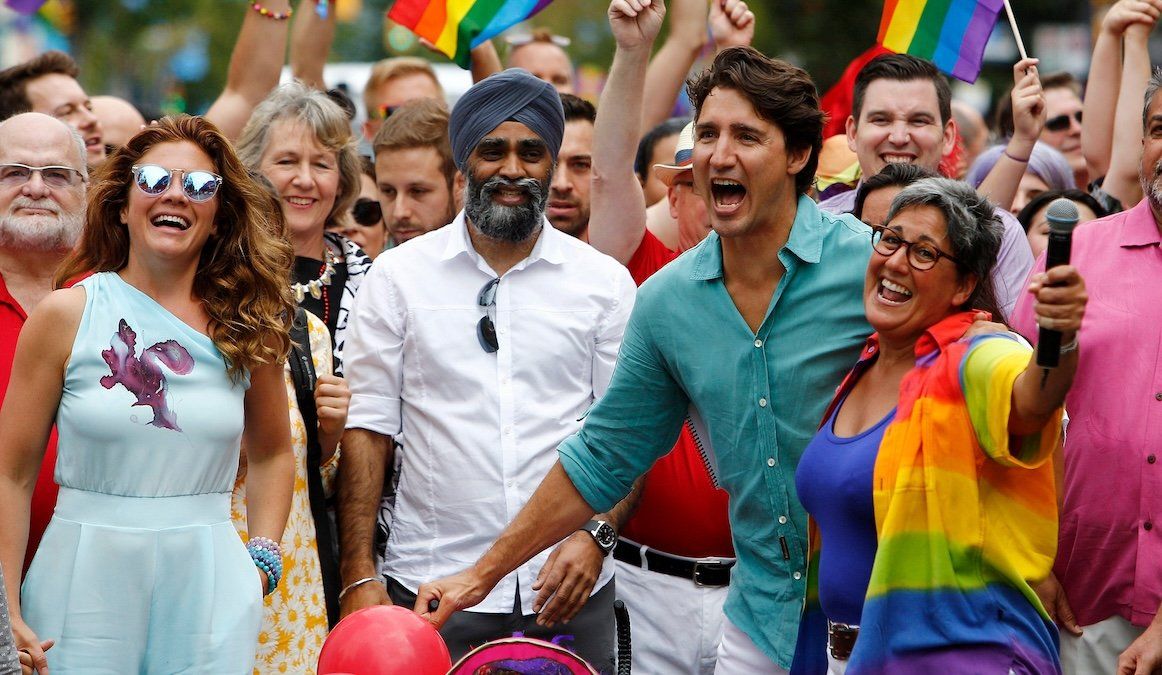
​Canada's Prime Minister Justin Trudeau reacts as he and his wife Sophie Grégoire Trudeau (the two are now separated) walk in the Vancouver Pride Parade in Vancouver, British Columbia, on July 31, 2016.

Canada's Prime Minister Justin Trudeau reacts as he and his wife Sophie Grégoire Trudeau (the two are now separated) walk in the Vancouver Pride Parade in Vancouver, British Columbia, on July 31, 2016.

REUTERS/Ben Nelms
3: Justin Trudeau led the Liberal Party to three federal election wins: a majority government in 2015 with 184 seats (39.47% of the popular vote), and minority governments in 2019 with 157 seats (33.12%) and 2021 with 160 seats (32.62%).

1: Trudeau became the first Canadian prime minister to march in a Pride parade. He marched in the Toronto Pride parade in 2016 and has since then attended parades in many cities, including Montreal, Halifax, and Vancouver.

147: In November 2015, there were 77 long-term drinking water advisories affecting 53 First Nations communities. As of November 7, 2024, the Government of Canada reports that 147 advisories have been lifted, with 31 still in effect in 29 communities.

43: Under Trudeau’s leadership, the federal public service expanded by approximately 43%, adding over 110,000 employees since 2015. In the same period, Canada’s population expanded by 17%.

61.9: Trudeau campaigned in 2015 on a promise of “modest short-term deficits.” Canada’s federal budget deficit reached CA$61.9 billion for the fiscal year ending March 2024, exceeding the government’s own target by 50%.

1.4 million: According to a report by UNICEF, between 2015 and 2020, the share of Canadians living below the poverty line fell from 14.5% to 6.4%. Canada also had one of the largest proportional drops in child poverty between 2012 and 2021, thanks to programs like the Canada Child Benefit and CERB. However, poverty has rebounded since then, to 9.9% in 2022, with 1.4 million children classified as poor.

22: Trudeau’s approval ratings have declined significantly, with most recent polls indicating that only 22% of Canadians approve of his performance. Fifty-nine percent of his party supporters said he should resign so the party can choose a new leader.
More For You

Mastercard Economic Institute's Outlook 2026 explores the forces redefining global business. Tariffs, technology, and transformation define an adaptive economy for the year ahead. Expect moderate growth amid easing inflation, evolving fiscal policies, and rapid AI adoption, driving productivity. Digital transformation for SMEs and shifts in trade and consumer behavior will shape strategies worldwide. Stay ahead with insights to help navigate complexity and seize emerging opportunities. Learn more here.

Miami Mayor-elect Eileen Higgins points as she thanks her staff and supporters on the night of the general election, on Tuesday, Nov. 4, 2025.
Carl Juste/Miami Herald/TNS/ABACAPRESS.COM

A Democrat won Miami’s mayoral race for the first time in nearly 30 years. The Republican defeat will ring some alarms for the party – and their support among Latino voters.

Women work in the plastic container assembly area inside the El Oso shoe polish factory, located in Mexico City, Mexico, in its new facilities, after officers from the Secretariat of Citizen Security and staff from the Benito Juarez mayor's office arbitrarily and violently remove their supplies, raw materials, machinery, and work tools on January 17 of this year following a coordinated operation stemming from a private dispute. On August 27, 2025.
Photo by Gerardo Vieyra/NurPhoto

50: Mexico’s President Claudia Sheinbaum is taking a page out of US President Donald Trump’s book, implementing up to a 50% tariff on more than 1,400 products in a bid to boost domestic production.